Introduction
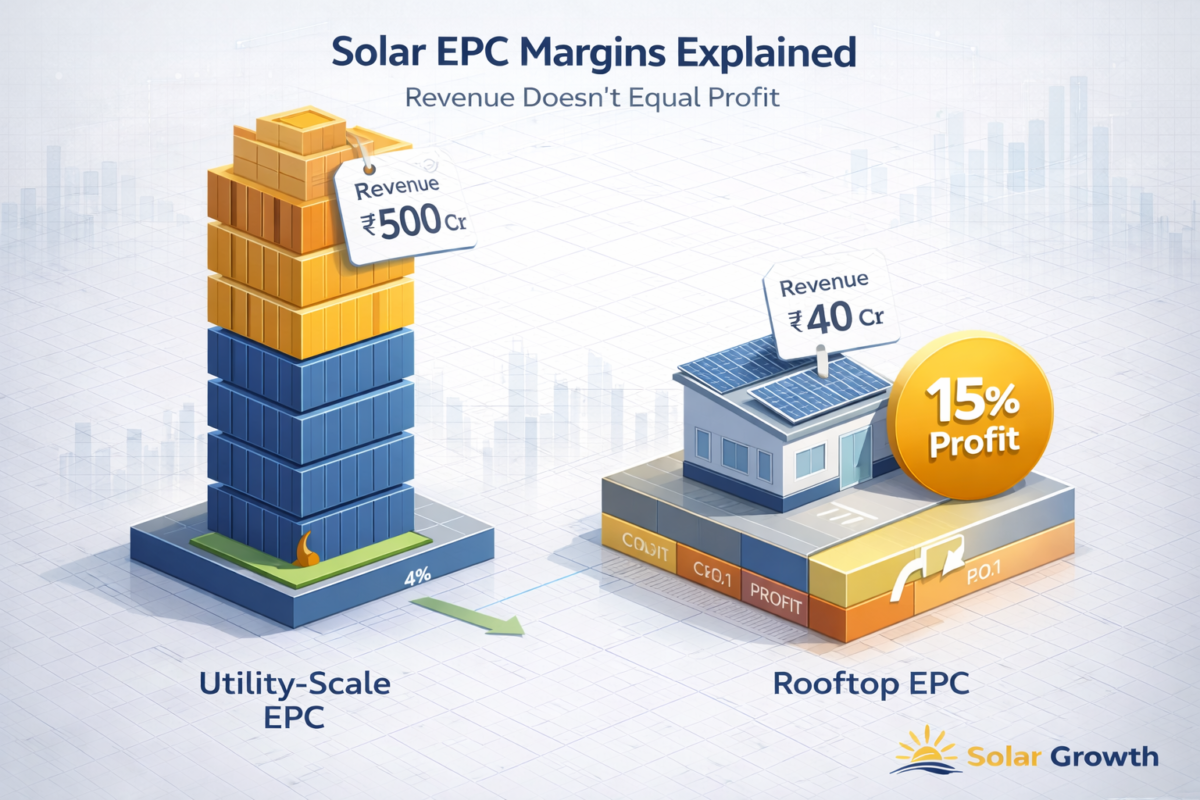
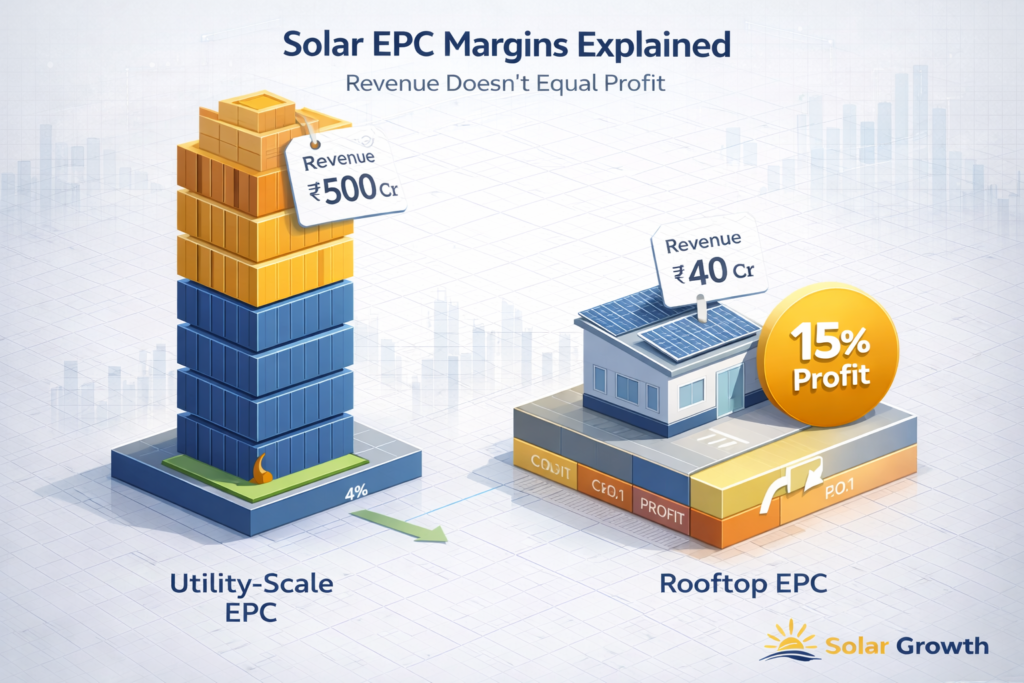
Many people assume Solar EPC companies make money simply by installing solar plants at scale. The reality is very different. EPC margins are thin, fragile, and highly sensitive to pricing mistakes, execution delays, and cash flow gaps.
In India, a solar EPC company does not survive by winning the most projects. It survives by protecting margins across procurement, execution, compliance, and payments.
This blog explains how solar EPC margins really work, where EPCs make money, where they lose it, and how profitable EPC companies structure their business differently.
What “Margin” Really Means in Solar EPC
Margin is not just the difference between project price and equipment cost.
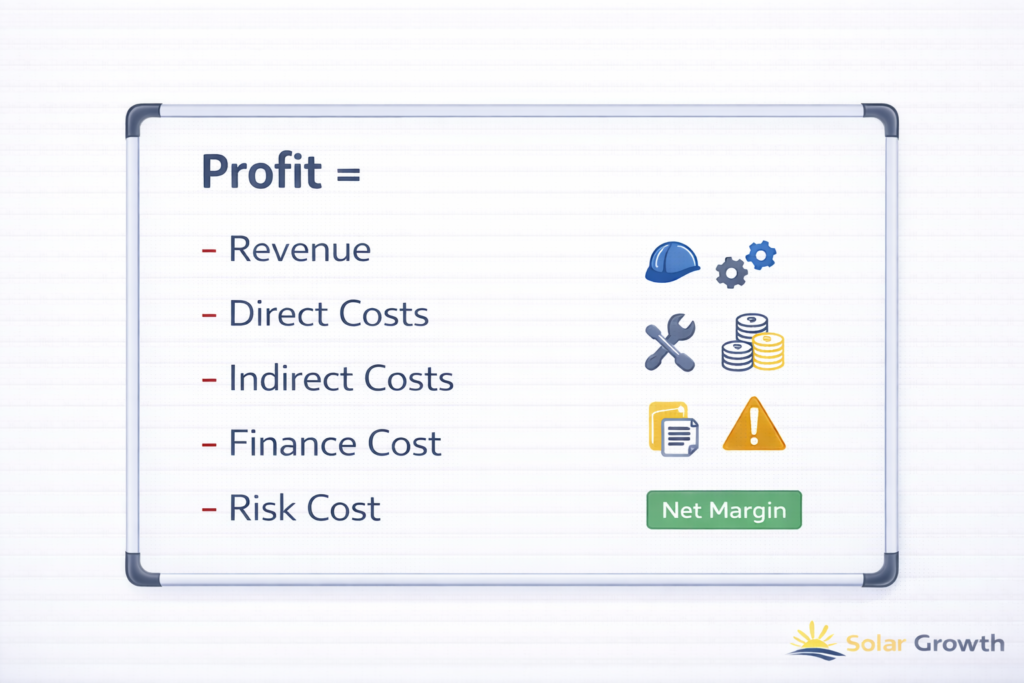
True EPC Margin =
Contract Value – (Direct Costs + Indirect Costs + Risk Costs + Finance Costs)
Many EPCs calculate margin only at the BOQ level and get shocked later.
Typical Solar EPC Margin Ranges in India
| EPC Segment | Realistic Net Margin |
| Rooftop C&I EPC | 12% – 20% |
| Utility-scale EPC | 6% – 10% |
| Government PSU EPC | 4% – 8% |
| Residential Rooftop | 10% – 15% |
Anything above this usually means either exceptional execution or unaccounted risk.
Where Solar EPCs Actually Make Money
1. Smart Procurement, Not Cheap Procurement
Profitable EPCs don’t chase the lowest price. They chase predictable performance.
They make money by:
- Locking module and inverter prices early
- Using approved vendor lists efficiently
- Avoiding last-minute spot buying
- Standardising BOS components
Example:
An EPC that saves ₹0.80/W on modules but loses 2 months due to warranty or delivery issues often loses more money overall.
2. Execution Efficiency
Execution speed directly protects margins.
Key factors:
- Accurate site surveys
- Repeatable installation processes
- Skilled labour teams
- Clear construction sequencing
Scenario:
A rooftop EPC finishing a project 3 weeks early can invoice faster and reduce interest costs pure margin gain.
3. Pricing Risk Correctly
Margins are destroyed when EPCs ignore risk.
Common risks to price in:
- Soil conditions
- Weather delays
- Grid readiness
- Client approvals
- LD and penalty clauses
Best practice:
Profitable EPCs add 5–8% contingency in utility projects and 2–4% buffer in rooftop projects.
4. Cash Flow Discipline
Cash flow decides whether margins remain theoretical or real.
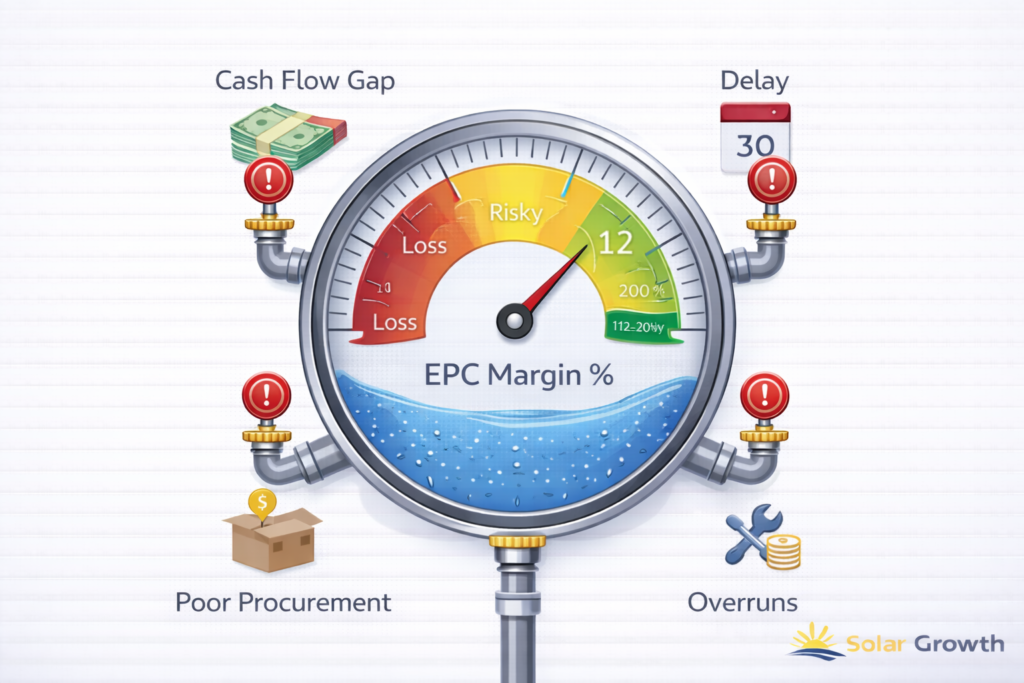
Key margin killers:
- Delayed payments
- Retention money
- High PBG requirements
- Long credit cycles
Reality check:
An EPC with 8% margin but 12-month payment delays may end up net negative after finance costs.
Cost Heads That Eat EPC Margins (Often Ignored)
| Cost Head | Impact |
| Finance & interest | High |
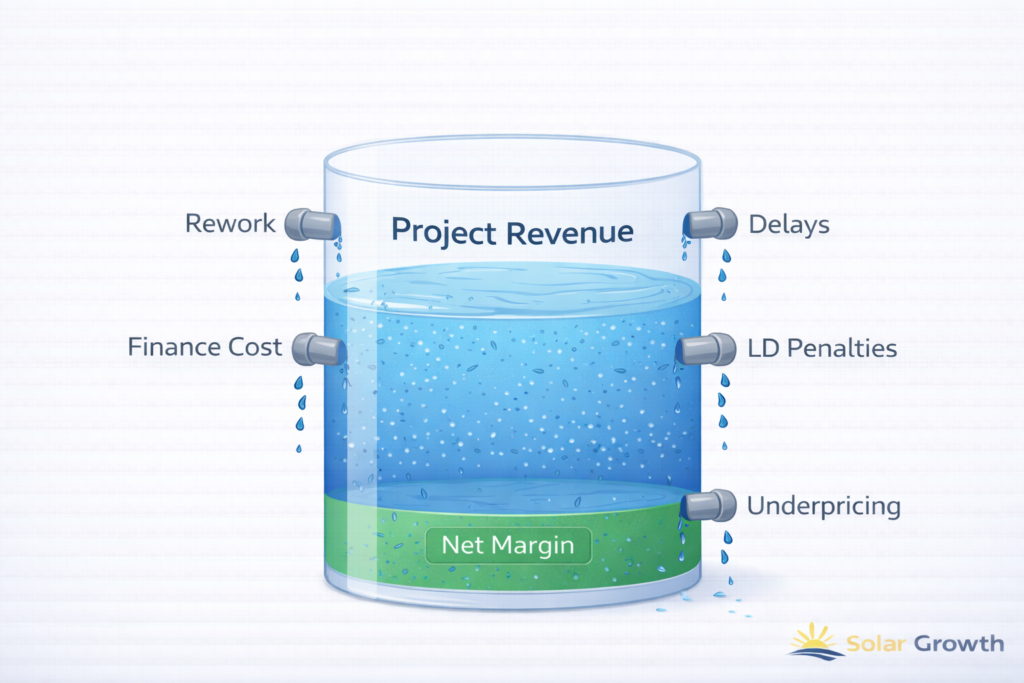
| Rework & delays | Very high |
| Compliance documentation | Medium |
| LDs & penalties | Extremely high |
| O&M underpricing | Long-term erosion |
Many EPCs win projects profitably on paper and lose money silently during execution.
Rooftop vs Utility-Scale: Margin Behavior
Rooftop EPC Margins
- Higher per-kW margins
- Faster billing
- Lower compliance burden
- Easier risk control
Utility-Scale EPC Margins
- Lower margins
- High volume, low tolerance for error
- Heavy cash blockage
- Strict penalties
Founder insight:
Most mid-sized EPCs make more stable profits in rooftop EPC, even with smaller revenue numbers.
How Sales & Bid Teams Protect Margins
Sales teams don’t just sell price — they sell risk clarity.
Best practices:
- Don’t commit timelines without execution sign-off
- Push milestone-based payments
- Avoid “all-inclusive” verbal promises
- Price change clauses for material escalation
Common mistake:
Sales undercutting price to win bids and leaving execution teams to “manage somehow”.
How Project Teams Protect Margins on Ground
Project managers protect margin by:
- Enforcing scope discipline
- Preventing scope creep
- Documenting change orders
- Managing vendor timelines tightly
Example:
Unapproved extra trenching or cable length changes quietly kill margins if not billed.
Government vs Private EPC Margin Reality
| Client Type | Margin Reality |
| Government / PSU | Low margin, high compliance |
| Private IPP | Medium margin, negotiable |
| C&I Clients | Higher margin, faster decisions |
Winning government tenders builds credibility — not cash.
Common EPC Margin Mistakes (Costly Ones)
- Chasing lowest bid wins
- Ignoring finance costs
- Underpricing compliance
- Mixing residential, rooftop, and utility pricing logic
- Not tracking actual vs estimated cost
Margins are lost after winning, not during bidding.
How Profitable EPC Companies Think Differently
They:
- Track margin per project, not revenue
- Kill unprofitable project types early
- Build pricing templates by segment
- Invest in documentation and controls
- Say “no” to bad tenders
Profitability is a decision, not an accident.
Conclusion
Solar EPC margins are thin by design. EPC companies that survive and grow are not the ones with the biggest order books, but the ones with pricing discipline, execution control, and cash flow awareness.
If you want to make money in solar EPC, stop chasing MW numbers. Start protecting margins at every stage bidding, procurement, execution, and billing.
Written by Rohith
Solar Industry Analyst at Solar Growth, covering India’s solar value chain, policy landscape, and business growth trends