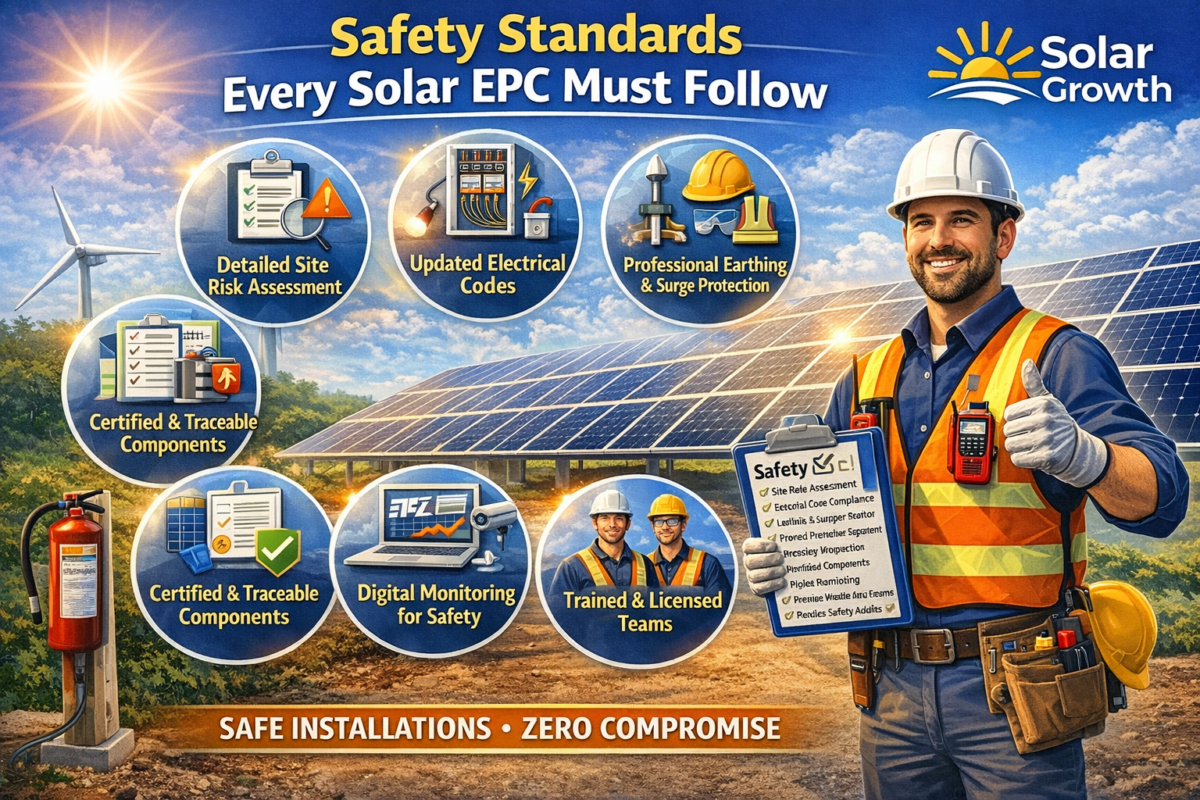
Solar installations are growing rapidly in 2026, and safety expectations are higher than ever. Modern solar plants combine high voltage electricity, structural work and digital monitoring systems. Any lapse can cause accidents, equipment damage and legal liability. Every responsible Solar EPC must strictly follow updated safety practices.
DETAILED SITE RISK ASSESSMENT
Before a single panel is installed, a complete risk evaluation is mandatory. Roof strength, wind load, electrical layout and fire access points must be analyzed. In 2026, advanced shadow mapping and thermal scanning are standard procedures. Proper planning prevents dangerous surprises later.
COMPLIANCE WITH UPDATED ELECTRICAL CODES
All installations must follow the latest national electrical standards and building regulations applicable in 2026. Correct cable sizing, approved breakers, residual current devices and certified inverters are non negotiable. Adhering to current codes ensures long term system safety.
PROFESSIONAL EARTHING AND SURGE PROTECTION
Grounding requirements have become stricter in recent years. Every solar plant must include dedicated earthing pits, surge protection devices and lightning arrestors. Modern safety guidelines demand periodic earthing resistance testing to maintain protection throughout the system life.
MANDATORY PERSONAL PROTECTIVE EQUIPMENT
Worker safety remains a top priority in 2026. Helmets, insulated gloves, anti slip footwear and full body harnesses are compulsory on every site. Updated occupational safety norms also require fall arrest systems and certified lifting tools for rooftop work.
FIRE SAFETY INTEGRATION
With larger rooftop plants becoming common, fire prevention standards have expanded. Flame retardant cables, fire rated conduits and accessible extinguishers are essential. Many regions now require clearly labeled emergency shutdown switches and safe access pathways.
USE OF CERTIFIED AND TRACEABLE COMPONENTS
Quality control is a major focus in 2026. Panels, inverters, connectors and mounting structures must carry valid certifications from recognized agencies. Traceability of components is important for warranty claims and future audits.
DIGITAL MONITORING FOR SAFETY
Modern solar plants are expected to include real time monitoring systems. Alerts for overheating, ground faults and voltage fluctuations help prevent accidents before they escalate. Remote diagnostics are now considered a basic safety requirement.
TRAINED AND LICENSED INSTALLATION TEAMS
Current regulations demand that electrical work be handled only by licensed professionals. Regular skill training, first aid knowledge and emergency response awareness are essential qualifications for every technician on site.
CLEAR LABELING AND DOCUMENTATION
High voltage warning signs, single line diagrams and maintenance manuals must be provided at handover. Proper documentation ensures that future servicing teams can operate the plant safely without confusion.
PERIODIC SAFETY AUDITS
Safety does not end after installation. In 2026, annual inspections, thermal imaging checks and preventive maintenance reports are standard practice. Continuous audits keep the system secure for decades.
Following these updated safety standards protects everyone involved. A disciplined EPC treats safety as a core responsibility, not an optional extra. Reliable solar power is built on safe installation practices.