For many EPC companies, executing a 100 kW solar project is the starting point. It builds technical confidence, local credibility, and a steady revenue base. But moving into megawatt scale projects is where real growth happens.
The shift is not just about handling bigger systems. It is about transforming processes, capabilities, and mindset.
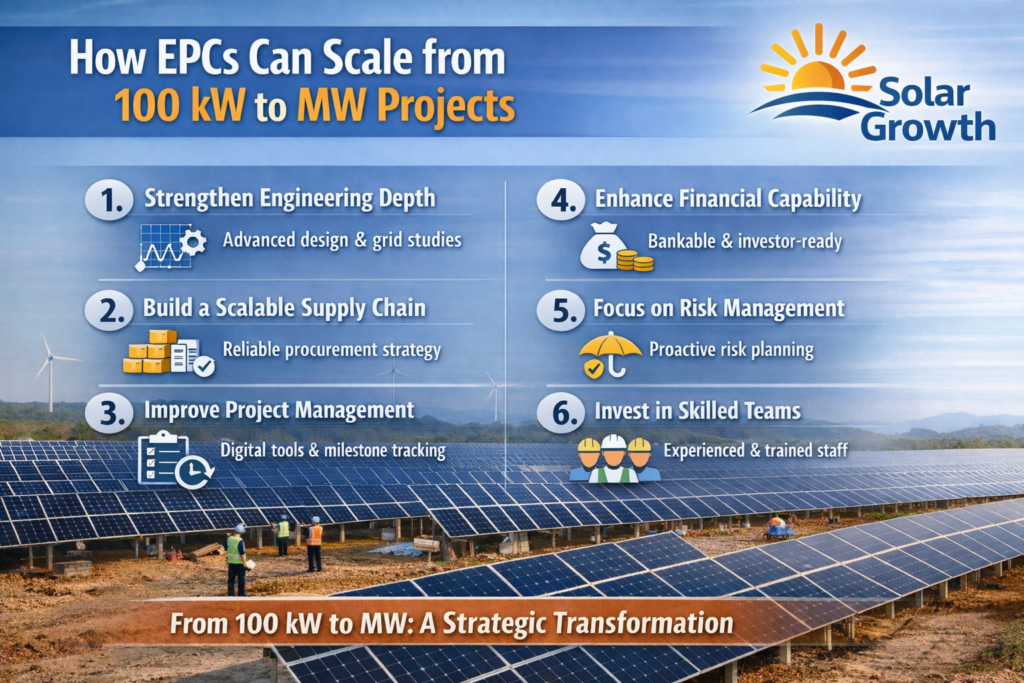
1. Strengthen Engineering Depth
At 100 kW, design complexity is manageable. At 1 MW and above, engineering becomes far more detailed. Grid interconnection studies, load flow analysis, protection coordination, and compliance documentation become critical.India added over 15 GW of solar capacity in 2024 alone, with most additions coming from utility scale projects above 1 MW. This signals where the market opportunity lies. EPCs that invest in advanced design software, performance simulation tools, and experienced electrical engineers are better positioned to compete in this segment.
2. Build a Scalable Supply Chain
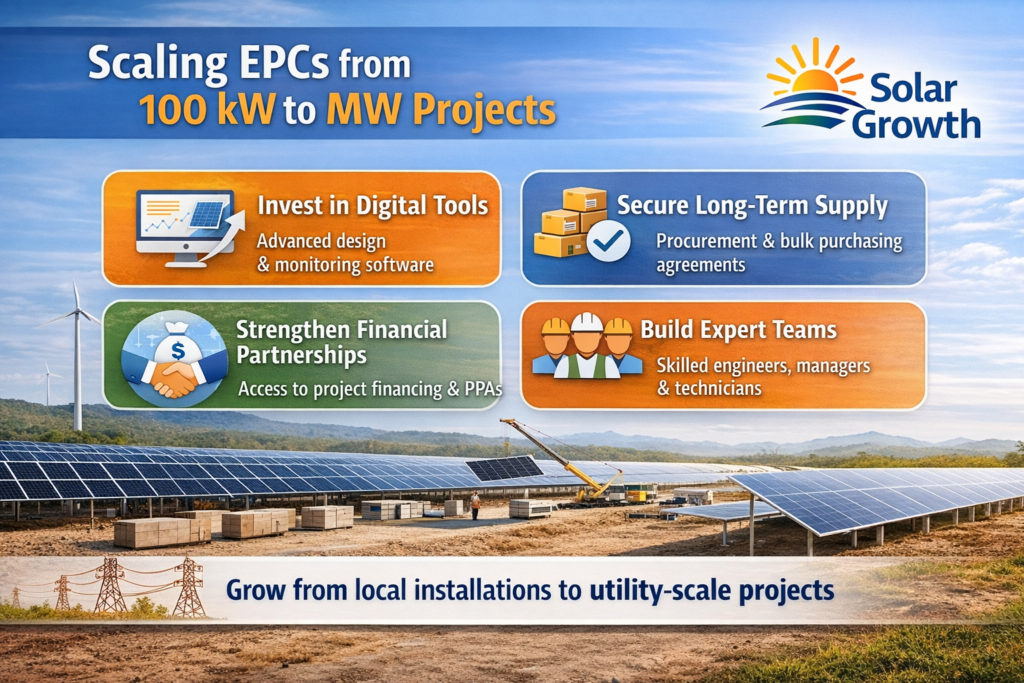
Small projects can survive on spot purchases. Megawatt projects cannot.Large scale projects require consistent module supply, reliable inverter partnerships, and predictable pricing structures. Long term vendor agreements reduce risk and protect margins. Bulk procurement improves negotiation power and ensures timely execution.With global supply chains stabilizing after recent disruptions, developers now prefer EPCs who can guarantee delivery schedules. Strong supplier relationships become a strategic advantage, not just an operational need.
3. Improve Project Management Systems
A 100 kW site might involve a small team and limited coordination. A 5 MW project can involve multiple subcontractors, heavy logistics, and tight commissioning deadlines.Digital project management platforms, real time reporting systems, and structured milestone tracking are essential. Without clear workflow visibility, delays compound quickly. Professional documentation, daily tracking, and structured escalation processes separate growing EPCs from stagnant ones.
4. Enhance Financial Capability
Scaling requires financial maturity.Megawatt projects involve higher working capital, performance guarantees, and bankability standards. Developers and lenders evaluate EPC track record, balance sheet strength, and risk management systems before awarding contracts.Many growing EPCs secure strategic partnerships with investors or larger developers to strengthen their financial credibility. Others diversify into EPC plus O and M services to create recurring revenue streams, which improves long term stability.
5. Focus on Risk Management
Larger projects bring higher exposure. Land approvals, DISCOM connectivity, regulatory changes, and weather delays can impact timelines.Professional risk assessment, contingency budgeting, and clear contractual frameworks are essential. Successful EPCs identify potential bottlenecks early rather than reacting after damage is done.
6. Invest in Skilled Teams
Technology supports growth, but people drive it.As projects scale, leadership structure must evolve. Dedicated procurement heads, experienced project managers, and commissioning specialists become necessary. Training teams in safety, quality control, and documentation improves performance consistency across multiple sites.
The Strategic Shift
Scaling from 100 kW to megawatt projects is not simply about increasing capacity. It is about moving from execution mode to structured enterprise growth.The global renewable energy market continues to expand rapidly, and utility scale installations dominate new capacity additions.
EPCs that strengthen engineering capability, formalize procurement systems, improve financial discipline, and build strong teams can transition confidently into larger projects.Growth at this level is intentional. With the right systems in place, the leap from kilowatt to megawatt becomes a calculated step rather than a risky gamble.