Understanding Financial Dynamics and Mitigation Strategies
The solar energy distribution sector is experiencing robust growth globally and in India. Distributed solar installations — including rooftop and small utility integrations — are appealing because they help reduce energy costs and support renewable energy targets. Yet, beneath the surface of this rapid adoption lies an underappreciated set of financial challenges: credit cycles and payment risks. These risks can shape investment decisions, determine project viability, and influence cash flow across the value chain.
What Are Credit Cycles in Solar Distribution?
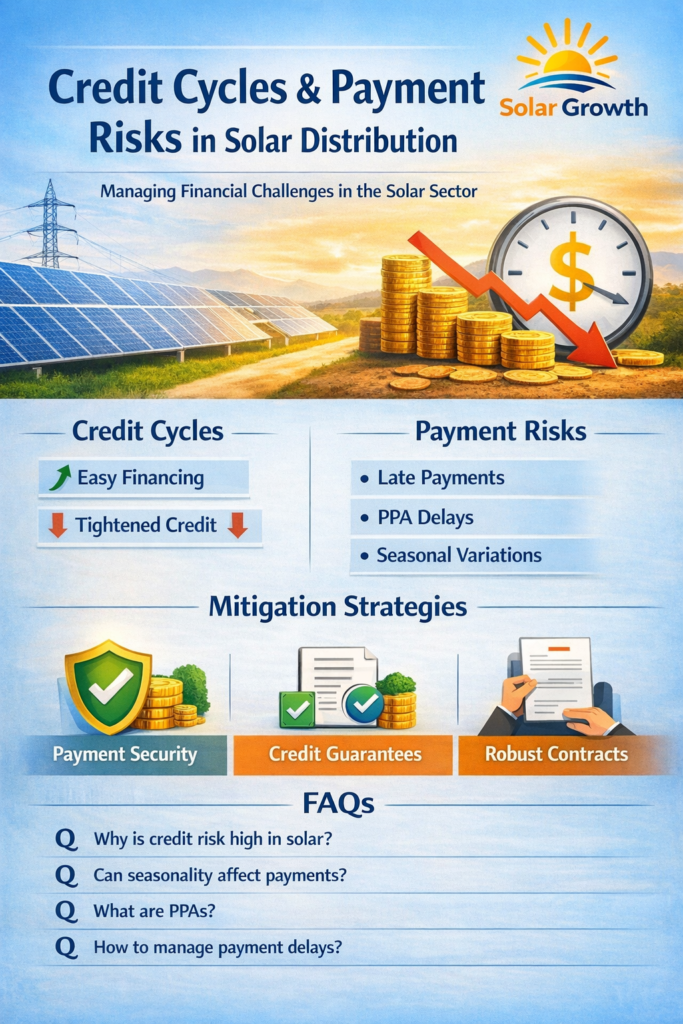
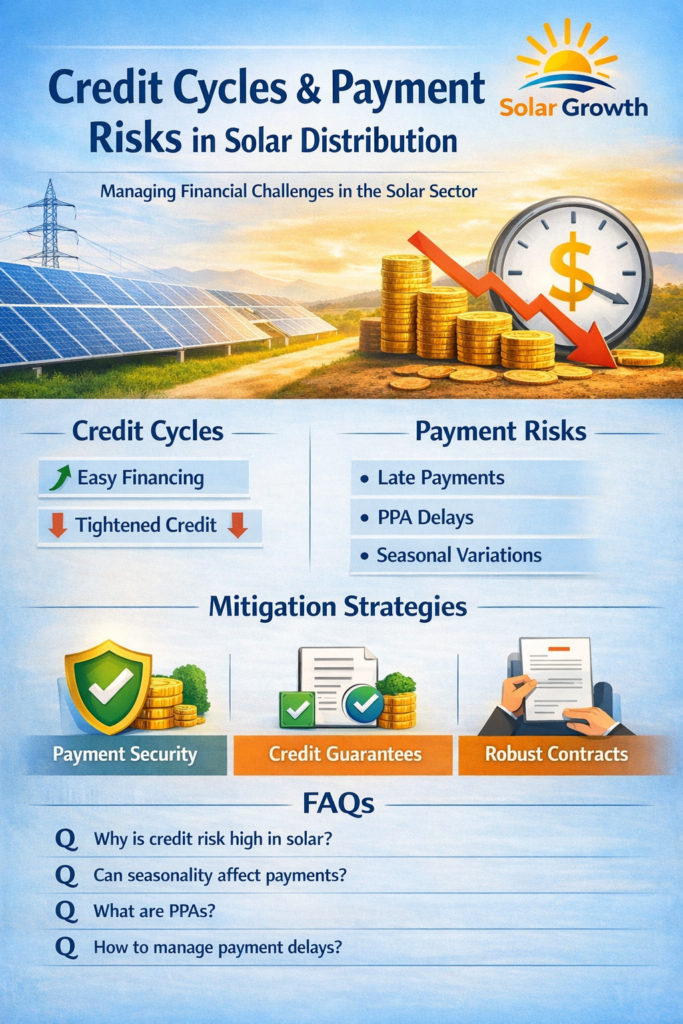
In finance, a credit cycle refers to the expansion and contraction of access to lending and capital in a market over time. For solar distribution, credit cycles influence the availability, cost, and conditions of loans and credit for manufacturers, developers, and buyers. During periods of easy credit — low interest rates and high liquidity — solar installations can grow rapidly as developers and consumers access funds easily. Conversely, when credit tightens due to rising interest rates or heightened risk awareness, financing becomes costlier or harder to secure. This can slow deployment and stress cash flows.
The solar sector’s credit cycle has shown this dynamic in recent years. In markets like the United States, the tightening of monetary policy and rising interest rates contributed to defaults on residential solar financing products, particularly asset-backed securities tied to solar loans, trading at steep discounts due to higher default rates. This has revealed vulnerabilities in financing models built on optimistic assumptions about credit performance.
Key Payment Risks in Solar Distribution
Payment risk refers to the potential for delayed or missed payments at various stages of the solar value chain. In the solar distribution context, these can appear in multiple forms:
1. Counterparty Payment Risk
A major source of risk arises when the buyer or offtaker — such as an electricity distribution utility or a corporate customer — is slow or late in making payments for power or equipment. Experts have noted that delays in signing power purchase agreements (PPAs) and paying for renewable power is a persistent challenge in the Indian renewable energy sector.
These payment delays can cause significant cash flow mismatches for developers and investors, especially in projects financed through debt that relies on stable revenue streams.
2. Operational and Administrative Delays
In distributed solar, especially smaller plants under 2 MW, invoices may receive lower prioritization by utilities or offtakers. Metering disputes, delayed certification, and rural operational constraints can further lengthen payment timelines.
3. Seasonal and Revenue-linked
RiskSolar revenue naturally fluctuates with seasons — lower production in winter months can reduce energy output and weaken the capacity of borrowers to meet debt payments tied to project revenues.
How Credit Cycles Amplify These Risks
When credit is abundant and cheap, stakeholders may underprice the risk associated with payments and credit defaults, assuming revenue streams will remain consistent over long periods. But as credit conditions tighten:
Cost of capital rises
Lenders become more selective
Risk premiums increase
This contraction can leave newer or smaller solar developers exposed, especially if their projects are tightly leveraged and dependent on steady cash flow.
In India, the long-term credit cycle in solar finance has shown uneven patterns: a period of compressed financing costs between 2012 and 2020 was followed by an expansion in costs by 2024 due to global monetary tightening. Questions regarding the credit quality of utility offtakers continue to restrain investment, with unresolved payment obligations and delayed PPAs slowing capital deployment.
Strategies to Mitigate Payment Risks
Solar developers and financiers use several approaches to manage credit and payment risk:
Payment Security Mechanisms (PSMs) which provide a buffer in case the buyer defaults or delays payment. These structured funds or guarantees help projects qualify for better credit ratings and reduce financing costs.
Credit enhancement and guarantee products for rooftop projects, especially where small and medium enterprises (MSMEs) are involved. Such mechanisms can provide lenders with reassurance against delayed or missed payments.
Robust contractual frameworks including escrow accounts, letters of credit, or milestone-based payment terms to align risk and reward more equitably.
Frequently Asked Questions (FAQs)
Q1: Why is credit risk particularly high in the solar distribution sector?
A1: Solar projects are capital-intensive and often financed through long-term debt, making them sensitive to payment reliability. Additionally, many buyers like state-owned utilities lack strong credit profiles, compounding payment risk.
Q2: Can seasonal variations affect solar loan repayments?
A2: Yes. Lower energy output in winter months can reduce cash flow, making it harder for borrowers to meet fixed debt obligations without flexible financing structures.
Q3: What role do PPAs play in payment risk?
A3: Power purchase agreements provide predictable revenue streams. Delays in signing or executing PPAs directly affect investors’ ability to forecast cash inflows and repayment capacity.
Q4: How can developers protect against payment delays?
A4: Using payment security mechanisms, guarantees, and structured credit products helps mitigate risk and provide assurance to lenders and investors.
Managing credit cycles and payment risks is vital for sustaining growth in solar distribution. With thoughtful risk mitigation, strong contractual frameworks, and evolving financing tools, stakeholders can build resilient, scalable solar markets that thrive even amid financial uncertainties.