Introduction
In India’s competitive solar market, distributors don’t grow by stocking modules. They grow by building strong EPC relationships.
EPC companies control large project volumes. They influence brand preference. They drive repeat orders. If you want stable turnover as a solar distributor, you must learn how to attract EPC customers systematically, not accidentally.
This guide explains practical, field-tested strategies that help solar distributors in India attract EPC customers, build long-term partnerships, and reduce price-based competition.
Understand How EPC Companies Choose Suppliers
Before you approach EPCs, understand how they evaluate suppliers.
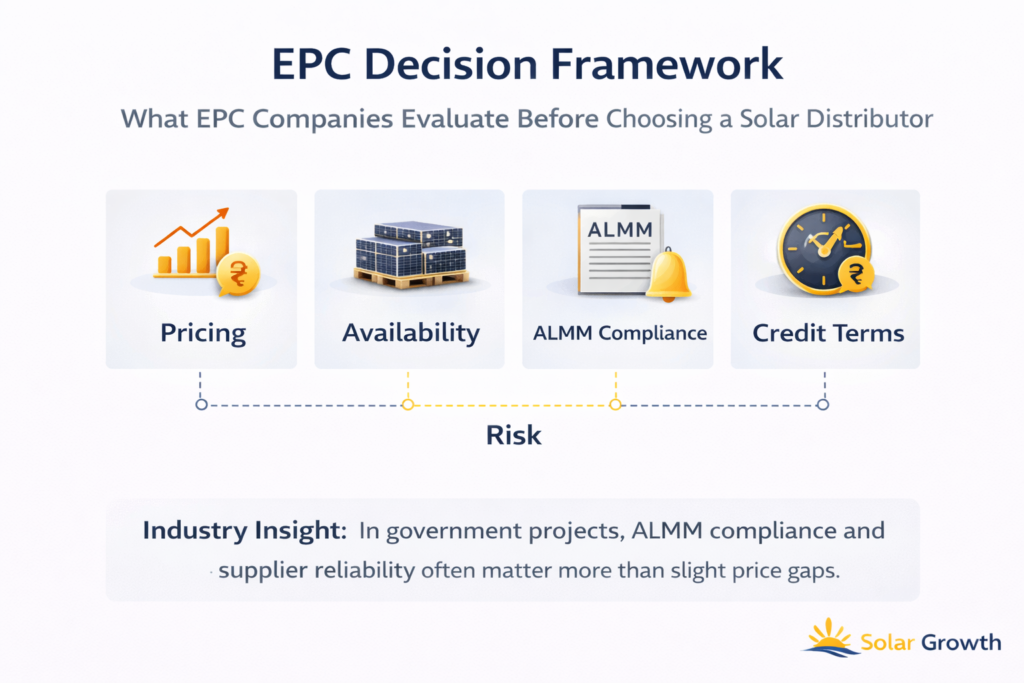
EPC procurement teams typically look at:
- Price competitiveness
- Product availability
- ALMM compliance
- Credit terms
- Delivery reliability
- Technical documentation support
Industry Reality
In government and SECI-linked projects, ALMM compliance and documentation speed often matter more than ₹0.10/W price difference.
If you don’t solve operational pain points, price alone won’t attract EPC customers.
Step 1: Position Yourself as a Reliable Supply Partner
Reliability beats discounting.
What EPCs Value Most
- Consistent stock availability
- Accurate delivery timelines
- Transparent pricing
- Fast documentation support
- Low damage rate
Example
A distributor who commits 100% delivery within 7 days consistently will win repeat business over one who offers lower price but delays dispatch.
Trust compounds. Discounts don’t.
Step 2: Specialize Instead of Being Generic
Many distributors try to supply everything.
Smart distributors focus.
Focus Models That Work
- C&I rooftop-focused supply
- Utility-scale module sourcing
- Inverter + module combo specialization
- High-efficiency modules only
When you position clearly, EPCs know when to call you.
Step 3: Build a Structured EPC Outreach System
Solar distribution marketing strategy must be proactive.
Practical Outreach Methods
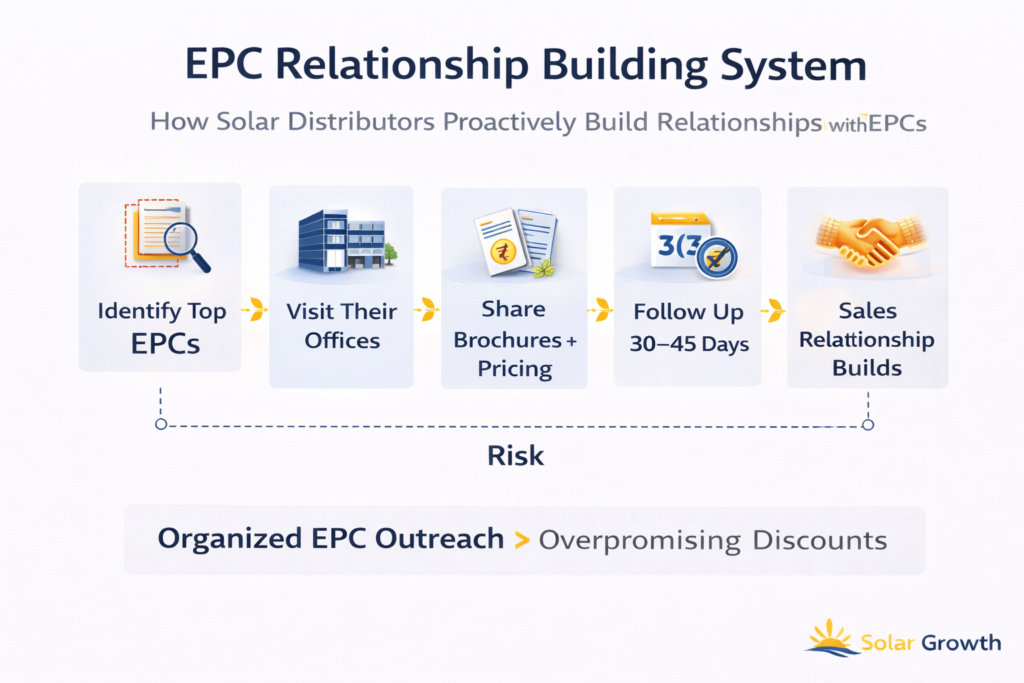
- Identify top 50 EPCs in your region
- Visit their offices personally
- Understand their typical project size
- Share product brochures + pricing sheet
- Follow up every 30–45 days
Relationship-based selling dominates B2B solar supply.
Step 4: Offer Smart Credit, Not Loose Credit
EPCs often demand credit.
Uncontrolled credit destroys distributors.
Balanced Credit Strategy
| EPC Type | Recommended Credit Policy |
| Small rooftop EPC | 30% advance, 30-day balance |
| C&I EPC | 20–30% advance, milestone-based |
| Utility EPC | Project-backed payment terms |
Always verify:
- Past payment behavior
- Project funding source
- Bank references
Attract EPC customers. Don’t finance them blindly.
Step 5: Support EPCs Beyond Product Supply
Distributors who support execution attract repeat orders.
Value-Added Support Ideas
- Provide SLD-compatible datasheets
- Share installation best practices
- Conduct product training sessions
- Update on ALMM changes
- Assist in urgent replacements
EPCs prefer partners who reduce friction.
Step 6: Improve Logistics Reliability
Delivery delays cost EPCs money.
If your logistics fail, your reputation drops.
Logistics Best Practices
- Confirm dispatch timelines in writing
- Use insured transport
- Track shipment daily
- Inspect goods before dispatch
Real example: During inverter shortages in 2022–23, distributors who communicated delays transparently retained EPC trust. Silent delays destroy relationships.
Step 7: Maintain Competitive but Sustainable Pricing
Trying to undercut every competitor is short-term thinking.
EPC procurement teams compare:
- Total landed cost
- Warranty terms
- Delivery risk
- Payment flexibility
If your solar distributor EPC partnerships depend only on price, they are fragile.
Step 8: Build Technical Credibility
EPCs work with technical teams.
Distributors who speak only in commercial languages lose advantage.
Build Credibility By:
- Understanding module degradation rates
- Knowing IEC standards
- Explaining PID resistance
- Sharing test reports quickly
Technical literacy increases trust.
Step 9: Create Digital Visibility
In India, many EPCs search suppliers online.
Your website should include:
- Clear product catalog
- ALMM compliance statement
- Warehouse photos
- Contact details
- Case references
A strong online presence improves inbound EPC leads.
Common Mistakes Distributors Make
- Calling EPCs only when stock is high
- Overpromising delivery timelines
- Ignoring documentation speed
- Extending excessive credit
- Not following up after first deal
Consistency builds supplier reputation.
How Long-Term EPC Relationships Are Built
Long-term EPC supplier relationships are built on:
- Consistency
- Transparent pricing
- Quick issue resolution
- Shared growth mindset
Some of the most successful distributors in India have 60–70% revenue from repeat EPC customers.
That is not marketing. That is trust.
Key Performance Benchmarks for Distributors
| Metric | Healthy Benchmark |
| Delivery accuracy | 95%+ on-time |
| Stock availability | 30–45 days buffer |
| Payment recovery | <45 days average |
| Damage rate | <0.5% |
Track these monthly.
If you don’t measure, you can’t improve.
Conclusion
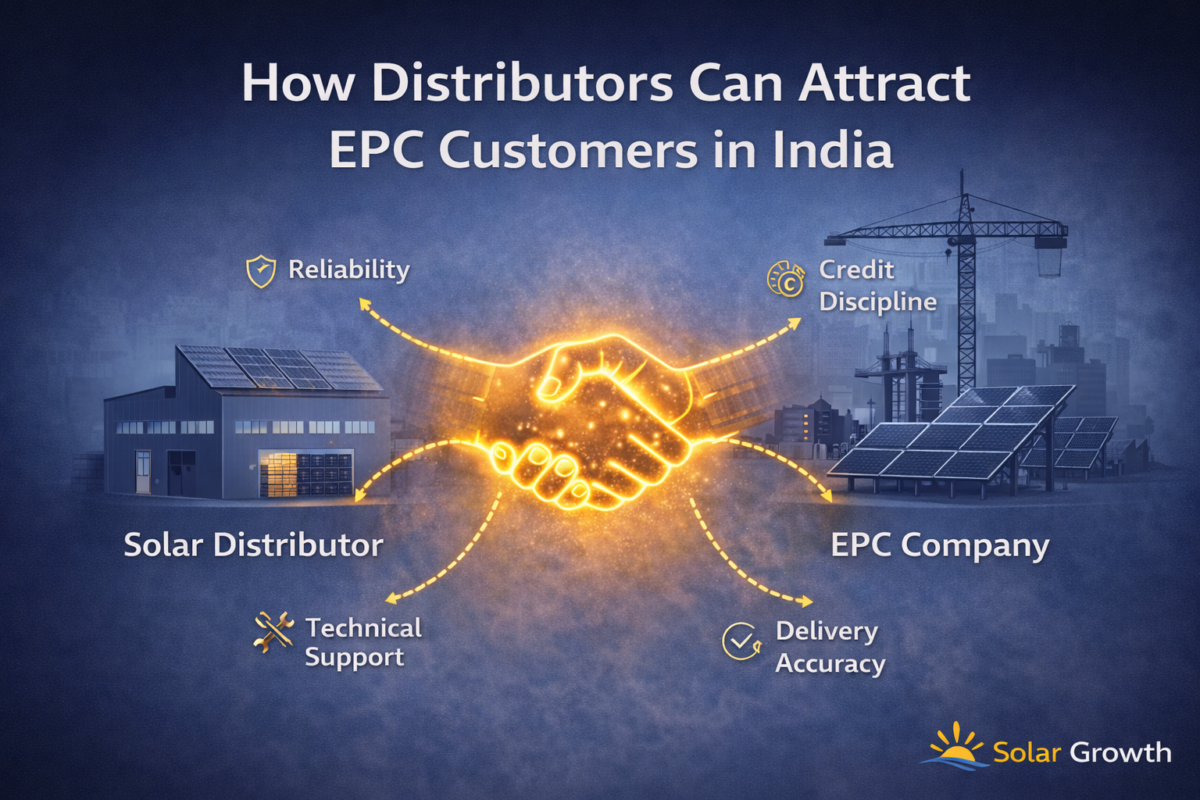
To attract EPC customers in India, solar distributors must focus on reliability, credit discipline, technical support, and consistent relationship-building.
Price matters. But reliability matters more.
EPC companies look for supply partners who reduce risk, not just cost.
In India’s competitive solar supply chain, distributors who act like long-term partners outperform those who act like traders.
Build trust. Protect margins. Grow strategically.
FAQs
1. How can a distributor approach EPC companies in India?
By identifying regional EPC firms, offering product presentations, providing ALMM-compliant documentation, and maintaining consistent follow-up.
2. Do EPC companies prefer lower price suppliers?
Price matters, but delivery reliability and documentation support often influence final selection.
3. Is offering credit necessary to attract EPC customers?
Credit helps but must be controlled. Milestone-based or partial advance terms reduce risk.
4. How can distributors build long-term EPC partnerships?
Through consistent delivery, transparent pricing, technical support, and fast problem resolution.
Written by Rohith Bingi
Solar Industry Analyst at Solar Growth, covering India’s solar value chain, policy landscape, and business growth trends