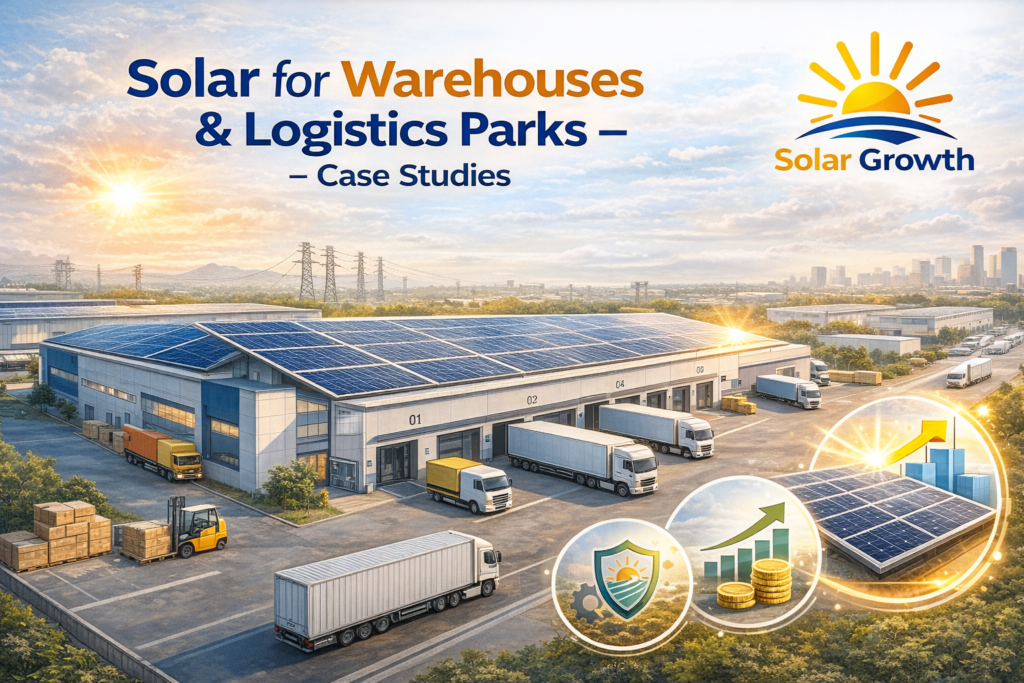
The rapid growth of e-commerce, manufacturing, and supply chain networks has increased the demand for large warehouses and logistics parks across India. These facilities operate for long hours and consume a significant amount of electricity for lighting, automation systems, cooling, and material handling equipment. Rising electricity tariffs have pushed many warehouse operators to look for more sustainable and cost-effective energy solutions. Solar power has emerged as one of the most practical options.
Large rooftop areas, predictable energy demand, and long building lifespans make warehouses ideal candidates for solar installations. Over the past few years, several logistics companies have adopted solar energy to reduce operating costs and meet sustainability goals.
Why Solar Works Well for Warehouses
Warehouses and logistics parks typically have massive rooftop spaces that remain unused. Installing solar panels on these roofs allows businesses to generate clean electricity without affecting daily operations. Since most warehouses operate during daytime hours, they can directly consume the electricity produced by solar panels.
Another advantage is the predictable load pattern. Warehouses usually require continuous lighting and equipment operation during the day, which aligns perfectly with solar generation. This helps businesses maximize self consumption and reduce reliance on the grid.
Solar installations also protect companies from rising power tariffs. Electricity costs have steadily increased in many Indian states, and solar power offers long term price stability. In many cases, solar projects achieve payback within four to five years while continuing to produce electricity for over twenty years.
Case Study 1: E-commerce Fulfillment Center
A large e-commerce fulfillment center in Maharashtra installed a 2 MW rooftop solar system on its warehouse facility. The building had a large metal roof structure that was ideal for solar mounting.The solar plant now generates nearly 3 million units of electricity every year. This covers around 60 percent of the warehouse’s energy demand. As a result, the company has reduced its electricity bills significantly and lowered its carbon emissions by thousands of tons annually.The project was financed through a third party power purchase agreement. This allowed the company to adopt solar power without heavy upfront investment.
Case Study 2: Industrial Logistics Park
An industrial logistics park in Gujarat implemented a distributed rooftop solar project across multiple warehouses. The combined solar capacity reached 5 MW.Each warehouse now generates part of its own electricity through rooftop panels. The project helped tenants reduce operating costs while also making the logistics park more attractive to environmentally conscious clients.Many multinational companies prefer warehouses powered by renewable energy because it supports their global sustainability targets.
Case Study 3: Cold Storage Warehouse
Cold storage facilities consume a large amount of electricity due to refrigeration systems that run continuously. A cold storage operator in Punjab installed a 500 kW solar plant to offset daytime electricity consumption.Although refrigeration systems run throughout the day and night, the solar installation significantly reduces daytime grid consumption. This has lowered energy costs and improved operational efficiency for the business.
Key Benefits for Warehouse Operators
Solar power offers several advantages for warehouses and logistics parks. The most obvious benefit is lower electricity costs. Solar energy reduces dependence on expensive grid power, especially during peak daytime hours.
Another benefit is sustainability. Many companies are under pressure from investors and customers to reduce their carbon footprint. Solar power helps logistics companies meet environmental commitments.
Solar installations also increase property value. Warehouses with renewable energy systems often attract premium tenants who prefer green infrastructure.
Latest Trends in Solar for Logistics Infrastructure
The adoption of solar power in the logistics sector is accelerating due to supportive government policies and falling solar equipment costs. Many developers are now designing warehouses with solar installations in mind from the beginning.
Battery storage and smart energy management systems are also becoming more common. These technologies help warehouses store excess solar energy and improve overall energy efficiency.Large logistics developers are increasingly partnering with solar developers to install rooftop solar systems across entire logistics parks.ConclusionSolar power is becoming an essential energy solution for warehouses and logistics parks. With large roof spaces, high electricity consumption, and long building lifetimes, these facilities are perfectly suited for solar installations. As electricity prices continue to rise and sustainability becomes a priority, solar adoption in the logistics sector is expected to grow rapidly in the coming years.
Frequently Asked Questions
1. Why are warehouses ideal for solar installations?
Warehouses have large rooftop spaces and consistent daytime electricity demand, which allows them to efficiently utilize solar power.
2. How much can warehouses save with solar energy?
Many warehouse operators can reduce electricity costs by 40 to 70 percent depending on system size and consumption patterns.
3. What financing options are available for solar projects?
Businesses can install solar systems through direct purchase, leasing, or power purchase agreements where a developer installs and maintains the system.
4. How long does a warehouse solar system last?
Most solar panels have a lifespan of 25 years or more, with minimal maintenance required.
5. Can logistics parks install solar across multiple warehouses?
Yes. Many logistics parks use distributed rooftop solar systems that generate power across multiple buildings within the facility.