
Environmental, Social, and Governance (ESG) has become a key framework for evaluating how responsibly companies operate. Investors, regulators, and customers now expect organizations to demonstrate measurable progress toward sustainability and ethical governance. One of the most effective ways businesses can strengthen their ESG performance is by adopting solar energy.
Solar power allows companies to reduce emissions, improve transparency in sustainability reporting, and contribute positively to communities. As global climate commitments intensify and sustainability regulations expand, solar energy is increasingly becoming a strategic tool for companies aiming to achieve their ESG goals.
Understanding ESG in the Corporate World
ESG refers to three major areas used to measure a company’s sustainability and ethical impact.Environmental factors focus on how businesses manage their environmental footprint.
This includes carbon emissions, energy efficiency, and resource use.Social factors evaluate how companies treat employees, communities, and customers.
Governance relates to transparency, ethical leadership, compliance, and responsible decision making.Companies that perform well in ESG tend to attract investors, strengthen brand reputation, and reduce regulatory risks.
Environmental Benefits of Solar Energy
The environmental component of ESG is where solar power delivers the most immediate impact. Traditional electricity production relies heavily on fossil fuels, which produce greenhouse gas emissions. By installing solar systems, businesses can replace fossil fuel electricity with clean renewable energy.
Solar energy directly reduces Scope 2 emissions, which are emissions produced from purchased electricity. For example, a commercial solar system can offset significant amounts of carbon dioxide each year, helping companies move closer to net zero targets.
Another advantage is that solar power generates electricity without consuming water or producing waste during operation. This makes it one of the most environmentally sustainable sources of energy available to businesses today.
By reducing emissions and energy consumption, companies can significantly improve their environmental performance in ESG reports.
Supporting the Social Dimension of ESG
Solar projects also contribute to the social pillar of ESG. When companies adopt renewable energy, they demonstrate commitment to sustainability and community well being.
Clean energy reduces air pollution and improves public health in surrounding areas. In addition, solar installations create jobs in manufacturing, installation, and maintenance, supporting local economic growth.
Employees and customers are increasingly drawn to companies that take climate responsibility seriously. Businesses that invest in solar often experience stronger employee engagement, improved morale, and enhanced brand reputation. These social benefits strengthen relationships with stakeholders and help companies build long term trust.
Governance and Transparency Through Solar Adoption
Governance is another important aspect of ESG where solar energy provides measurable advantages. Solar systems generate detailed performance data, including energy production and carbon reduction metrics.
This data allows companies to track sustainability progress and integrate verified figures into their ESG reports. Transparent reporting builds credibility with investors and regulatory authorities.
Solar investments also encourage companies to adopt long term strategic planning and risk management practices. Predictable energy costs and reduced exposure to volatile electricity prices contribute to stronger financial governance.
As ESG regulations continue to evolve globally, renewable energy adoption helps organizations stay compliant with sustainability standards.
Financial and Strategic Advantages
Beyond environmental and governance benefits, solar energy offers practical business advantages. Companies can reduce electricity costs by generating their own power and protecting themselves from rising grid prices.
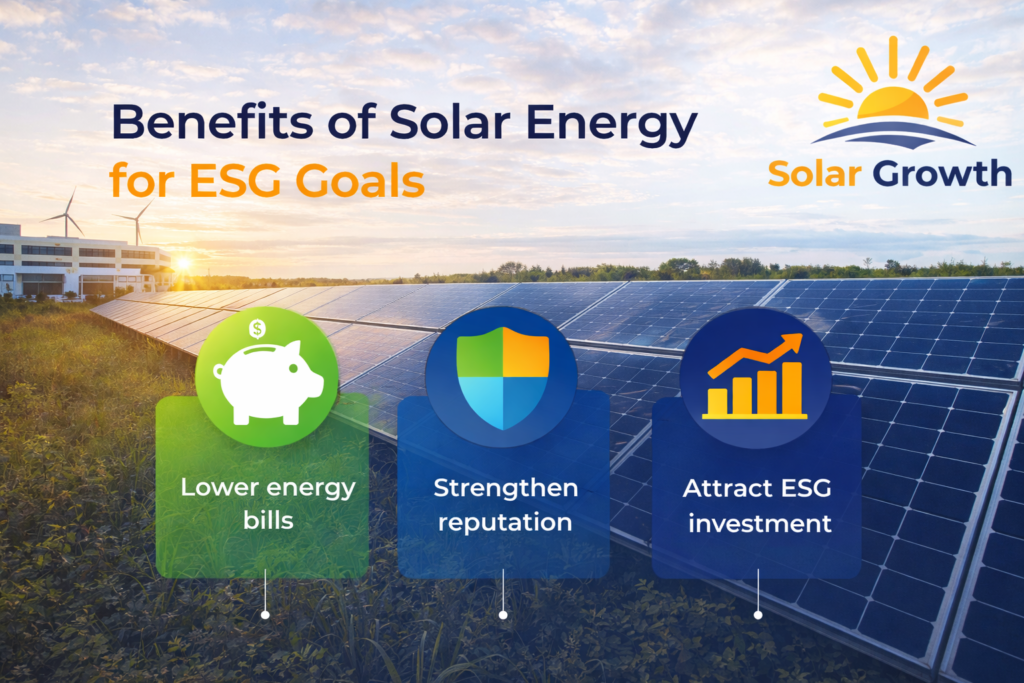
Lower operational costs, combined with improved ESG ratings, make solar a strategic investment. Many investors now consider ESG performance when deciding where to allocate capital, meaning companies with strong sustainability initiatives often gain better access to funding.
The Future of ESG and Solar
As climate policies tighten and stakeholder expectations grow, renewable energy adoption will become increasingly important for corporate sustainability strategies. Solar technology continues to improve in efficiency and affordability, making it accessible for businesses across industries.
Organizations that invest in solar today not only reduce their environmental impact but also strengthen their ESG credentials, enhance brand reputation, and build long term resilience.
Conclusion
Solar energy has emerged as one of the most effective tools for companies striving to meet ESG goals. By reducing carbon emissions, supporting communities, and improving governance transparency, solar power helps businesses align profitability with sustainability.In an era where responsible business practices are essential for long term success, adopting solar energy is no longer just an environmental decision. It is a strategic step toward building a sustainable and future ready organization.
FAQ
1. What does ESG mean in business?
ESG stands for Environmental, Social, and Governance. It is a framework used to evaluate how responsibly a company operates in terms of environmental impact, social responsibility, and ethical governance.
2. How does solar energy improve ESG performance?
Solar energy reduces greenhouse gas emissions, improves sustainability reporting, lowers operational costs, and demonstrates a company’s commitment to clean energy and environmental responsibility.
3. Can solar energy help companies achieve net zero goals?
Yes. Solar power significantly reduces carbon emissions from electricity consumption, making it a key strategy for organizations working toward net zero targets.
4. Do investors consider solar adoption in ESG ratings?
Yes. Investors increasingly assess ESG performance when making investment decisions. Companies using renewable energy often receive stronger sustainability ratings.
5. Is solar energy financially beneficial for companies?
In addition to ESG benefits, solar energy can reduce electricity bills, protect businesses from rising energy prices, and provide long term operational savings.