Introduction
Electricity reliability and cost management are major concerns for industrial businesses in India. Manufacturing plants, warehouses, and large commercial facilities depend heavily on uninterrupted power supply to maintain production efficiency.
Solar power has already become a popular solution for industries looking to reduce electricity costs. However, solar generation depends on sunlight and does not produce energy at night.
This is where battery energy storage systems (BESS) become valuable.
Combining solar power with battery storage allows industries to store excess solar energy and use it when needed, improving energy reliability, reducing peak electricity costs, and optimizing power consumption.
This guide explains how solar plus battery storage systems work for industries in India, including technology, cost considerations, benefits, and best practices.
What Is Solar + Battery Storage?
Solar + battery storage refers to a system where solar panels generate electricity and batteries store excess energy for later use.
Key Components
- Solar photovoltaic (PV) panels
- Inverters
- Battery energy storage systems (BESS)
- Energy management system (EMS)
- Monitoring and control systems
The system allows businesses to store unused solar energy during the day and use it during peak demand periods or power outages.
Why Industries Are Adopting Solar + Storage
Industries adopt solar battery systems for several strategic reasons.
1. Energy Cost Reduction
Solar power reduces grid electricity consumption.
Battery storage allows industries to use stored solar energy during peak tariff periods.
2. Backup Power During Outages
Industrial operations often require uninterrupted power.
Battery storage can provide backup electricity during grid failures.
3. Peak Demand Management
Many industrial tariffs include demand charges based on peak electricity usage.
Battery systems help reduce peak demand by supplying stored power.
4. Energy Independence
Solar plus storage reduces dependence on unreliable grid electricity.
How Solar + Battery Systems Work
Solar panels generate electricity during daylight hours.
When energy production exceeds immediate consumption, excess electricity charges the batteries.
Basic Energy Flow
- Solar panels generate electricity
- Energy powers industrial loads
- Excess power charges batteries
- Stored energy is used during peak demand or nighttime
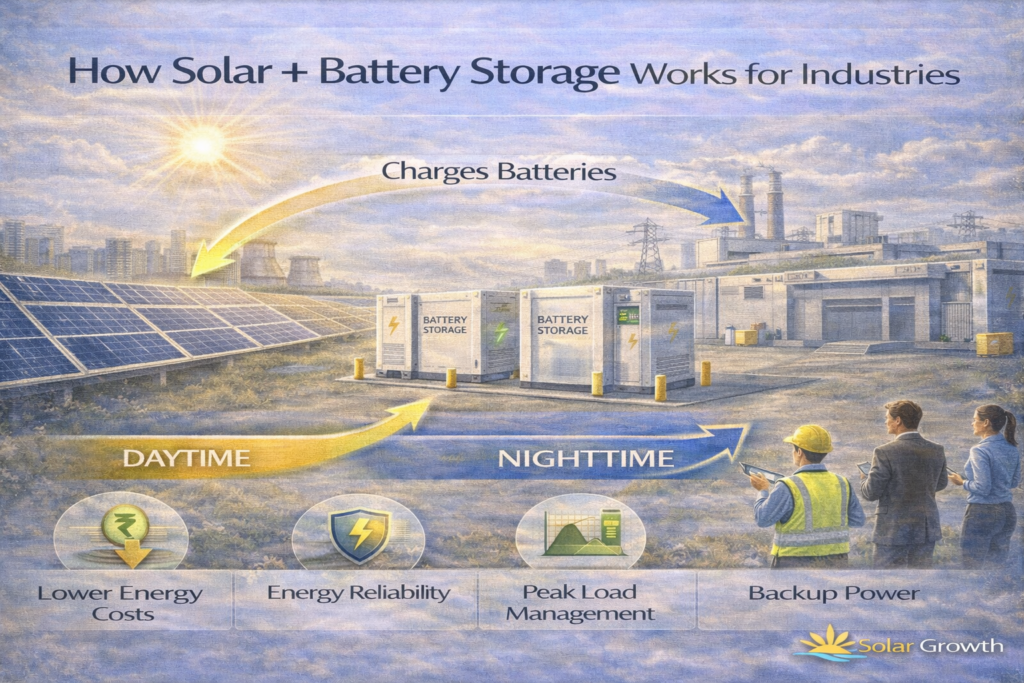
Energy management systems automatically control charging and discharging.
Solar + Battery System Cost in India
Battery storage significantly increases project cost compared to solar-only installations.
Typical Cost Components
| Component | Estimated Cost |
| Solar PV system | ₹35,000 – ₹45,000 per kW |
| Battery storage | ₹15,000 – ₹30,000 per kWh |
| Energy management system | Project specific |
Battery technology, system size, and integration complexity affect overall costs.
Example: Solar + Battery System for a Factory
A manufacturing facility installs:
- 500 kW solar system
- 1 MWh battery storage
Solar Generation
Approx. 700,000 units annually.
Key Benefits
- Reduced grid consumption
- Backup power during outages
- Reduced peak demand charges
Although battery systems increase initial investment, they provide operational resilience and energy management benefits.
Types of Battery Technologies Used
Several battery technologies are used in industrial energy storage.
Lithium-Ion Batteries
Most widely used technology.
Advantages:
- High energy density
- Long lifecycle
- Fast charging capability
Lead-Acid Batteries
Traditional battery technology.
Advantages:
- Lower upfront cost
- Simple technology
However, they have a shorter lifespan compared to lithium batteries.
Flow Batteries
Emerging technology used for large-scale storage.
Advantages:
- Long lifespan
- Large storage capacity
Benefits of Solar + Battery Storage for Industries
Industrial solar storage systems provide multiple advantages.
Cost Optimization
Stored energy can be used during high-tariff periods.
Grid Reliability
Battery storage ensures stable power supply.
Renewable Energy Integration
Battery systems increase solar energy utilization.
Energy Resilience
Businesses can operate during grid outages.
Industrial Applications of Solar Battery Storage
Battery storage is particularly useful for industries with high energy consumption.
Common applications include:
- Manufacturing plants
- Cold storage facilities
- Data centers
- Textile factories
- Food processing plants
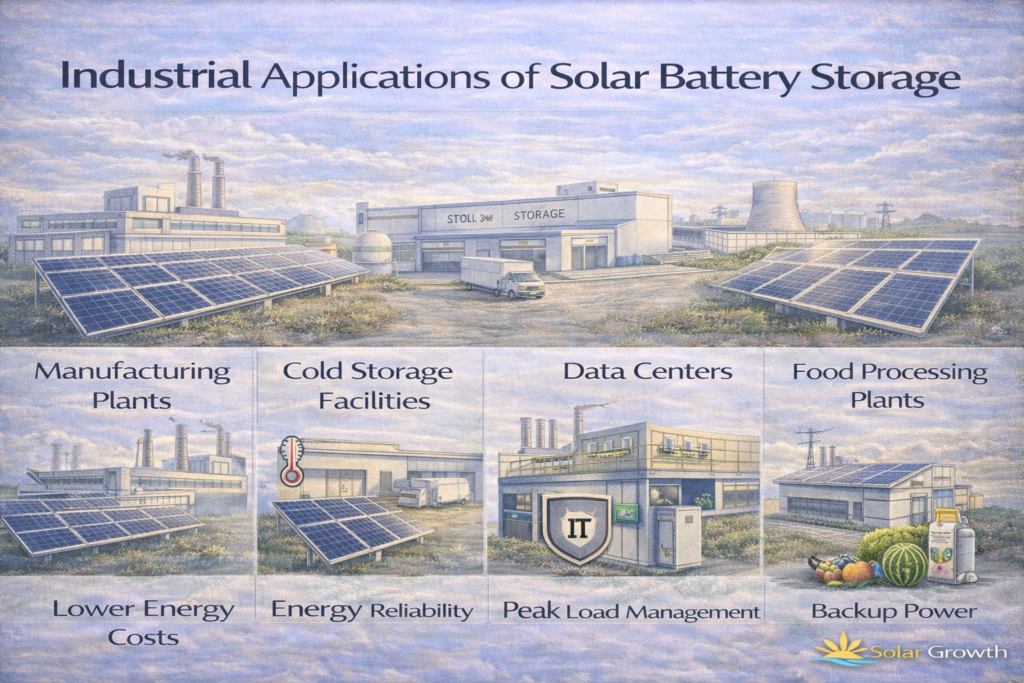
These industries require stable and predictable energy supply.
Challenges of Solar Battery Storage Systems
Despite the advantages, solar battery systems also present challenges.
High Initial Investment
Battery systems add significant capital cost.
Battery Replacement
Most batteries require replacement after 8–12 years.
Technology Complexity
Energy management systems require proper design and monitoring.
Regulatory Uncertainty
Energy storage policies are still evolving in many regions.
Best Practices for Industrial Solar Storage Projects
Industries planning solar storage systems should follow key best practices.
Conduct Detailed Energy Analysis
Understand load patterns and peak demand.
Evaluate Financial Returns
Analyze cost savings from demand charge reduction.
Select Reliable Battery Technology
Choose proven battery systems with strong warranty support.
Work With Experienced EPC Contractors
Solar storage projects require specialized design expertise.
Industry Trends in Solar + Storage
Battery storage adoption is growing rapidly worldwide.
Key drivers include:
- Falling battery prices
- Increasing renewable energy adoption
- Grid reliability challenges
- Corporate sustainability goals
Large industrial consumers increasingly combine solar and storage to improve energy resilience.
Conclusion
Solar power combined with battery storage is becoming a powerful energy solution for industrial businesses in India.
While solar panels reduce electricity costs, battery systems provide energy storage, backup power, and peak demand management.
Although battery storage increases upfront project costs, it improves energy reliability and operational flexibility.
Industries that carefully evaluate system design, battery technology, and financial returns can successfully integrate solar plus storage into their long-term energy strategy.
FAQs
1. Why do industries combine solar power with battery storage?
Battery storage allows industries to store excess solar energy and use it during peak demand or power outages.
2. Is solar battery storage expensive?
Battery systems increase initial project cost, but they improve energy reliability and peak demand management.
3. How long do industrial batteries last?
Most lithium-ion batteries used in solar storage systems last between 8 and 15 years depending on usage.
4. Can solar batteries power factories during outages?
Yes, battery storage can provide backup power for critical loads during grid failures.
Written by Rohith Bingi
Solar Industry Analyst at Solar Growth, covering India’s solar value chain, policy landscape, and business growth trends