Introduction
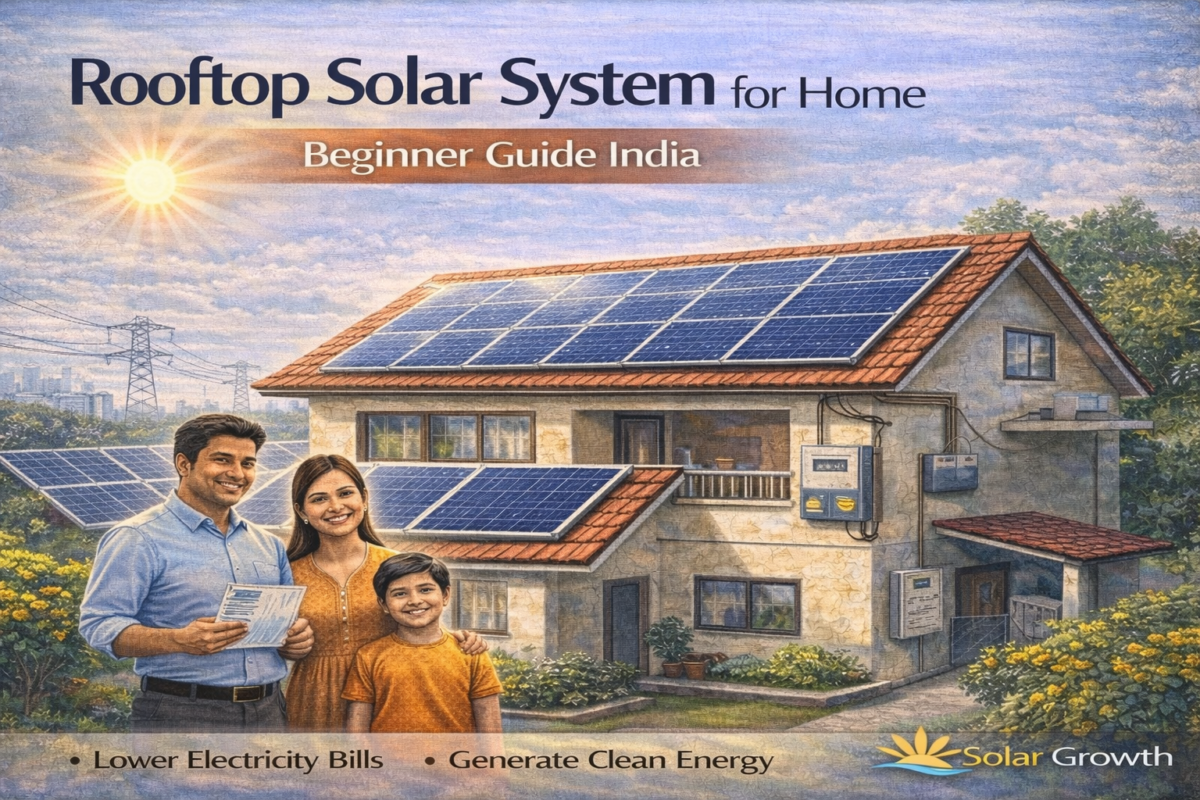
Electricity costs in India have been rising steadily, and many homeowners are looking for ways to reduce their monthly power bills. At the same time, environmental awareness is increasing, and households are exploring renewable energy options.
One of the most practical solutions is installing a rooftop solar system for home use.
Residential solar systems allow homeowners to generate electricity using sunlight and reduce dependence on grid power. With government incentives, falling solar panel prices, and improved technology, rooftop solar has become more accessible than ever.
This beginner guide explains how rooftop solar systems work for homes in India, including installation process, costs, subsidies, and key factors homeowners should consider.
One of the most practical solutions is installing a rooftop solar system for home use.
What Is a Rooftop Solar System?
A rooftop solar system is a solar power setup installed on the roof of a house that generates electricity using sunlight.
Solar panels convert sunlight into electricity, which can be used to power household appliances.
Key Components of a Home Solar System
A typical residential solar system includes:
- Solar panels (photovoltaic modules)
- Solar inverter
- Mounting structures
- Electrical wiring
- Net Meter or battery system
Together, these components convert solar energy into usable electricity for homes.
How Rooftop Solar Works
Solar panels installed on the roof absorb sunlight and generate direct current (DC) electricity.
However, household appliances operate on alternating current (AC). Therefore, a solar inverter converts DC electricity into AC electricity. To understand how different system types affect your electricity usage and backup, it’s important to compare On-Grid vs Off-Grid vs Hybrid Solar
Basic Solar Energy Flow
- Solar panels generate electricity from sunlight
- Inverter converts DC electricity to AC
- Electricity powers household appliances
- Excess electricity can be sent to the grid or stored in batteries
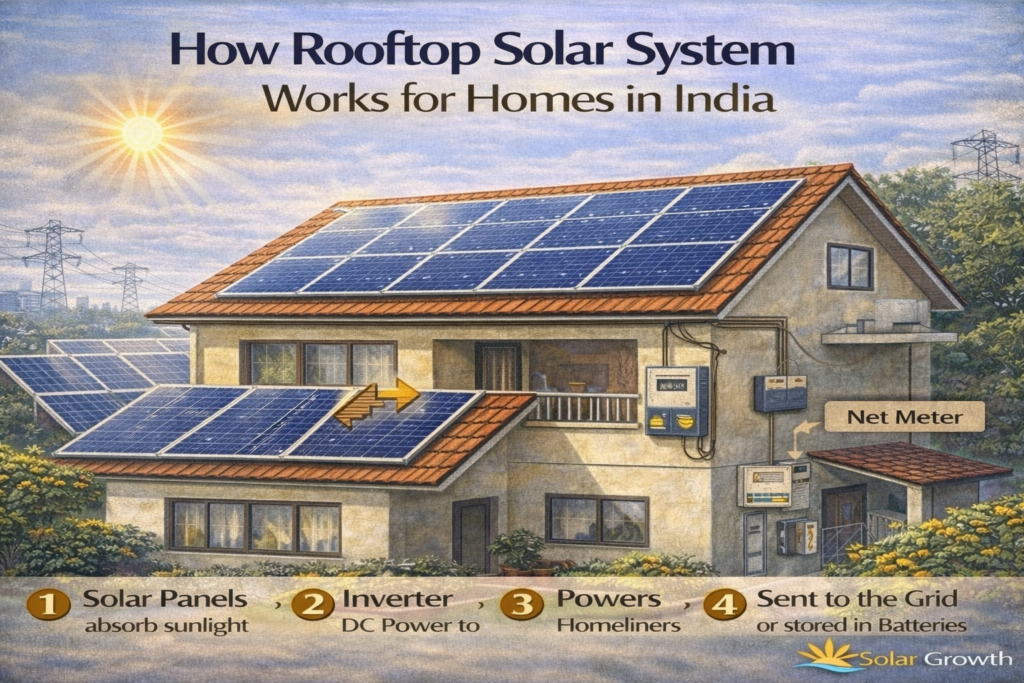
In grid-connected systems, excess power can reduce electricity bills through net metering.
Types of Rooftop Solar Systems for Homes
There are three main types of residential solar systems in India.
1. On-Grid Solar System
The most common residential solar setup.
Features
- Connected to the electricity grid
- Excess electricity exported through net metering
- No battery storage required
Advantages:
- Lower installation cost
- Higher efficiency
- Faster payback period
2. Off-Grid Solar System
Off-grid systems operate independently of the electricity grid.
Features
- Includes battery storage
- Suitable for remote areas without grid access
However, off-grid systems are more expensive because of battery costs.
3. Hybrid Solar System
Hybrid systems combine grid connection with battery storage.
Advantages include:
- Backup power during outages
- Ability to store solar electricity
Hybrid systems provide energy security but cost more than standard grid-connected systems.
Rooftop Solar System Cost in India
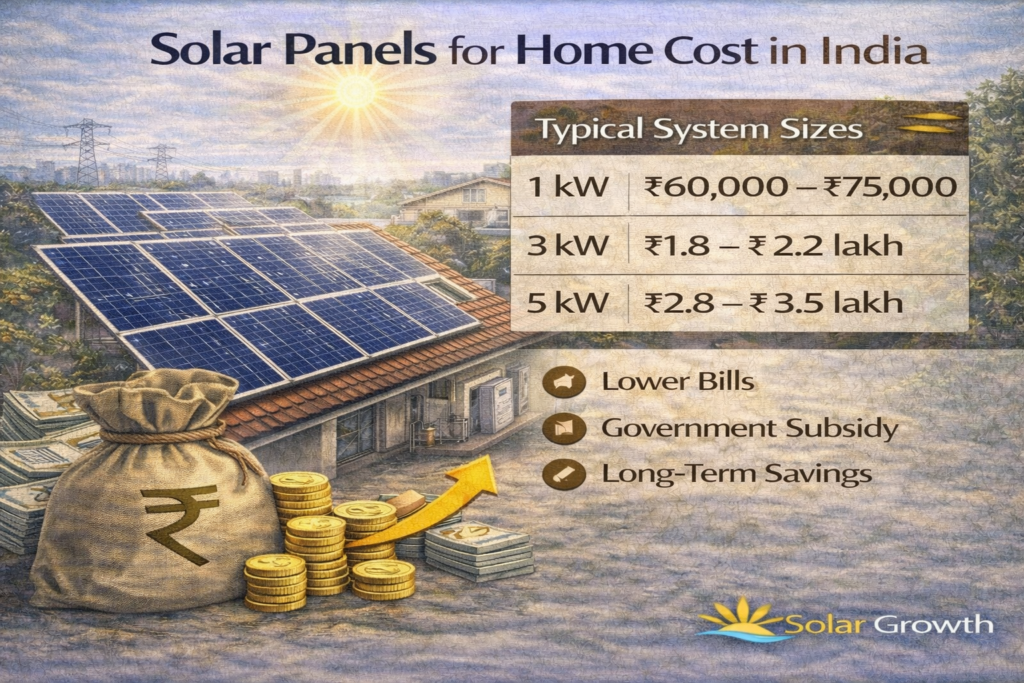
The cost of residential solar systems depends on system size, equipment quality, and installation complexity.
Typical Solar Installation Cost
| System Size | Approx Cost |
| 1 kW | ₹60,000 – ₹75,000 |
| 3 kW | ₹1.8 – ₹2.2 lakh |
| 5 kW | ₹2.8 – ₹3.5 lakh |
Costs vary depending on location, inverter type, and mounting structure.
Government Subsidy for Residential Solar
The Government of India promotes rooftop solar through subsidy programs.
Residential users can receive subsidies under schemes such as PM Surya Ghar Yojana.
Example Subsidy Structure
| System Size | Subsidy |
| Up to 2 kW | Up to 40% |
| 2–3 kW | Up to 20% |
Subsidy policies may vary depending on state and program updates.
Government subsidies can significantly reduce your initial investment, and the application process is now fully online for homeowners in India
How Much Electricity Can a Rooftop Solar System Generate?
Solar electricity generation depends on system size and sunlight availability.
Example
A 3 kW solar system can generate approximately:
- 12–15 units of electricity per day
- 4,500–5,000 units annually
This is sufficient to power many average Indian households.
Benefits of Installing Solar Panels at Home
Home solar systems offer several advantages.
Lower Electricity Bills
Solar power reduces dependence on grid electricity.
Environmentally Friendly Energy
Solar energy produces zero emissions.
Energy Independence
Homeowners become less dependent on electricity providers.
Long-Term Investment
Solar systems typically last 20–25 years.
While solar systems require minimal upkeep, regular cleaning and basic maintenance are important to maintain efficiency over the long term
Common Mistakes Homeowners Make
Many homeowners make avoidable mistakes when installing solar systems.
Common errors include:
- Choosing installers based only on lowest price
- Ignoring roof structure capacity
- Using low-quality solar equipment
- Not understanding net metering policies
Proper planning helps avoid these issues.
Best Practices Before Installing Rooftop Solar
Homeowners should take several steps before installing solar panels.
Conduct a Roof Assessment
Ensure the roof can support solar panels.
Choose Certified Installers
Work with experienced solar EPC contractors.
Compare Multiple Quotes
Evaluate pricing, equipment quality, and warranties.
Understand Local Regulations
Check net metering rules and subsidy eligibility.
Example: Rooftop Solar Installation Case
A homeowner in Pune installed a 5 kW rooftop solar system.
Results
- Monthly electricity bill reduced by nearly 70%
- System payback achieved in about 5 years
- Significant long-term savings over 20 years
This demonstrates how solar can be a strong financial investment.
Future of Residential Solar in India
Residential solar adoption is expected to grow rapidly in India.
Factors driving growth include:
- Government incentives
- Rising electricity prices
- Improved solar technologies
- Growing environmental awareness
Many experts believe rooftop solar will become a common feature of Indian homes in the coming decade.
Conclusion
Rooftop solar systems provide homeowners in India with a practical way to reduce electricity bills and adopt clean energy.
With government subsidies, improving solar technology, and long-term financial benefits, residential solar installations are becoming increasingly popular.
Homeowners who carefully evaluate system size, equipment quality, installation partners, and subsidy programs can achieve significant energy savings and contribute to a more sustainable future.
If you’re planning to install a rooftop solar system for your home, understanding system types, net metering, and government subsidies is essential.
Apply for Solar Subsidy with Expert Support
Applying for rooftop solar subsidy can be confusing if you’re doing it for the first time. Choosing the right system, vendor, and documentation process is critical to avoid delays.
Sign up with us now to get expert assistance in solar installation and subsidy application. Free Registration – Solar Growth
FAQs
1. How much does a rooftop solar system cost in India?
A residential solar system typically costs between ₹60,000 and ₹75,000 per kW depending on equipment quality and installation complexity.
2. How long do solar panels last?
Most solar panels have a lifespan of 20–25 years.
3. Can rooftop solar eliminate electricity bills?
In many cases, rooftop solar can significantly reduce electricity bills, especially with net metering.
4. Do solar panels work during cloudy weather?
Yes, solar panels still generate electricity during cloudy conditions, although output may be lower.
Written by Rohith Bingi
Solar Industry Analyst at Solar Growth, covering India’s solar value chain, policy landscape, and business growth trends