Rooftop solar is becoming one of the most practical energy solutions for Indian households. With rising electricity tariffs and increasing awareness about renewable energy, many homeowners are considering installing solar panels. Government initiatives and subsidies have made solar installations more affordable than ever before.
In 2026, the cost of installing a home solar system in India depends on factors such as system size, panel type, installation complexity, and government incentives. Understanding these costs can help homeowners make a well informed decision.
Average Home Solar Cost in India (2026)
The cost of installing a residential rooftop solar system in India generally ranges between ₹60,000 and ₹90,000 per kW before subsidy depending on equipment quality and installation requirements.
This means the price varies according to the size of the system. Smaller systems have a lower upfront cost but generate less electricity, while larger systems require higher investment but offer greater savings over time.
Estimated Solar System Prices in 2026
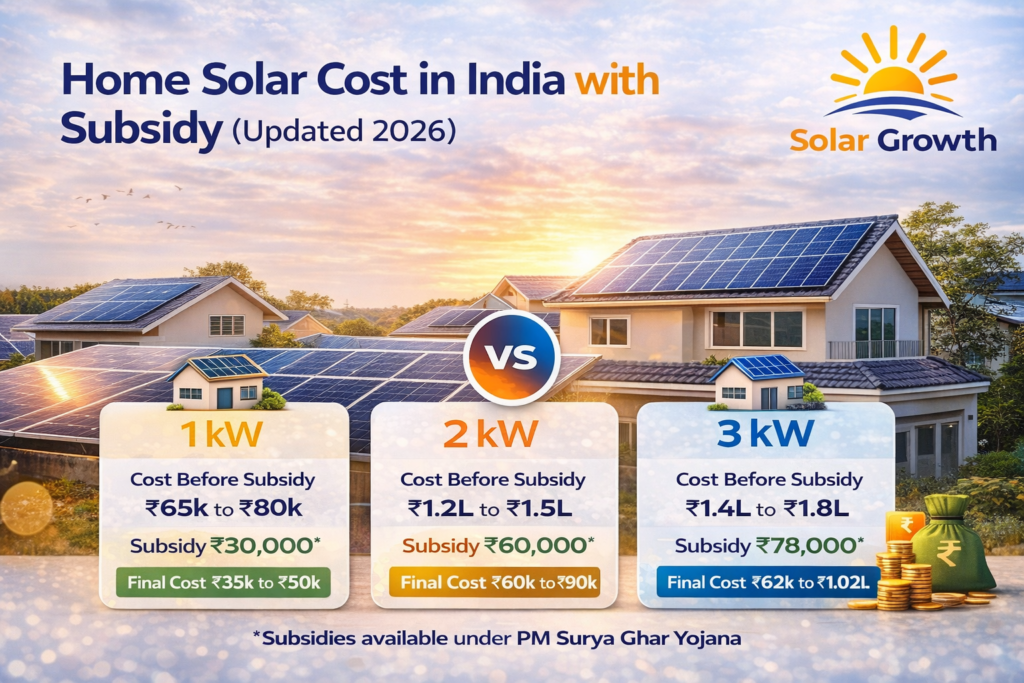
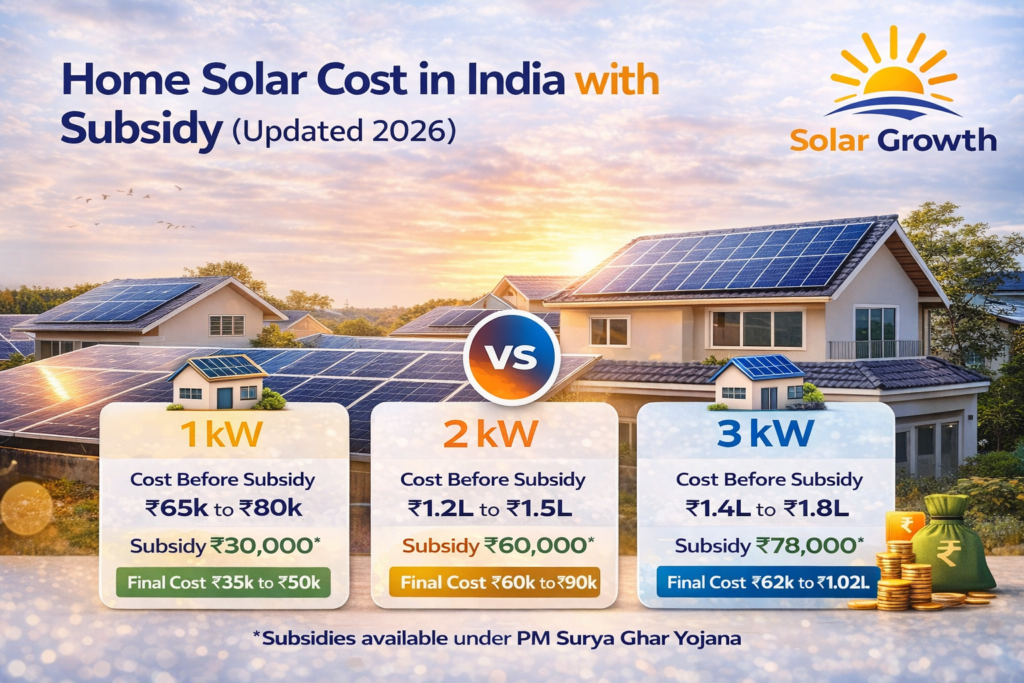
1 kW solar system
Cost before subsidy: ₹65,000 to ₹80,000
Subsidy: around ₹30,000
Final cost after subsidy: ₹35,000 to ₹50,000
Monthly generation: around 90 to 120 units
2 kW solar system
Cost before subsidy: ₹1.2 lakh to ₹1.5 lakh
Subsidy: around ₹60,000
Final cost after subsidy: ₹60,000 to ₹90,000
3 kW solar system
Cost before subsidy: ₹1.4 lakh to ₹1.8 lakh
Subsidy: up to ₹78,000
Final cost after subsidy: approximately ₹62,000 to ₹1.02 lakh.
Systems larger than 3 kW receive subsidy only up to the first 3 kW portion.
Government Solar Subsidy in 2026
The central government currently promotes residential rooftop solar through the PM Surya Ghar Muft Bijli Yojana, launched in 2024. The scheme aims to install solar panels in one crore homes across India by 2027.
Under this program, households can receive significant financial assistance.
Subsidy structure
Up to 2 kW: ₹30,000 per kW
2 to 3 kW: additional ₹18,000 per kW
Maximum subsidy: ₹78,000 for systems of 3 kW or more.
The subsidy amount is transferred directly to the homeowner’s bank account after installation and inspection through the national rooftop solar portal.
Monthly Savings with Rooftop Solar
A properly sized solar system can significantly reduce electricity bills.
For example:
A 1 kW system can save around ₹600 to ₹900 per month.
A 3 kW system can save about ₹1,800 to ₹2,700 monthly.
A 5 kW system may reduce electricity bills by ₹3,000 to ₹4,500 each month.
Since solar panels typically last 20 to 25 years, the long term savings are substantial.
Payback Period and Return on Investment
The payback period for rooftop solar systems has become shorter in recent years due to subsidies and falling equipment prices.
Payback with subsidy: around 3 to 5 years
Payback without subsidy: about 4 to 7 years
After the system recovers its initial cost, the electricity generated is essentially free for the remaining lifespan of the panels.
Factors That Affect Solar Installation Cost
Several factors influence the final price of a rooftop solar system in India.
1. Type of solar panels
Modern technologies such as Mono PERC or TOPCon panels offer higher efficiency but may cost more.
2. Inverter type
String inverters are generally more affordable, while microinverters or hybrid systems can increase overall cost.
3. Roof structure
Elevated mounting structures or complex rooftops may increase installation expenses.
4. Location and labor costs
Installation charges can vary depending on the city and accessibility of the rooftop.
Why Home Solar Is Growing in India
India’s renewable energy sector is expanding rapidly. The government continues to promote solar adoption through subsidies, policy support, and ambitious renewable targets. Many states are also introducing additional incentives and easier approval processes to accelerate rooftop solar installations.
As technology becomes more efficient and affordable, rooftop solar is expected to play a major role in reducing household electricity costs and supporting clean energy goals.
Conclusion
Installing a home solar system in India has become increasingly affordable in 2026 thanks to government subsidies and falling equipment prices. With installation costs starting from around ₹35,000 after subsidy for small systems, solar power is now accessible to many households.By investing in rooftop solar, homeowners can lower electricity bills, gain energy independence, and contribute to a cleaner environment.

FAQ
1. What is the cost of installing solar panels at home in India in 2026?
The average cost ranges from ₹60,000 to ₹90,000 per kW before subsidy, depending on equipment quality and installation conditions.
2. How much subsidy is available for rooftop solar in India?
Under the PM Surya Ghar scheme, homeowners can receive up to ₹78,000 subsidy for systems of 3 kW or larger.
3. How long does it take to recover the cost of a solar system?
Most residential solar systems recover their investment within 3 to 5 years when subsidy is included.
4. Do solar panels eliminate electricity bills completely?
In many cases, solar panels can reduce electricity bills by 70 to 95 percent, depending on system size and household energy usage.
5. How long do solar panels last?
Most rooftop solar panels have a lifespan of 20 to 25 years with minimal maintenance.