Rooftop solar systems are becoming increasingly popular among homeowners in India. With rising electricity prices and strong government support for renewable energy, many households are installing solar plants to generate their own power. One of the most common questions people ask before installing solar panels is simple. How much electricity can a home solar plant actually produce?
The answer depends on several factors such as system size, location, sunlight availability, panel efficiency, and maintenance. Understanding these elements can help homeowners estimate their potential energy generation and savings.
Average Electricity Production from Home Solar Systems
Solar systems are usually measured in kilowatts (kW), which indicates the system’s power capacity. The amount of electricity produced depends on the sunlight received during the day.
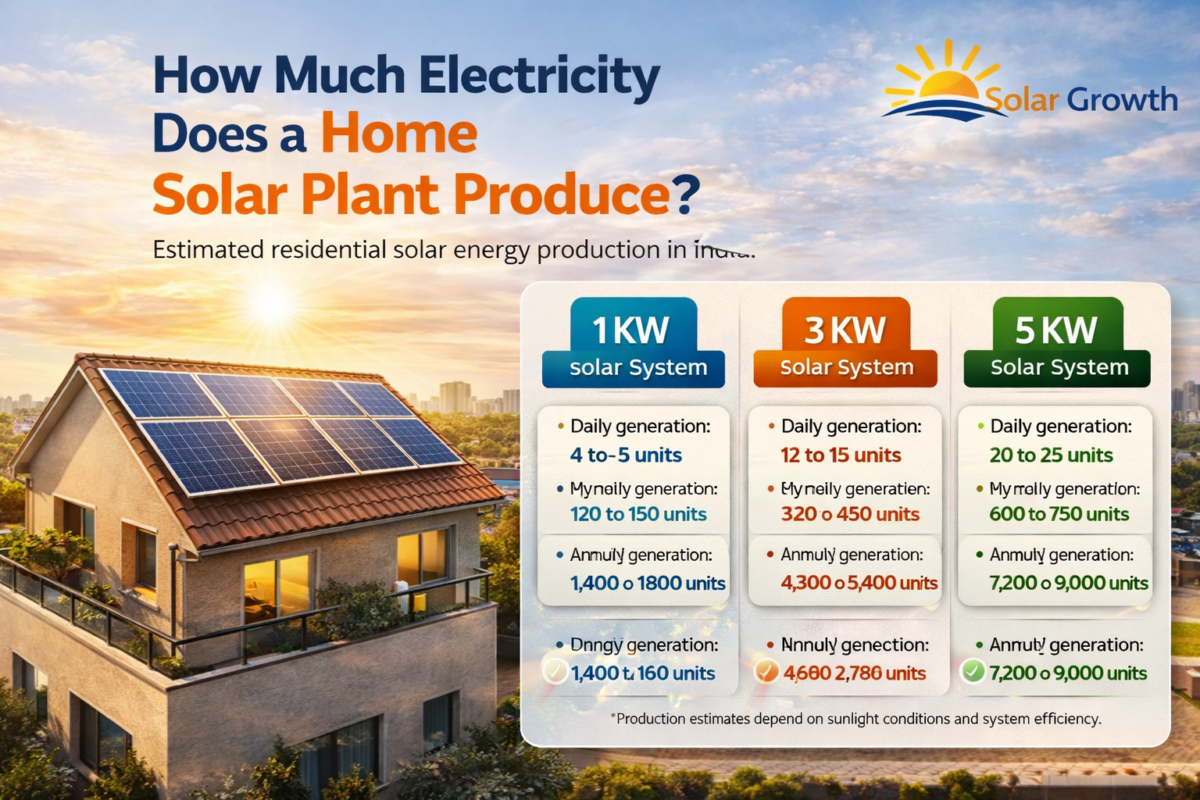
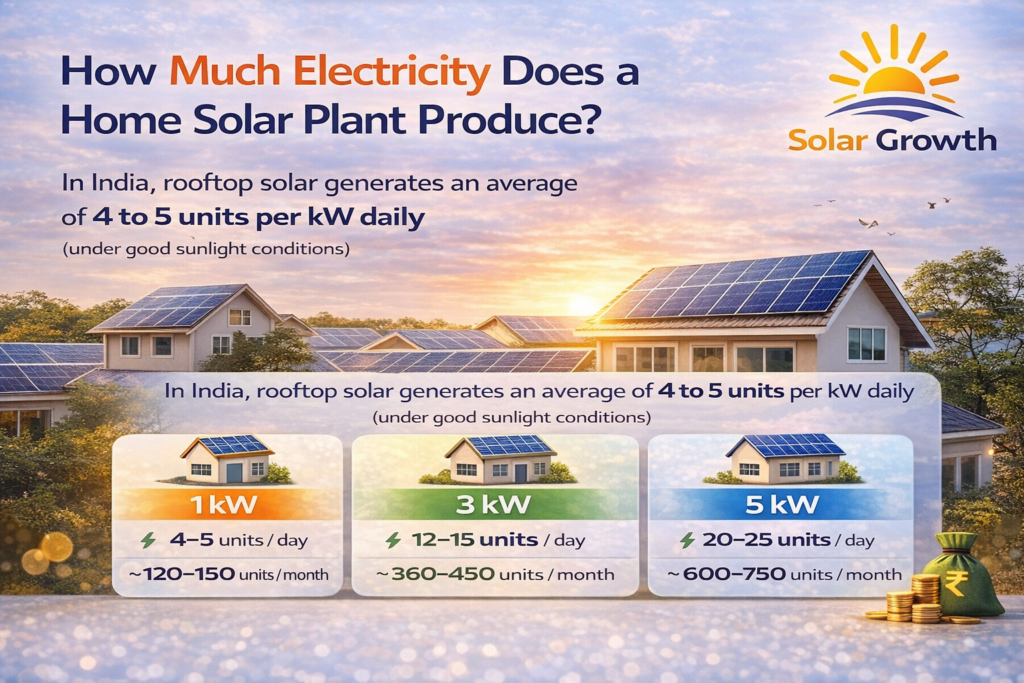
In India, on average, 1 kW of rooftop solar can generate around 4 to 5 units of electricity per day under good sunlight conditions. This means a small system can already cover a significant portion of household energy needs.
Here is a general estimate of electricity generation for common residential solar system sizes.
1 kW Solar System
Daily generation: 4 to 5 units
Monthly generation: 120 to 150 units
Annual generation: 1,400 to 1,800 units
3 kW Solar System
Daily generation: 12 to 15 units
Monthly generation: 360 to 450 units
Annual generation: 4,300 to 5,400 units
5 kW Solar System
Daily generation: 20 to 25 units
Monthly generation: 600 to 750 units
Annual generation: 7,200 to 9,000 units
These numbers may vary slightly depending on weather conditions and geographical location.
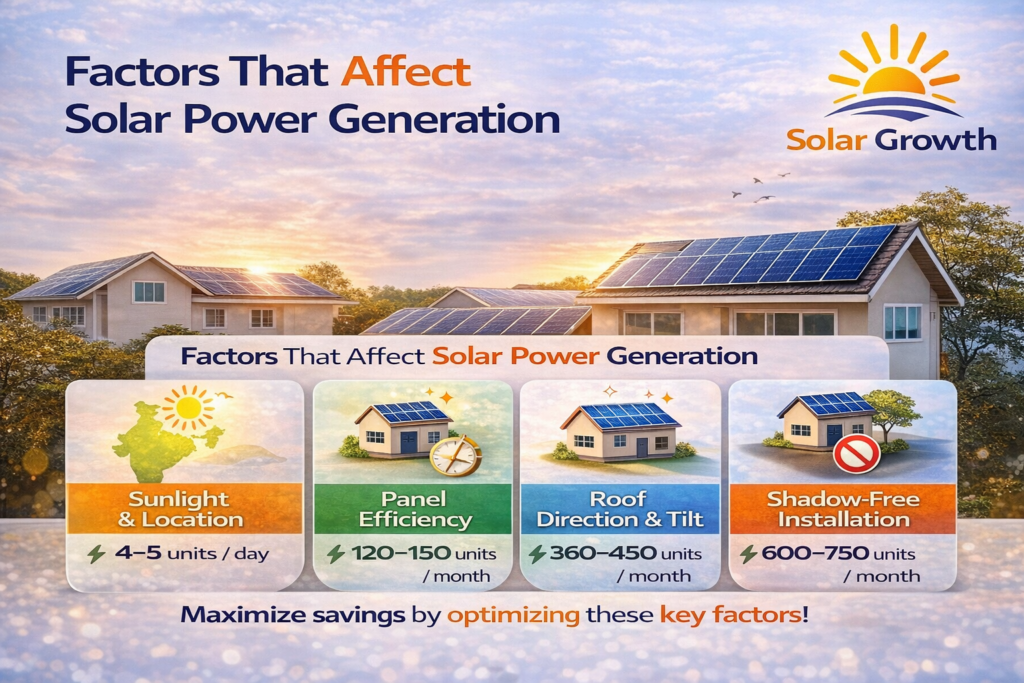
Factors That Affect Solar Power Generation
While system capacity provides a general estimate, actual electricity production depends on several important factors.
Sunlight and Location
India receives strong solar radiation in most regions, especially states such as Rajasthan, Gujarat, Maharashtra, and Tamil Nadu. Homes located in areas with longer sunny days will generate more electricity than areas with frequent cloud cover.
Panel Efficiency
Modern solar panels are far more efficient than earlier generations. Technologies such as Mono PERC and TOPCon solar panels can generate more electricity from the same rooftop area compared to older polycrystalline panels.
Roof Direction and Tilt
Solar panels perform best when installed facing south with the correct tilt angle. Proper orientation ensures that panels capture the maximum amount of sunlight throughout the day.
Shadow Free Installation
Trees, water tanks, or nearby buildings casting shadows can reduce energy production. A shadow free rooftop significantly improves system performance.
Maintenance and Cleaning
Dust accumulation can reduce solar panel efficiency. Cleaning panels every few weeks helps maintain optimal energy generation.
How Solar Power Matches Household Electricity Needs
The right solar plant size depends on your monthly electricity consumption.
For example:
Homes using 150 to 200 units per month may need around a 1.5 kW to 2 kW system.
Homes consuming 300 to 400 units per month usually require a 3 kW system.
Larger households using 600 units or more may benefit from a 5 kW or larger system.
By selecting the correct system size, homeowners can offset a large portion of their electricity bills.
Impact of Net Metering
Many Indian states support rooftop solar through net metering policies. This system allows homeowners to export excess electricity generated during the day to the power grid.
When the solar system produces more electricity than the home consumes, the surplus power is sent to the grid. During nighttime or cloudy days, electricity can be drawn back from the grid, helping balance overall energy consumption.
Net metering significantly improves the financial return of rooftop solar systems.
Long Term Performance of Solar Plants
Solar panels typically have a lifespan of 25 years or more. Although their efficiency gradually decreases over time, most panels still produce around 80 percent of their original capacity even after 20 to 25 years.
This long lifespan makes rooftop solar one of the most reliable and cost effective investments for homeowners.
Conclusion
A home solar plant can generate a substantial amount of electricity depending on its size and location. In India, even a modest rooftop solar system can produce enough energy to reduce electricity bills significantly.With strong sunlight availability, government incentives, and advancing solar technology, rooftop solar is becoming an increasingly attractive option for households seeking energy independence and long term savings.
FAQ
1. How many units of electricity does 1 kW solar produce in India?
A 1 kW solar system typically produces 4 to 5 units of electricity per day, which equals around 120 to 150 units per month.
2. How much electricity does a 3 kW solar system generate?
A 3 kW system can generate approximately 360 to 450 units per month depending on sunlight and system efficiency.
3. Can a 5 kW solar system power an entire house?
Yes. In many households a 5 kW system can cover most or all electricity needs, especially when combined with net metering.
4. Does solar power work during cloudy days?
Solar panels still produce electricity during cloudy weather, but the output is lower compared to sunny days.
5. How long do solar panels last?
Most solar panels last 20 to 25 years or longer, with only a small reduction in efficiency over time.