Best Direction and Angle for Solar Panels on RoofInstalling solar panels on a rooftop is one of the most effective ways for homeowners to reduce electricity costs and adopt clean energy. However, the performance of a solar system depends greatly on how the panels are positioned. The direction they face and the angle at which they are installed can significantly influence how much sunlight they receive throughout the day.
Understanding the best direction and tilt angle for solar panels helps maximize energy production and ensures homeowners get the best return on their investment.
Why Direction Matters for Solar Panels
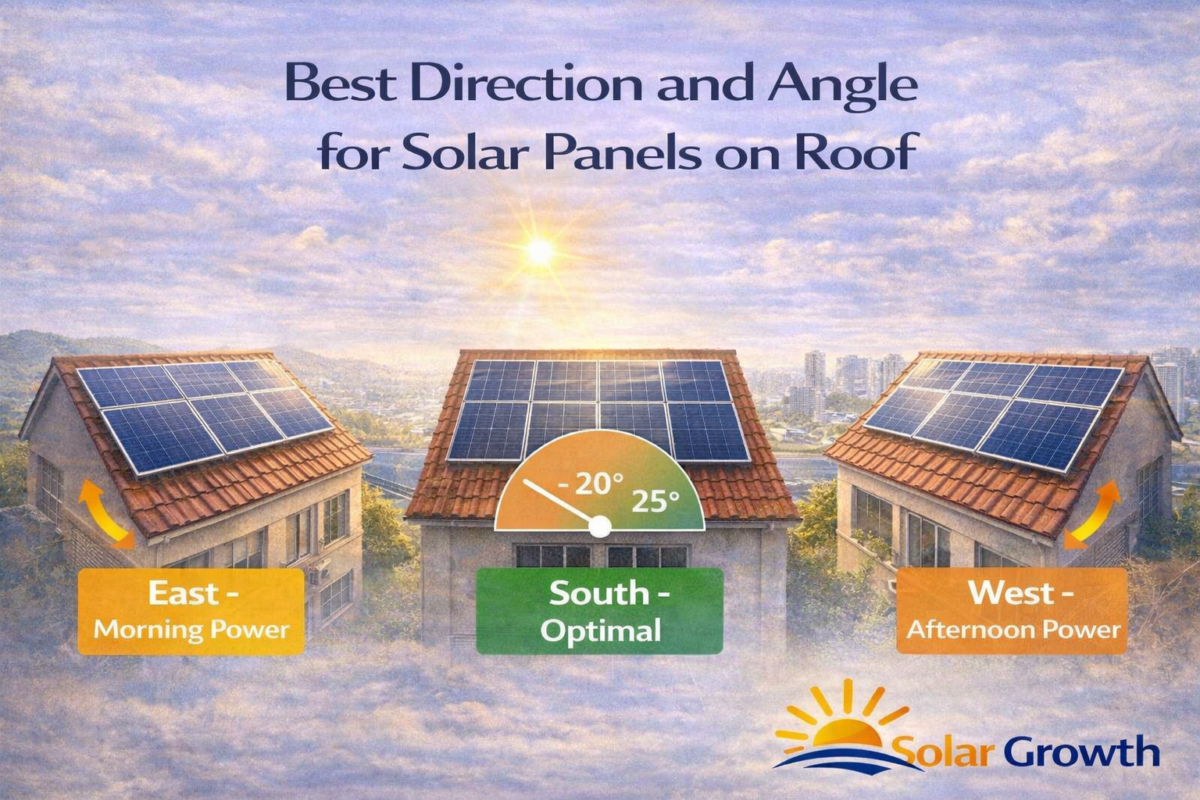
The direction that solar panels face is called the orientation. In countries located in the Northern Hemisphere, including India, the most efficient direction for rooftop solar panels is true south. This orientation allows panels to receive the maximum sunlight throughout the day because the sun travels across the southern part of the sky for most of the year. When panels face south, they capture sunlight from morning until evening, which results in higher electricity generation. Even a small change in direction can reduce efficiency if it limits the amount of sunlight reaching the panels.
However, not every roof faces south. Fortunately, solar systems can still work well on other orientations:
East facing panels generate more electricity in the morning.
West facing panels produce more power in the late afternoon and evening.
North facing roofs are generally less efficient in India because they receive the least direct sunlight.
Although south facing systems usually generate the highest total energy, east and west installations are still practical for many homes, especially when electricity usage peaks at specific times of the day.
Ideal Tilt Angle for Rooftop Solar Panels
The tilt angle refers to how steeply the panels are positioned relative to the ground. This angle is important because solar panels produce the most electricity when sunlight hits them as directly as possible.
A common rule used by installers is to set the tilt angle close to the latitude of the location. This approach balances solar production across different seasons and maximizes annual energy output.
In India, typical rooftop solar tilt angles are approximately:
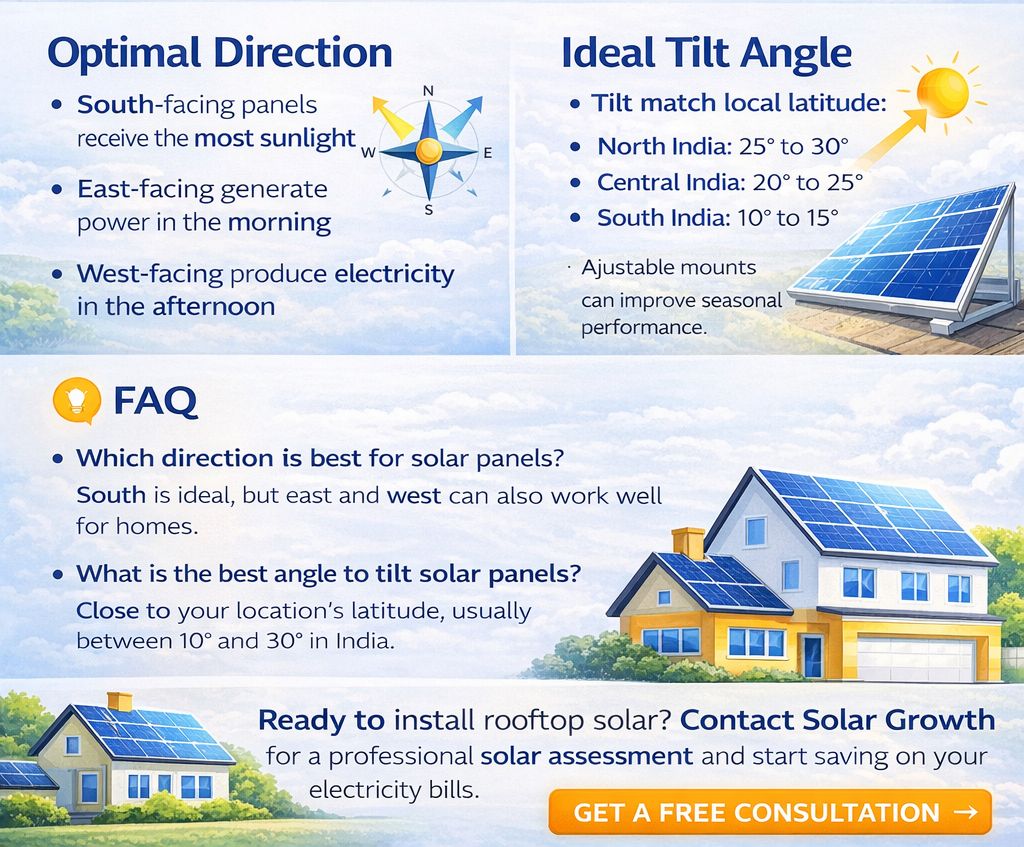
North India: 25° to 30°
Central India: 20° to 25°
South India: 10° to 15°
For example, cities like Delhi benefit from a tilt angle around 25 degrees, while cities such as Bengaluru perform best with angles closer to 11 to 15 degrees.
These angles help capture sunlight effectively throughout the year without needing complicated tracking systems.
Adjusting the Angle for Seasonal Performance
Some solar installations use adjustable mounting structures that allow the tilt angle to change during the year. While this is more common in large solar farms, it can also be used in residential systems.
Homeowners may choose to slightly adjust the tilt depending on their energy needs:
Flatter panels capture more sunlight during summer when the sun is higher.
Steeper panels perform better in winter when the sun sits lower in the sky.
However, most rooftop systems use a fixed tilt angle because it provides excellent yearly performance without extra maintenance.
Other Factors That Influence Solar Efficiency
Direction and angle are important, but they are not the only factors that affect solar performance. Several other considerations can influence how well a rooftop system works.
Shade: Trees, nearby buildings, and water tanks can block sunlight. Panels should ideally receive unobstructed sunlight between 9 AM and 3 PM.
Roof Type: Flat roofs allow flexible mounting structures that can adjust the tilt and orientation of panels. Sloped roofs may limit the available angles.
Ventilation: Panels perform better when there is airflow beneath them. Installers usually maintain a small gap between the roof and panels to prevent overheating.
Conclusion
Choosing the right direction and angle for solar panels can make a significant difference in energy production. For most homes in India, south facing panels with a tilt angle close to the local latitude provide the best overall performance.Even if a roof does not face the ideal direction, modern solar installation techniques allow systems to be designed for different roof layouts.
With proper planning and professional installation, homeowners can still enjoy strong energy generation and long term savings.Solar energy is becoming more accessible each year, and optimizing panel placement is one of the smartest steps toward maximizing its benefits.
FAQ
1. Which direction is best for solar panels in India?
The best direction is true south because it allows panels to receive the maximum sunlight throughout the day.
2. What is the ideal tilt angle for rooftop solar panels?
The ideal tilt angle is usually close to the latitude of your location, which typically ranges between 10° and 30° across India.
3. Can solar panels work on east or west facing roofs?
Yes. East facing panels generate more power in the morning, while west facing panels produce more electricity in the afternoon.
4. Do solar panels need seasonal angle adjustments?
Most residential systems use a fixed tilt angle that works efficiently year round, although adjustable mounts can improve seasonal performance.
5. What reduces solar panel efficiency on roofs?
Shade from trees or buildings, poor installation angles, and insufficient airflow beneath the panels can reduce efficiency.
Thinking about installing rooftop solar for your home?
The right panel direction and angle can significantly improve your system’s performance and savings.