
Introduction
Solar energy is one of the fastest-growing energy sources in India. Rising electricity costs, government incentives, and environmental concerns are driving adoption across homes and businesses.
But solar is not a perfect solution.
Many people jump into solar expecting instant savings, only to face issues like poor system design, delayed payback, or performance gaps.
Understanding both advantages and disadvantages of solar energy in India is critical before making a decision.
This guide gives a practical, real-world view not marketing promises.
What Is Solar Energy and How It Works
Solar energy is generated by converting sunlight into electricity using photovoltaic (PV) panels.
A typical system includes:
- Solar panels
- Inverter
- Mounting structure
- Electrical components
- Net meter (for grid-connected systems)
If you’re new to solar, it’s important to understand how a complete rooftop system works before evaluating benefits and limitations.
Key Advantages of Solar Energy in India
Solar offers strong financial and operational benefits when implemented correctly.
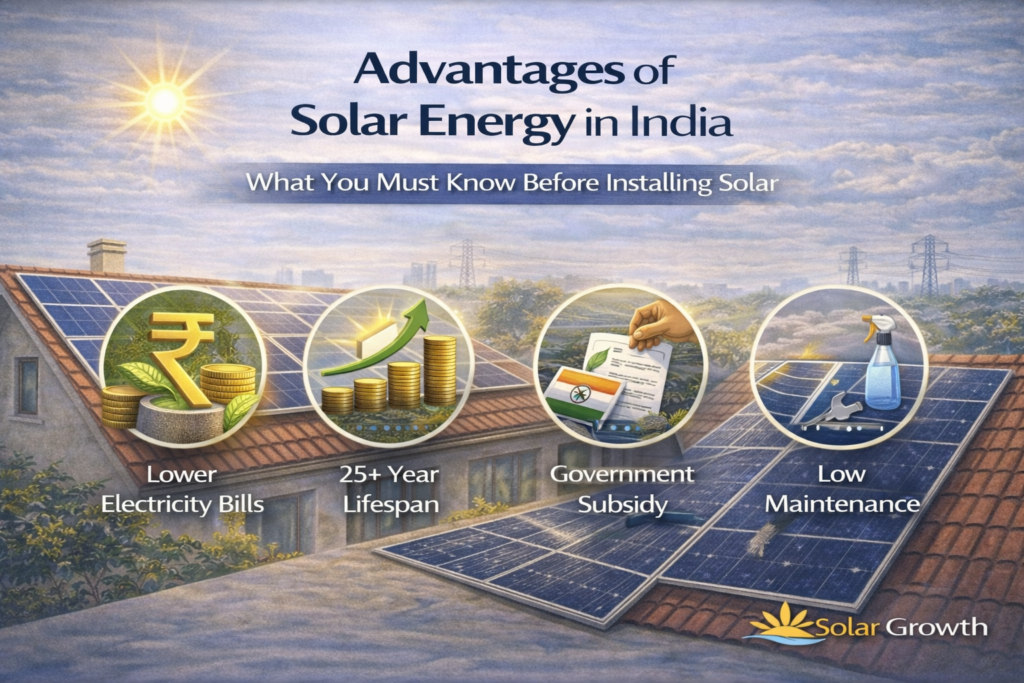
1. Significant Reduction in Electricity Bills
The biggest advantage is cost savings.
Example:
- A factory paying ₹8/unit installs solar
- Solar generation cost: ₹3–₹4/unit
Savings: 40–60%
For homeowners, solar can reduce electricity bills by 70–90%, depending on system size.
2. Long-Term Investment with Stable Returns
Solar systems typically last 25+ years.
Unlike diesel or grid electricity:
- No fuel cost
- Predictable energy cost
- Increasing ROI over time
Industry Benchmark
| Parameter | Typical Value |
| Payback period | 3–6 years |
| System life | 25+ years |
| ROI | 15–25% |
3. Government Subsidies and Incentives
India offers strong policy support.
For residential users:
- Subsidies under PM Surya Ghar scheme
- Net metering benefits
These significantly reduce upfront investment.
4. Low Maintenance Requirement
Solar systems require minimal maintenance:
- Cleaning every 1–3 months
- Basic inspection
No moving parts → low wear and tear.
5. Environment-Friendly Energy Source
Solar reduces:
- Carbon emissions
- Dependence on fossil fuels
For businesses, this also improves ESG compliance.
6. Energy Independence
Solar reduces reliance on grid electricity.
For industries:
- Protection against tariff hikes
- Better energy planning
For homes:
- Reduced dependence on DISCOM supply
Key Disadvantages of Solar Energy in India
Now the part most blogs hide.
1. High Initial Investment
Even after subsidy:
- Residential system: ₹1–3 lakhs
- Commercial systems: much higher
Many users underestimate upfront cost.
2. Performance Depends on Sunlight
Solar output varies due to:
- Weather
- Location
- Seasonal variation
Monsoon months reduce generation.
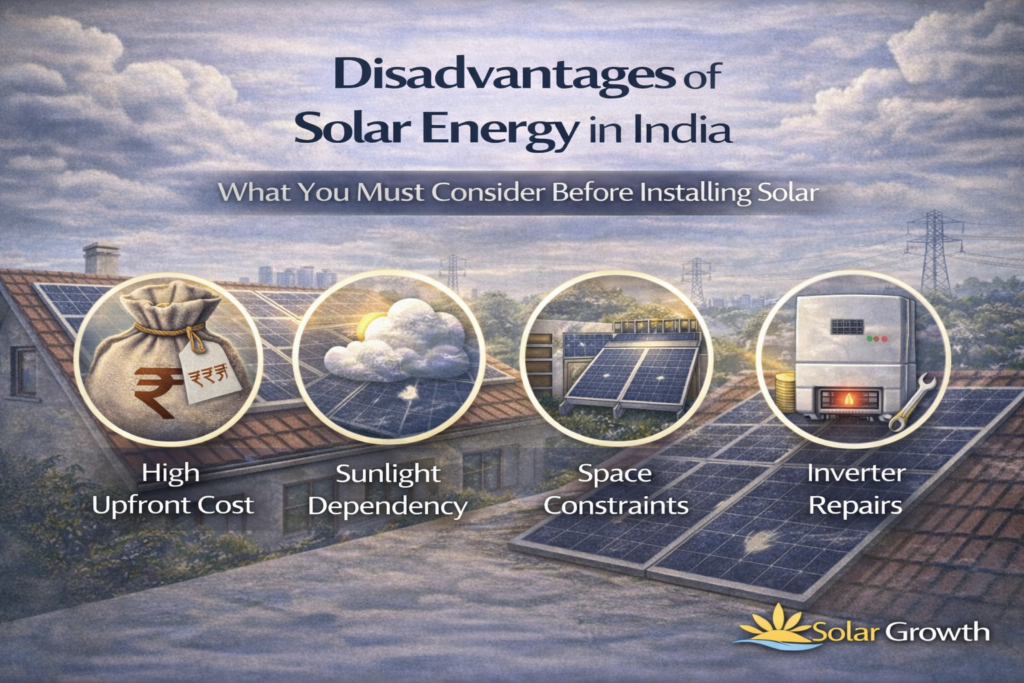
3. Space Requirement
Rooftop space is a major constraint.
Example:
- 1 kW requires ~100 sq.ft
- Small homes may not have enough space
4. Poor System Design Leads to Losses
This is a major real-world issue.
Common problems:
- Wrong system sizing
- Low-quality components
- Improper installation
Result: Lower savings, longer payback
5. Dependency on Net Metering Policies
For on-grid systems:
- Savings depend on net metering
- Policies vary by state
Policy changes can impact returns.
6. Inverter Replacement Cost
Solar panels last long, but:
- Inverters last ~8–12 years
Replacement cost adds to lifecycle expense
Solar Energy: Pros vs Cons Summary
| Advantages | Disadvantages |
| Lower electricity bills | High upfront cost |
| Long-term savings | Weather dependency |
| Government incentives | Space requirement |
| Low maintenance | Policy dependency |
| Clean energy | Design risks |
Real Scenario: Good vs Bad Solar Decision
Case 1 (Good Decision)
- Proper EPC selection
- Correct system sizing
- Quality components
Payback achieved in 4 years
Case 2 (Bad Decision)
- Lowest-price vendor
- Poor design
- Delayed execution
Payback extended to 8+ years
Common Mistakes People Make
- Choosing based only on lowest price
- Ignoring EPC quality
- Not understanding net metering
- Overestimating savings
- Skipping maintenance
Solar success depends more on execution than technology.
Best Practices Before Installing Solar
- Evaluate energy consumption properly
- Choose experienced EPC partner
- Use certified components
- Understand subsidy and policies
- Plan for long-term maintenance
Is Solar Energy Worth It in India?
Short answer: Yes but only if done correctly
Solar is worth it when:
- System is designed properly
- Financial planning is realistic
- Execution is disciplined
Otherwise, it becomes a slow ROI investment.
Conclusion
Solar energy offers strong advantages in India, including cost savings, long-term returns, and sustainability benefits.
However, it is not a zero-risk investment.
Understanding both advantages and disadvantages helps homeowners and businesses make informed decisions and avoid costly mistakes.
Solar is not just about installing panels it is about planning, execution, and long-term performance.
To fully understand how solar systems work in real-world conditions, you should go through this complete rooftop solar system guide in India.
CTA
Make the Right Solar Decision
Solar energy can deliver strong savings, but only when planned and executed correctly.
Sign up with us to get expert guidance on choosing the right solar solution for your home or business. Free Registration – Solar Growth
You may also find these guides useful:
- Rooftop Solar System for Home – Complete Beginner Guide
- Commercial Rooftop Solar Cost, ROI & Payback in India
- How to Choose Right Solar EPC Company for Your Business
FAQs
1. What are the main advantages of solar energy in India?
Solar reduces electricity bills, provides long-term savings, and is environmentally friendly.
2. What are the disadvantages of solar energy?
High upfront cost, dependency on sunlight, and poor system design risks.
3. Is solar energy worth it in India?
Yes, if the system is properly designed and installed with realistic financial expectations.
4. How long does a solar system last?
Solar panels typically last 25 years or more, with gradual efficiency decline.
Written by Rohith Bingi
Solar Industry Analyst at Solar Growth, covering India’s solar value chain, policy landscape, and business growth trends