Solar energy has moved far beyond being just an alternative source of power. It is now one of the most reliable, scalable, and financially rewarding energy solutions available today. With rising electricity costs and increasing environmental concerns, solar is no longer a future concept. It is a present-day necessity.
Despite its growing popularity, many homeowners still lack clarity about how solar truly works, how much it can save, and what makes it such a powerful investment. Understanding the facts behind solar energy can help you make smarter, long-term decisions for your home.
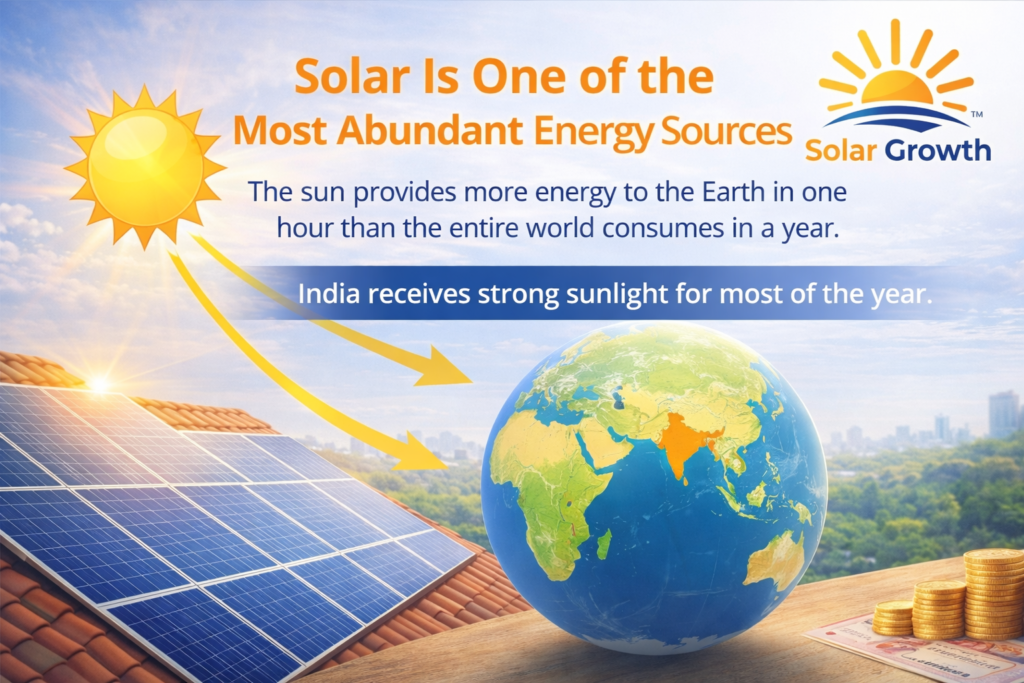
Solar Is One of the Most Abundant Energy Sources
The sun provides more energy to the Earth in one hour than the entire world consumes in a year. India, in particular, receives strong sunlight for most of the year, making it one of the most favorable regions for solar energy generation.
This abundance makes solar not only sustainable but also highly dependable for residential use.
Solar Panels Do Not Need Direct Heat to Work
A common misconception is that solar panels require extreme heat to generate electricity. In reality, solar panels work using sunlight, not temperature.
Even on cloudy days, panels continue to generate electricity using diffused sunlight. This makes solar systems effective across different weather conditions.
Solar Can Significantly Reduce Electricity Bills
A properly sized solar system can reduce electricity bills by 70 to 90 percent. In many cases, homeowners are able to offset most of their monthly consumption.
With mechanisms like net metering, excess electricity generated during the day can be exported to the grid and used later, further improving savings.
Solar Systems Require Minimal Maintenance
Solar panels are designed to be durable and long-lasting. Most systems require only occasional cleaning to remove dust and debris.
With proper installation, solar panels can function efficiently for 20 to 25 years or more, making them one of the lowest maintenance energy solutions.
Solar Is a Long-Term Investment, Not an Expense
Although there is an upfront cost, solar systems typically recover their investment within a few years through savings on electricity bills.
After the payback period, the electricity generated is essentially free for the remaining lifespan of the system. This makes solar one of the most financially attractive upgrades for homeowners.
Solar Technology Has Improved Significantly
Modern solar panels are far more efficient than earlier versions. Technologies such as Mono PERC and TOPCon allow homeowners to generate more electricity using less rooftop space.
Improved inverters and system designs also ensure better performance and reliability.
Solar Can Power Most Household Appliances
From basic lighting to heavy appliances, solar systems are capable of supporting everyday household needs.
- Lights and fans
- Refrigerators
- Washing machines
- Air conditioners (with the right system size)
- Water heaters
With proper planning, solar can handle both regular and high-consumption appliances effectively.
Solar Systems Are Scalable
One of the biggest advantages of solar is flexibility. You can start with a smaller system and expand it later as your electricity needs grow.
This makes solar suitable for both small homes and larger households.
Solar Supports Energy Independence
By generating your own electricity, you reduce dependence on the grid and protect yourself from rising electricity tariffs.
Over time, this creates a more stable and predictable energy cost for your home.
Solar Is Environmentally Responsible
Solar energy is clean and renewable. It does not produce harmful emissions or contribute to air pollution.
By switching to solar, homeowners actively reduce their carbon footprint and contribute to a more sustainable future.
Take a Smarter Step Toward Solar
If you are considering solar for your home, the best place to start is by understanding your electricity consumption and rooftop potential. A thoughtfully designed system can transform the way you use energy while delivering consistent savings over time.
Solar is not just about reducing bills. It is about making a long-term decision that benefits both your finances and the environment.
Explore what a solar setup could look like for your home and take the first step toward a more efficient and future-ready lifestyle.
Get solar leads, free registration
Frequently Asked Questions
1. Do solar panels work during cloudy days?
Yes, solar panels continue to generate electricity using diffused sunlight, although output may be slightly lower.
2. How long do solar panels last?
Most solar panels last between 20 to 25 years with minimal efficiency loss over time.
3. Can solar panels run all household appliances?
Yes, with the right system size, solar can power most appliances including air conditioners and water heaters.
4. Is solar expensive to maintain?
No, solar systems require very little maintenance, mainly occasional cleaning.
5. How much can solar reduce electricity bills?
Solar can reduce electricity bills by 70 to 90 percent depending on system size and usage.