Introduction
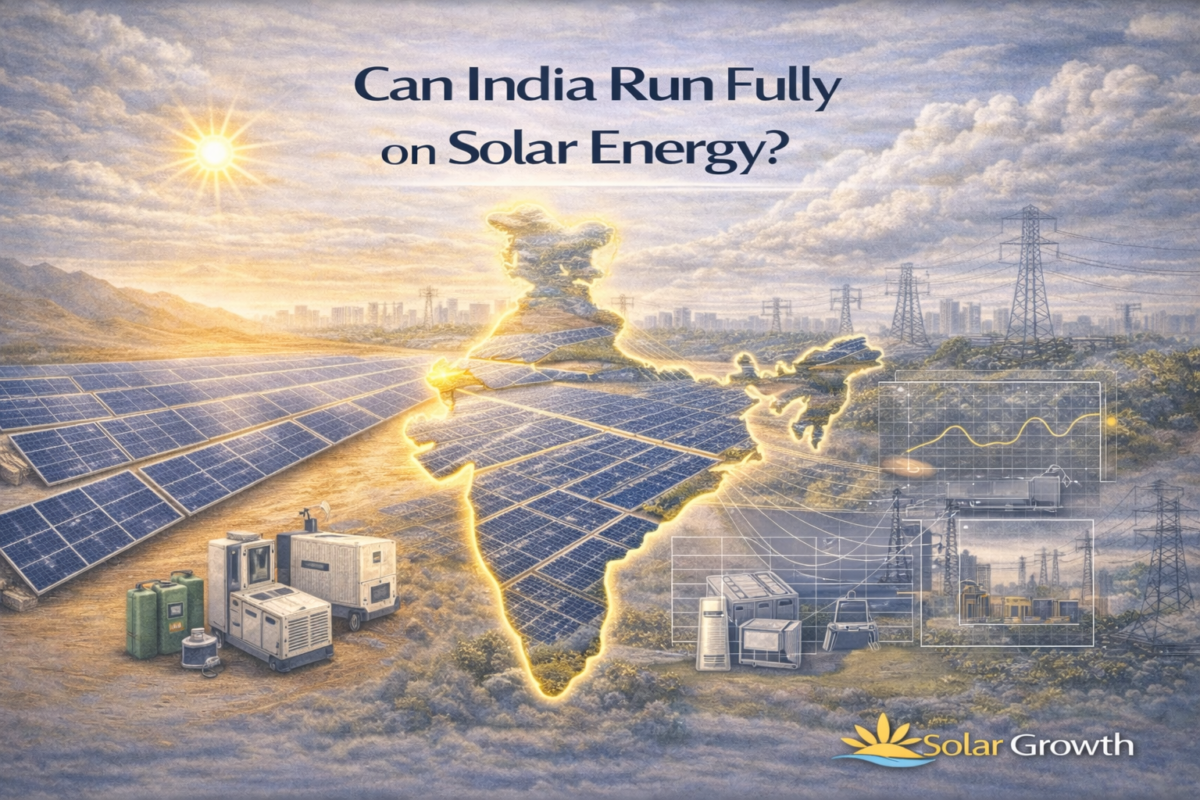
India is rapidly expanding its solar energy capacity. From large solar parks in Rajasthan to rooftop installations in cities, solar is becoming a major part of the country’s energy mix.
This raises a big question:
Can India run fully on solar energy?
The idea sounds attractive, clean, renewable, and abundant. But the reality is more complex.
This guide breaks down the practical feasibility, challenges, and future potential of solar energy in India without unrealistic assumptions.
While large-scale solar is complex, understanding rooftop systems is a good starting point read this rooftop solar system guide in India.
India’s Current Solar Energy Status
India is among the top solar energy producers globally.
Key Facts:
- Installed solar capacity: 70+ GW (approx.)
- Target: 500 GW renewable capacity by 2030
- Solar share is growing rapidly
Solar is already a key contributor, but it is still only a part of the total energy mix.
Why Solar Energy Looks Like the Perfect Solution
India has strong solar potential due to geography.
Advantages:
- 300+ sunny days per year
- Large land availability in some regions
- Falling solar panel costs
- Strong government push
On paper, solar seems capable of powering the entire country.
The Reality: Can Solar Alone Power India?
Short answer:
No not fully, at least not with current technology
Here’s why.
1. Solar Is Intermittent (Biggest Limitation)
Solar power depends on sunlight.
Problem:
- No generation at night
- Reduced output during monsoon
- Cloud cover affects production
Example:
A solar plant produces power during the day but zero at night, while demand continues 24/7.
2. Energy Storage Is Not Yet Scalable
To run fully on solar, India would need massive storage.
Current situation:
- Battery storage is expensive
- Large-scale storage infrastructure is limited
Reality check:
Storing energy for night-time and peak demand is one of the biggest barriers.
3. Land Requirement Is Massive
Solar requires significant space.
Estimate:
- 1 MW solar → ~4–5 acres
To power India entirely:
Requires huge land allocation, which is not practical everywhere.
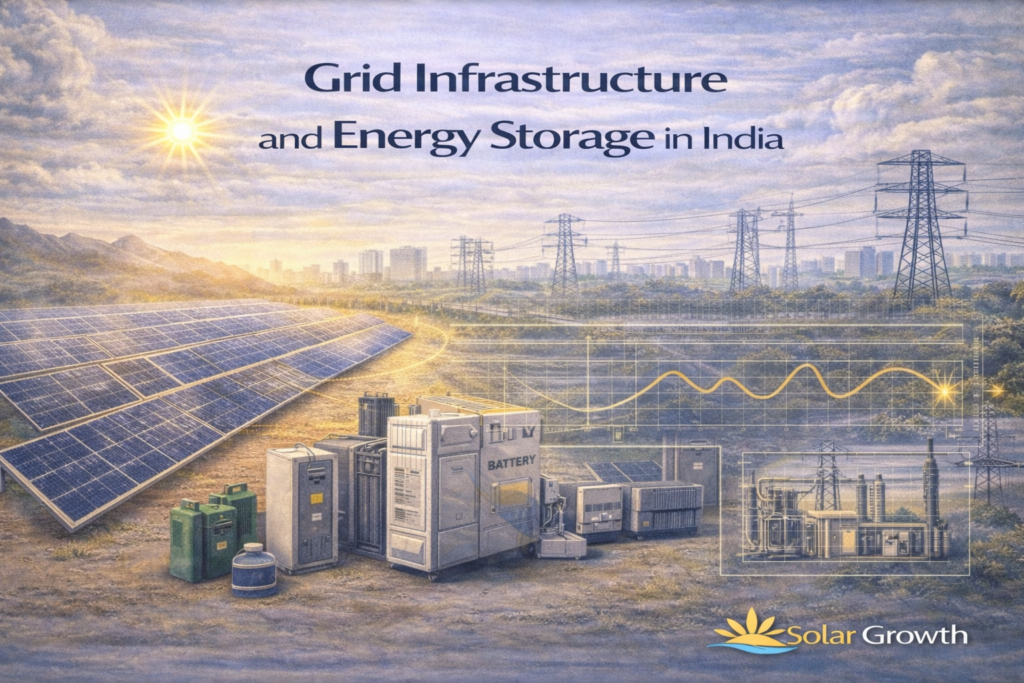
4. Grid Infrastructure Challenges
India’s grid is not fully optimized for:
- Distributed solar
- Variable power supply
Issues:
- Transmission losses
- Grid balancing challenges
- Integration of renewable sources
5. Seasonal Variations Affect Output
Solar generation varies across seasons.
Example:
- High generation in summer
- Lower output during monsoon
This creates mismatch between:
Energy supply vs demand
Solar vs Total Energy Demand (India)
| Factor | Solar Capability | Reality |
| Daytime supply | Strong | Works well |
| Night supply | Zero | Needs storage |
| Seasonal stability | Medium | Variable |
| Grid readiness | Growing | Limited |
What Is the Practical Future?
Instead of 100% solar, India is moving toward:
Hybrid energy mix
This includes:
- Solar
- Wind
- Hydro
- Thermal (backup)
- Battery storage
Realistic Model for India
Future Energy Mix
- Solar: Major contributor
- Wind: Complements solar
- Storage: Stabilizes supply
- Grid upgrades: Enable distribution
This is how reliable power systems work globally.
Real-World Example
A commercial facility in India:
- Uses solar during daytime
- Uses grid power at night
- Uses DG backup in emergencies
This hybrid approach is already common.
Role of Solar for Homes and Businesses
Even if India cannot run fully on solar:
Solar is still highly valuable
For homes:
- Reduces electricity bills
- Provides long-term savings
For businesses:
- Cuts operating costs
- Improves energy stability
Common Misconceptions
“Solar can replace all power immediately”
Reality: Needs storage + hybrid systems
“Solar works the same everywhere”
Reality: Location and weather matter
“Solar means zero dependency”
Reality: Grid + backup still needed
Best Practices for Solar Adoption
- Choose correct system size
- Understand energy consumption
- Combine solar with grid or storage
- Work with experienced EPC providers
Future of Solar Energy in India
India’s solar future is strong, but realistic.
Expected trends:
- Falling battery costs
- Better grid integration
- Growth in hybrid systems
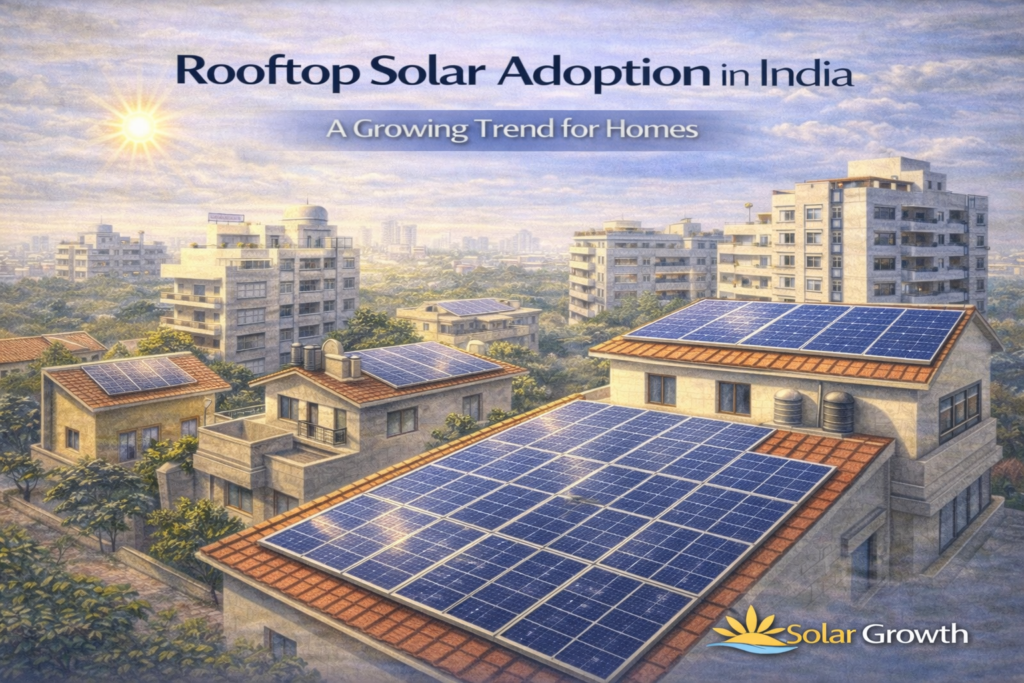
- Increased rooftop adoption
Solar will likely become:
Dominant but not exclusive energy source
Conclusion
India cannot run fully on solar energy today due to challenges like storage limitations, grid constraints, and variability.
However, solar will play a central role in India’s energy future.
The goal is not 100% solar
but a balanced, reliable energy system.
For individuals and businesses, solar remains one of the smartest investments for long-term savings and sustainability.
Plan Your Solar Strategy the Right Way
Solar energy offers strong long-term benefits, but it must be planned correctly based on your energy needs and usage patterns.
Sign up with us to get expert guidance on the right solar solution for your home or business Free Registration – Solar Growth .
You may also find these guides useful:
- Solar Energy Advantages & Disadvantages in India
- Commercial Rooftop Solar Cost, ROI & Payback in India
- How to Choose Right Solar EPC Company for Your Business
FAQs
1. Can India run entirely on solar energy?
No, due to storage limitations, grid challenges, and solar intermittency.
2. What is the future of solar energy in India?
Solar will be a major energy source, combined with wind, storage, and grid power.
3. Why can’t solar power supply electricity at night?
Solar panels generate electricity only when sunlight is available.
4. Is solar energy still worth it in India?
Yes, for both homes and businesses, solar provides long-term cost savings and sustainability benefits.
Written by Rohith Bingi
Solar Industry Analyst at Solar Growth, covering India’s solar value chain, policy landscape, and business growth trends