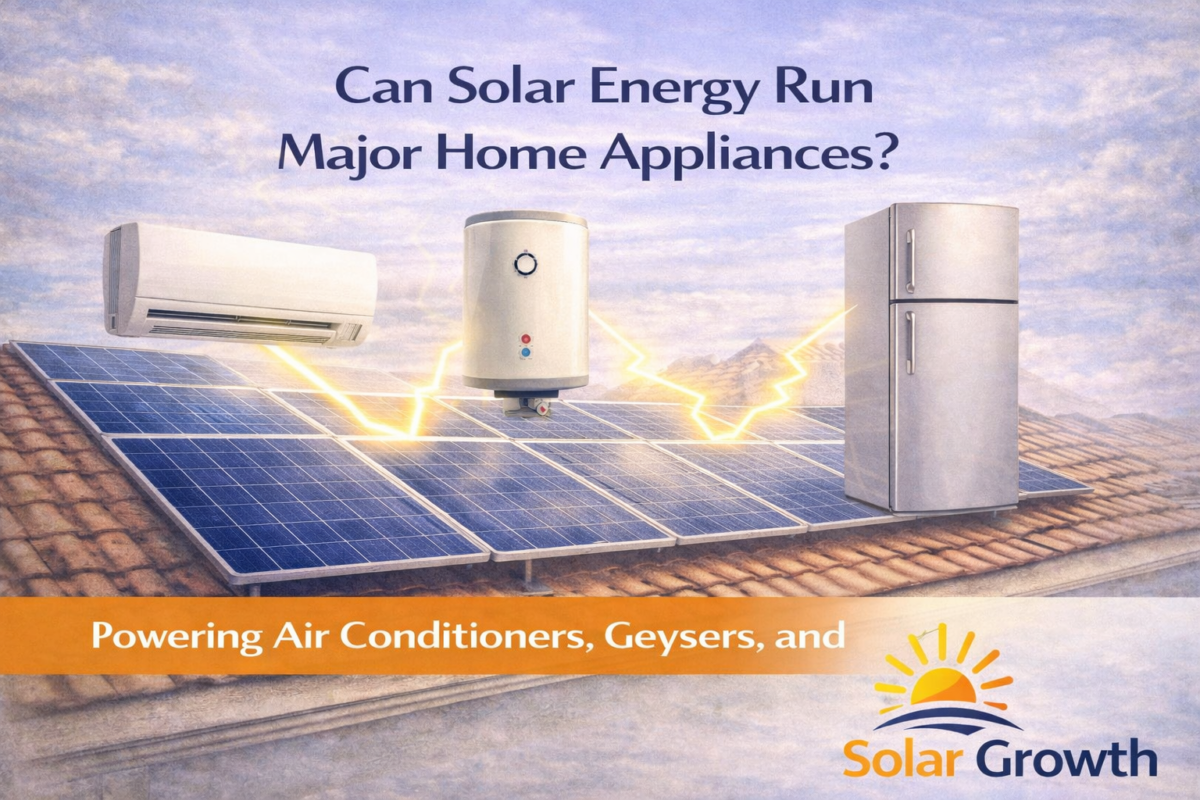
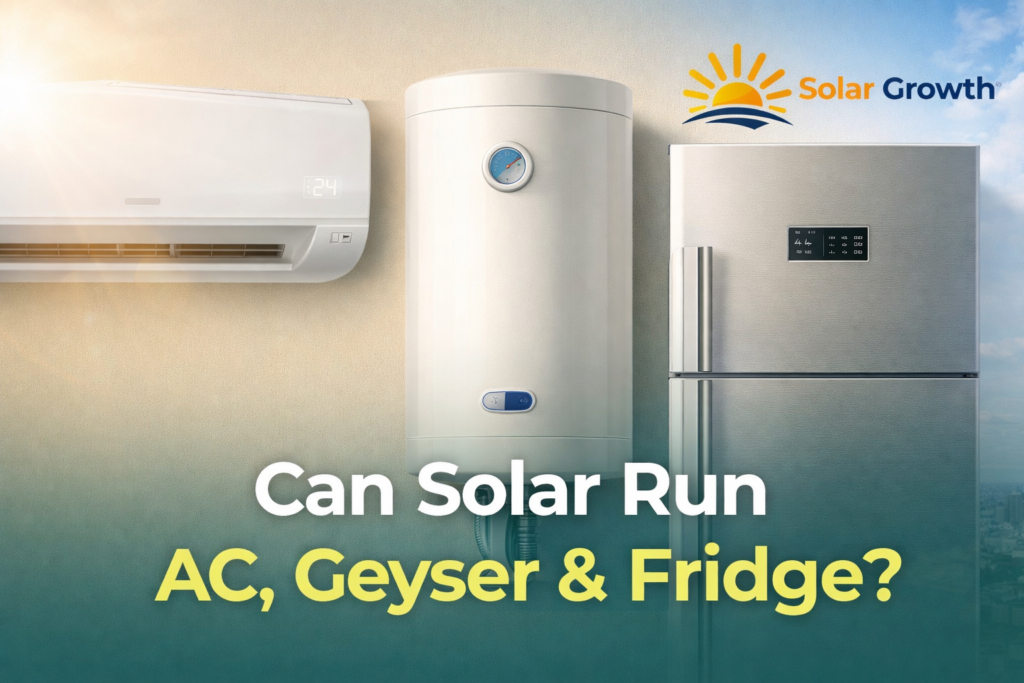
As electricity consumption continues to rise in Indian households, many homeowners are exploring rooftop solar as a way to reduce their monthly bills and become less dependent on grid power. A common question people ask before installing a system is simple: can solar energy actually run major home appliances like air conditioners, geysers, and refrigerators?
The short answer is yes. A properly designed rooftop solar system can power most household appliances, including high energy devices such as AC units, water heaters, and refrigerators. However, the capacity of the solar system and the household’s electricity consumption play an important role in determining how efficiently these appliances can be supported.
Understanding how solar energy powers your home can help homeowners make informed decisions before installing a system.
How Solar Powers Household Appliances
Solar panels generate electricity when sunlight hits the photovoltaic cells on the panels. This electricity is then converted by an inverter into usable power for your home. The generated electricity can directly run appliances during the daytime when solar production is highest.
If your solar system is connected to the grid through net metering, any excess electricity generated during the day can be exported to the grid. This allows you to receive credits which can offset the electricity you use at night or during periods of lower solar generation.
Because of this arrangement, solar systems are capable of supporting regular household electricity consumption over time, including the use of appliances such as air conditioners, refrigerators, and water heaters.
Running an Air Conditioner on Solar
Air conditioners are among the most energy intensive appliances in a home. A typical 1.5 ton split AC can consume between 1.5 to 2 units of electricity per hour depending on the model and efficiency rating.
Many Indian households install solar systems between 3 kW and 5 kW in size, which are capable of supporting AC usage along with other appliances. During sunny daytime hours, the solar panels can directly power the AC while also supplying electricity to other parts of the home.
Energy efficient inverter AC units can further reduce power consumption and make solar usage more effective.
Running a Geyser on Solar
Electric water heaters also consume a significant amount of power. A typical geyser may require between 1.5 kW and 3 kW depending on its capacity.
Solar can support geyser usage, especially if the water heating is scheduled during the daytime when solar energy production is highest. Many homeowners also combine solar panels with solar water heaters to reduce electricity consumption even further.
This combination helps reduce the overall load on the solar system and improves long term savings.
Running a Refrigerator on Solar
Refrigerators are one of the easiest appliances to run on solar power. Most modern refrigerators consume between 100 and 300 watts depending on the model and size.
Since refrigerators run continuously throughout the day, they benefit from the steady electricity generated by rooftop solar systems. A typical solar installation can easily support a refrigerator along with lighting, fans, and other appliances.
Choosing the Right Solar System Size
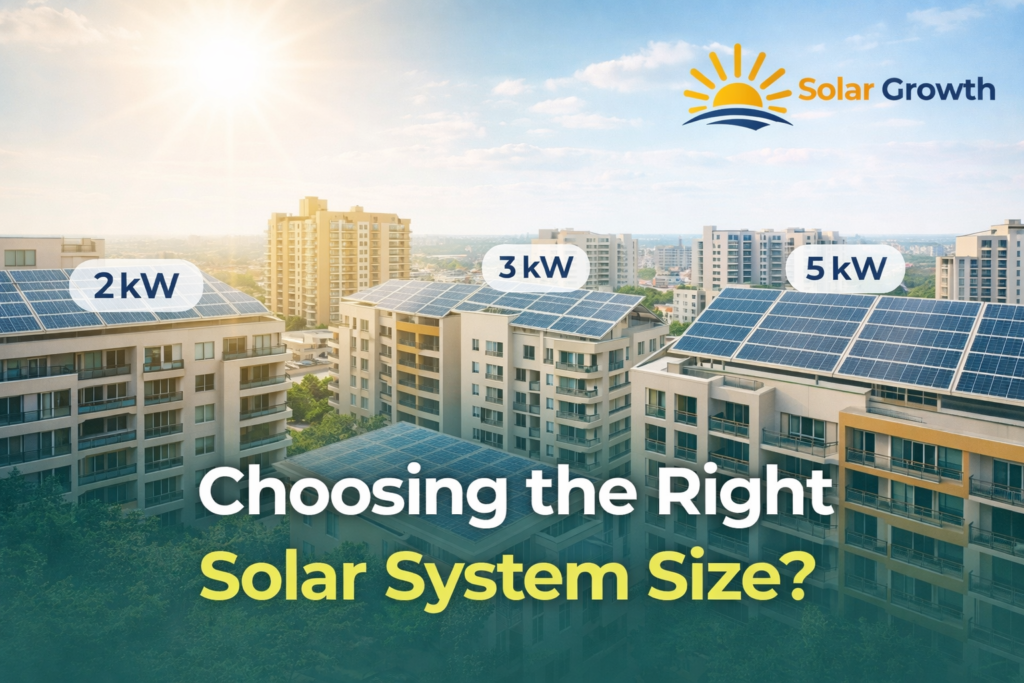
The ability of solar power to run your appliances depends on the size of the solar system and your total electricity usage.
For example:
2 kW system can support basic loads such as lights, fans, and a refrigerator
3 to 5 kW system can support AC usage along with regular household appliances
5 kW or larger systems can handle higher electricity consumption in larger homes
A professional energy assessment can help determine the ideal system size based on your monthly electricity bills and usage patterns.
Long Term Benefits of Running Appliances on Solar
Switching to solar energy offers several advantages beyond just powering appliances.
Homeowners can significantly reduce electricity bills, protect themselves from rising power tariffs, and contribute to a cleaner environment. Solar systems also have a long lifespan of 20 to 25 years, making them a reliable long term investment.
With government incentives and net metering policies available in many Indian states, installing rooftop solar has become more accessible and financially attractive for homeowners.
Conclusion
Solar power is fully capable of running everyday household appliances including air conditioners, geysers, and refrigerators. With the right system size and proper installation, homeowners can meet a large portion of their electricity needs through clean and renewable energy.
As solar technology continues to improve and electricity costs rise, more households across India are choosing rooftop solar as a practical solution for energy independence.
FAQ
1. Can a 3 kW solar system run an air conditioner?
Yes. A 3 kW system can support moderate AC usage along with other household appliances depending on sunlight availability and electricity consumption.
2. Do appliances run directly on solar power?
During the daytime, appliances can run directly on solar energy. Any additional electricity required is supplied by the grid if the system is grid connected.
3. Can solar power run appliances at night?
Without battery storage, solar panels do not generate electricity at night. However, net metering allows daytime excess electricity to offset nighttime consumption.
4. How long do rooftop solar systems last?
Most solar panels last 20 to 25 years and continue producing electricity even after that with slightly reduced efficiency.
5. Is solar suitable for homes with high electricity consumption?
Yes. Larger solar systems can be installed to match higher electricity usage in homes with appliances such as AC units, geysers, and washing machines.
Thinking about running your home appliances on solar energy?
A professional solar assessment can help determine the right system size for your home and estimate how much you can save on electricity