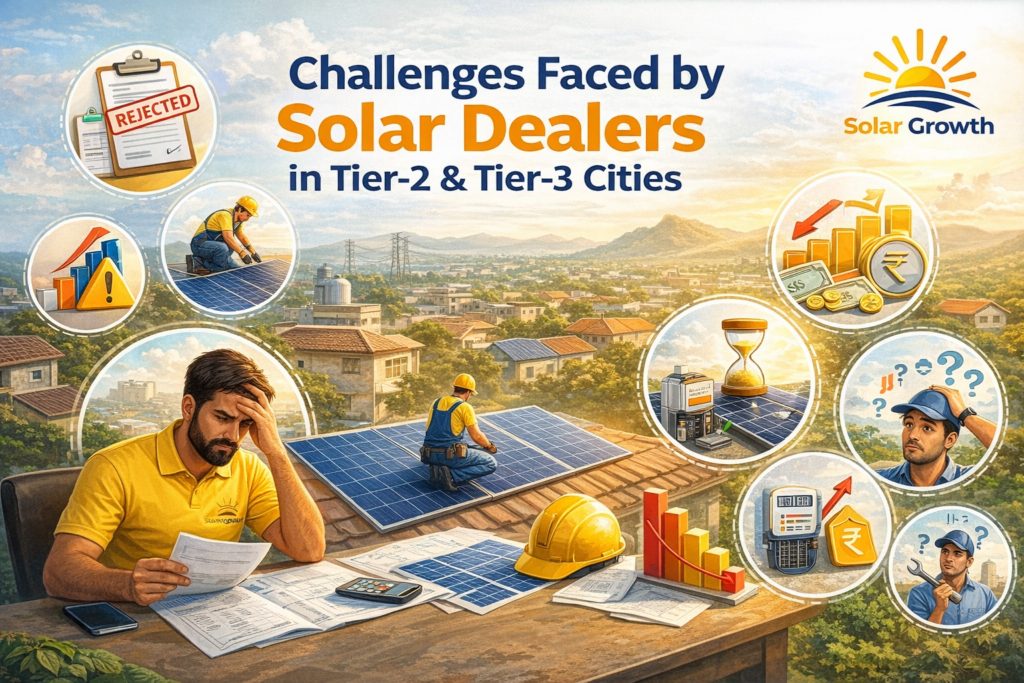
The solar energy revolution in India is no longer confined to the big metros. Increasing electricity costs, frequent power outages, better awareness of renewable energy benefits, and government incentive schemes have spurred strong demand for solar solutions in Tier-2 and Tier-3 cities. However, while opportunities abound, solar dealers and installers in these regions are facing a unique set of challenges. These obstacles — ranging from financing woes to regulatory complexities — require strategic planning, patience, and innovation to overcome.
1. Financial and Financing Hurdles
Despite the clear long-term savings offered by solar installations, the upfront capital required remains a barrier in many smaller cities. Residents and business owners in Tier-2 and Tier-3 markets often have limited access to formal credit or are wary of taking loans for solar projects. Local banks and financial institutions can be hesitant to extend loans for rooftop solar due to perceived risks or inadequate collateral. While government incentives — such as the PM Surya Ghar: Muft Bijli Yojana — have brought down net costs significantly, delays in subsidy disbursement and complex documentation still dampen enthusiasm and slow sales cycles.
2. Net-Metering and Regulatory Delays
One of the trickiest problems for dealers is the inconsistent regulatory framework across states. Net-metering approvals — which allow solar producers to feed excess energy back into the grid — are crucial for a good return on investment. But approval timelines vary widely, often extending beyond 60 to 90 days, depending on the locality and utility company. These delays not only test the patience of customers but also strain dealers’ cash flow and installation schedules.
3. Awareness and Trust Deficit
In many smaller cities, people may have only a vague idea of how solar panels work or what benefits they truly offer. Even with rising awareness, there’s often a lack of trust in clean energy technologies, especially when it comes to long-term performance, warranties, and after-sales service. Some customers fear that subpar installations or cheap components will compromise system performance. Dealers end up spending significant time educating leads — which increases customer acquisition costs and prolongs sales cycles.
4. Intense Competition and Thin Profit Margins
As the solar wave has reached smaller cities, competition has exploded. More installers and resellers are entering the market, leading to fierce price wars and shrinking profit margins. Dealers must balance competitive pricing with offering quality products and dependable service — a difficult tightrope to walk when inventory costs remain high and financing is tight.
5. After-Sales Service Challenges
Solar installations aren’t a one-time transaction. Panels and inverters require maintenance, performance monitoring, and occasional repairs. In Tier-2 and Tier-3 cities, the sparse availability of skilled technicians makes after-sales service a persistent problem. Some dealers struggle to offer robust service networks or rapid response times, which can reduce customer satisfaction and harm word-of-mouth referrals.
6. Supply Chain and Stocking Issues
Smaller dealers often lack the bulk purchasing power of larger players, making it hard to maintain adequate inventory. Solar equipment is bulky, delicate, and costly. Misjudging demand or facing delayed shipments — especially for batteries or high-efficiency modules — can disrupt installation schedules and erode customer confidence.
7. Policy Uncertainty and External Risks
Sudden changes in solar policies at the state or utility level can catch dealers off guard. For example, new capacity caps on customer approvals or shifts in subsidy rules can hamper sales plans. Moreover, international trade tensions and import duties — such as recent tariffs on solar components destined for export markets — can influence local pricing and supply dynamics.
Frequently Asked Questions (FAQs)
1. Why is selling solar difficult in Tier-2 and Tier-3 cities?
Selling in these regions requires education and trust-building because residents often have limited prior experience with solar technology and financing models. Delays in approvals and subsidy transfers also extend sales cycles.
2. Can customers get financial help for solar installations?
Yes. Central government schemes like PM Surya Ghar: Muft Bijli Yojana offer subsidies that can reduce the upfront cost. Dealers can also help customers access loans or EMI plans, but these take time and paperwork.
3. How important is after-sales service for solar customers?
Very important. Good after-sales support ensures long-term system performance and boosts referrals. Dealers who can offer maintenance services or reliable service partners gain a competitive edge.
In conclusion,
solar dealers in Tier-2 and Tier-3 cities operate in a dynamic and evolving environment. While consumer interest and government push are strong, barriers in finance, regulation, awareness, competition, and service infrastructure require thoughtful strategies and local market understanding. Those who can navigate these challenges will be well-placed to thrive as India’s solar adoption continues its rapid expansion.