
Introduction
Solar energy has become one of the most attractive investments for businesses worldwide. Companies are installing solar systems to reduce electricity costs, improve sustainability performance, and protect themselves from rising power tariffs.
However, the success of a commercial solar project depends heavily on selecting the right Solar EPC (Engineering, Procurement, and Construction) partner.
A solar EPC contractor is responsible for designing, supplying, installing, and commissioning the entire solar system. The wrong EPC choice can lead to project delays, poor system performance, hidden costs, and lower return on investment.
This guide explains how businesses can evaluate solar EPC companies and choose the right partner for a successful commercial solar project.
What Is a Solar EPC Company?
A Solar EPC company manages the entire lifecycle of a solar project.
EPC stands for:
- Engineering
- Procurement
- Construction
Instead of coordinating multiple vendors, businesses work with one company responsible for the entire solar system implementation.
EPC Responsibilities
Typical EPC services include:
- Site feasibility assessment
- System design and engineering
- Procurement of solar equipment
- Installation and commissioning
- Grid connection and testing
- Operation and maintenance support
An experienced EPC partner ensures that the solar plant operates efficiently for its full 25-year lifecycle.
Why Choosing the Right Solar EPC Is Critical
Solar projects are long-term investments.
Most commercial solar plants operate for 20–25 years, which means installation quality and equipment reliability directly impact long-term energy generation.
Choosing the wrong EPC partner can cause problems such as:
- Lower energy output
- System failures
- Poor installation quality
- Hidden costs
- Warranty disputes
- Delayed commissioning
A reliable EPC partner minimizes these risks and maximizes project performance.
Key Factors to Evaluate When Selecting a Solar EPC
Businesses should assess multiple criteria before selecting an EPC contractor.
1. EPC Experience and Track Record
Experience is one of the strongest indicators of EPC reliability.
Businesses should evaluate:
- Total installed solar capacity (MW)
- Number of commercial projects completed
- Experience with similar industries
- Client references and case studies
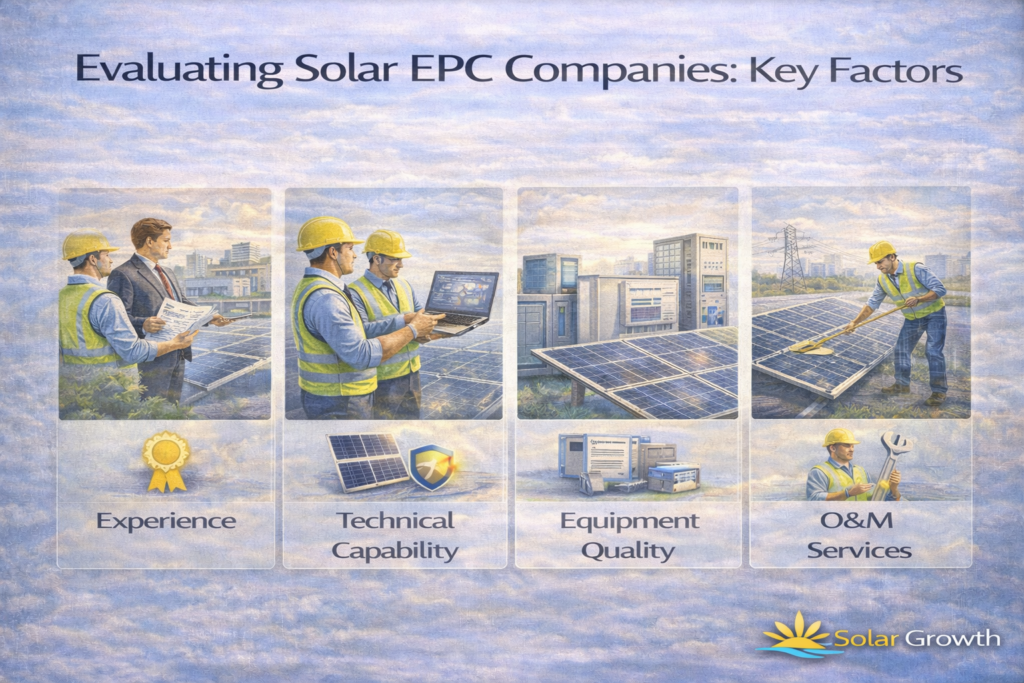
A company that has completed many large solar installations is more likely to handle project challenges effectively.
Example
An EPC that has installed 100+ commercial rooftop projects will usually have better design and installation expertise than a new contractor.
2. Technical Design and Engineering Capability
Solar project performance depends heavily on system design.
Key engineering aspects include:
- Solar panel orientation and tilt
- Shading analysis
- System sizing
- Electrical design
- Grid integration
Professional EPC companies use simulation software such as PVsyst to estimate solar energy generation.
Businesses should always request detailed generation estimates before finalizing the contractor.
3. Quality of Equipment Used
Solar plants rely on several critical components.
Major equipment includes:
- Solar modules
- Inverters
- Mounting structures
- Electrical cables
- Monitoring systems
Businesses should verify that the equipment used meets international standards.
Important Certifications
| Component | Certification |
| Solar Modules | IEC 61215 / IEC 61730 |
| Inverters | IEC 62109 |
| Mounting Structures | Corrosion-resistant materials |
High-quality equipment improves system reliability and long-term performance.
4. Transparent Pricing and Cost Breakdown
Solar EPC pricing should always be transparent.
Businesses should request a detailed bill of quantities (BOQ) including:
- Solar module cost
- Inverter cost
- Mounting structures
- Electrical equipment
- Installation cost
- Monitoring system
- Operation and maintenance services
Choosing the cheapest EPC is not always the best option.
Low prices may indicate lower equipment quality or hidden costs later.
5. Operation and Maintenance (O&M) Services
Solar systems require regular maintenance to maintain efficiency.
Typical O&M services include:
- Panel cleaning
- System monitoring
- Inverter servicing
- Preventive maintenance
- Performance checks
Many EPC companies offer annual maintenance contracts (AMC).
Reliable maintenance services help maintain system efficiency for decades.
6. Regulatory and Compliance Expertise
Solar projects must comply with local electricity regulations.
These may include:
- Net metering approvals
- Grid interconnection permits
- Electrical safety compliance
- Environmental clearances
An experienced EPC contractor understands these regulatory processes and helps avoid project delays.
7. Financial Stability of the EPC Company
Solar systems have long warranty periods.
Typical warranties include:
- 25-year solar panel performance warranty
- 5–10 year inverter warranty
Businesses should verify that the EPC company has strong financial stability and long-term operational presence.
This ensures the company can honor service and warranty commitments.
Example: EPC Selection Case Study
A logistics company planned a 1 MW rooftop solar installation for its warehouse.
Three EPC contractors submitted proposals.
Evaluation factors included:
- Project experience
- Equipment specifications
- System design
- Pricing transparency
- Service support
Although one EPC offered a lower price, the company selected another contractor with stronger project experience and better maintenance services.
The final system achieved higher energy generation and fewer operational issues.
Solar EPC Selection Checklist
Businesses can use the following checklist when evaluating EPC contractors.
| Evaluation Factor | Key Question |
| Experience | How many commercial projects completed? |
| Equipment Quality | Which module and inverter brands are used? |
| Design Capability | Are energy simulations provided? |
| Pricing | Is the cost structure transparent? |
| Maintenance | Does the EPC provide O&M services? |
| Compliance | Can the EPC handle regulatory approvals? |
Using a structured evaluation process reduces project risks.
Common Mistakes Businesses Make
Many companies rush the EPC selection process and overlook important details.
Common mistakes include:
- Selecting the lowest price without evaluating quality
- Ignoring EPC project experience
- Not reviewing equipment certifications
- Overlooking maintenance services
- Signing unclear contracts
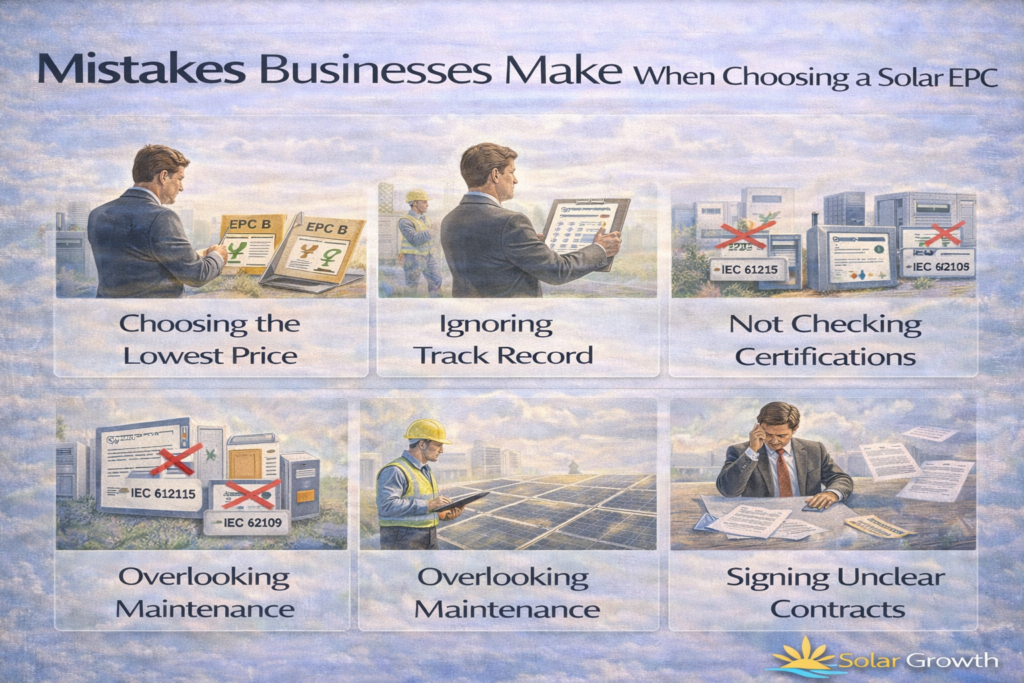
These mistakes can significantly affect project performance and ROI.
Best Practices Before Finalizing an EPC Partner
Businesses should follow a systematic process before signing EPC contracts.
Conduct Detailed Feasibility Studies
Assess roof space, structural capacity, and energy demand.
Compare Multiple EPC Proposals
Evaluate at least three proposals before making a decision.
Verify Client References
Speak with previous clients to understand EPC performance.
Review Contract Terms Carefully
Ensure equipment warranties, pricing terms, and maintenance responsibilities are clearly defined
Industry Trends in Solar EPC Services
The solar EPC industry is evolving rapidly.
Major trends include:
- Digital solar plant monitoring systems
- AI-based performance analytics
- High-efficiency solar modules
- Hybrid solar-battery systems
- Integrated energy management platforms
Businesses increasingly prefer EPC partners that offer complete energy solutions, not just installation services.
Conclusion
Choosing the right solar EPC partner is one of the most important decisions in a commercial solar project.
A reliable EPC contractor ensures high-quality system design, proper installation, efficient energy generation, and long-term operational support.
Businesses that carefully evaluate EPC experience, equipment quality, pricing transparency, regulatory expertise, and maintenance services can significantly reduce project risks and maximize solar investment returns.
With the right EPC partner, solar energy becomes a powerful tool for reducing electricity costs and achieving sustainability goals.
FAQs
1. What does a solar EPC company do?
A solar EPC company manages the engineering, procurement, and construction of solar power systems, including design, equipment supply, installation, and commissioning.
2. How do businesses evaluate solar EPC contractors?
Businesses should evaluate EPC experience, project portfolio, equipment quality, pricing transparency, and maintenance support.
3. Is the cheapest EPC contractor always the best option?
No. Lower prices may compromise equipment quality or system performance.
4. Why is maintenance support important in solar EPC projects?
Regular maintenance ensures optimal system performance and extends the lifespan of solar installations.
Written by Rohith Bingi
Solar Industry Analyst at Solar Growth, covering India’s solar value chain, policy landscape, and business growth trends