
Rising electricity costs, increasing operational demands, and growing pressure to meet sustainability targets are pushing businesses in India to rethink how they consume energy.
Commercial solar is no longer just an alternative. It has become a strategic decision that directly impacts cost efficiency, long-term planning, and brand positioning.
From understanding how billing works to evaluating financial incentives and real-world applications, this guide covers everything businesses need to know before adopting solar.

Why Commercial Solar Is Gaining Traction
For most businesses, electricity is a significant operational expense. Warehouses, factories, office buildings, and logistics parks consume large amounts of power daily.
Solar energy addresses this challenge by allowing businesses to:
- Generate their own electricity
- Reduce dependence on grid power
- Stabilize long-term energy costs
- Align with sustainability goals
With improving technology and supportive policies, commercial solar has become both practical and financially viable across industries.
Understanding How Solar Works for Businesses
A commercial solar system is typically installed on rooftops or large open spaces within a facility.
During the day:
- Solar panels generate electricity
- Businesses consume this power directly
- Excess energy is either exported or sold depending on the metering system
The way this electricity is measured and billed depends on the type of metering arrangement, which plays a crucial role in determining financial returns.
Net Metering vs Gross Metering: What Businesses Need to Know
One of the most important decisions in commercial solar is choosing the right metering system.
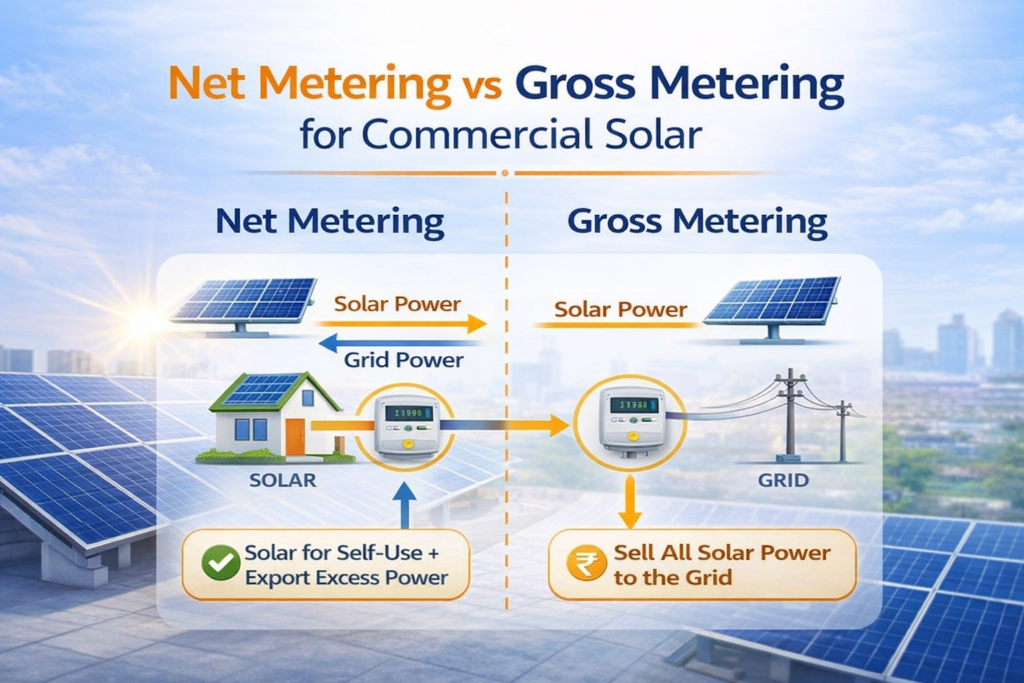
Net Metering
Under net metering:
- Solar energy is used for self-consumption first
- Surplus electricity is exported to the grid
- The final bill is calculated based on net consumption
For example, if a business consumes 1,000 units and generates 700 units, it only pays for 300 units.
This model works well for businesses that operate during the day and want to reduce electricity bills.
Gross Metering
Under gross metering:
- All solar energy is exported to the grid
- The business buys all its electricity separately
The electricity sold is compensated at a fixed rate, which is usually lower than the retail tariff.
This model is more suitable when solar is treated as a power generation asset rather than a cost-saving tool.
Which One Is More Practical?
For most commercial and industrial users, net metering offers stronger financial benefits because it directly offsets electricity costs.
However, policies vary across states, and system size limits or tariff structures can influence which option is more suitable.
Where Commercial Solar Delivers Maximum Value
Certain industries benefit more from solar due to their energy patterns.
Warehouses and Logistics Parks
Warehouses are one of the most ideal use cases for solar.
They offer:
- Large, unused rooftop areas
- Consistent daytime energy demand
- Long building lifespans
This combination allows businesses to maximize solar generation without disrupting operations.
Real-World Applications
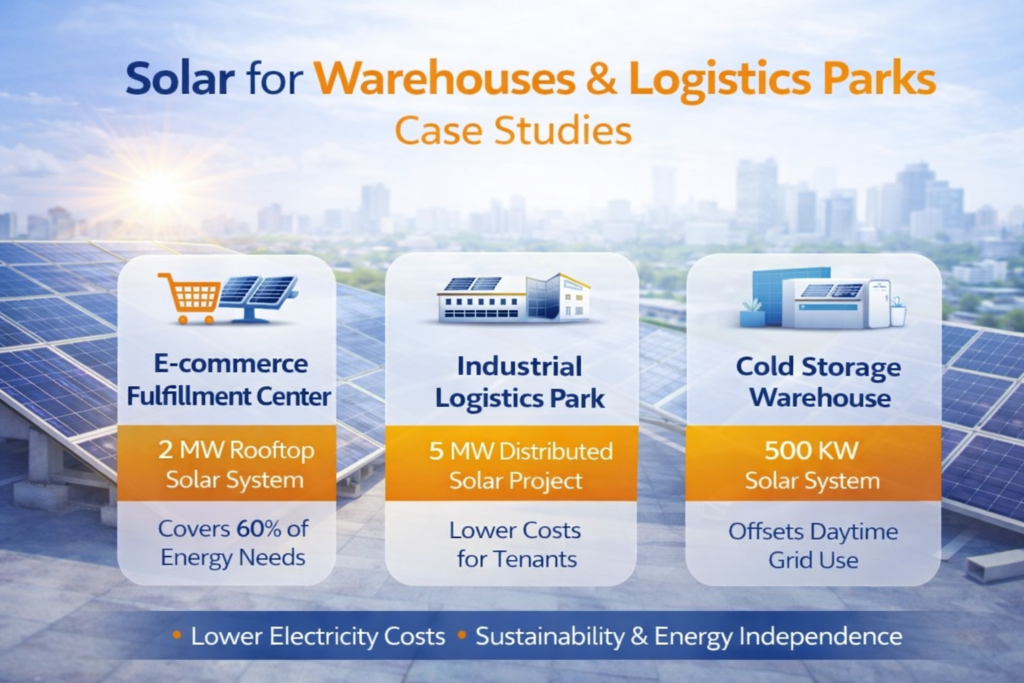
E-commerce fulfillment center
A large fulfillment center installed a multi-megawatt rooftop system that now supplies a major portion of its daily energy requirement. This has significantly reduced electricity expenses and improved sustainability metrics.
Industrial logistics park
A logistics park implemented solar across multiple warehouses, allowing each unit to generate part of its own electricity. This not only reduced costs but also increased the overall value of the property for tenants.
Cold storage facility
Even with round-the-clock energy demand, a cold storage unit used solar to offset daytime consumption, leading to noticeable savings.
How Solar Supports ESG Goals
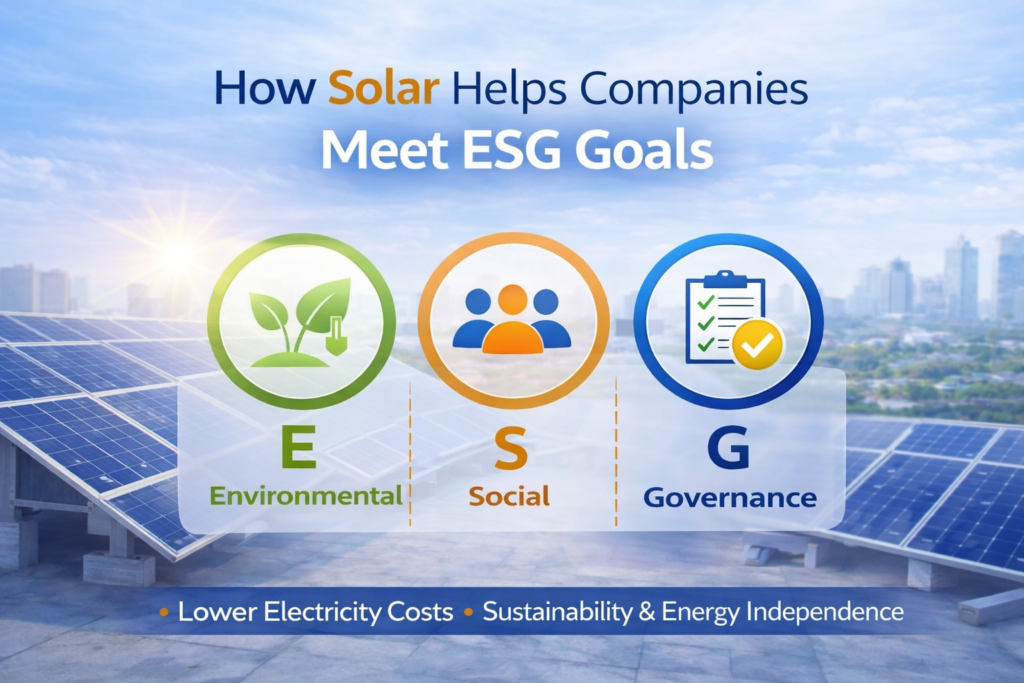
Environmental, Social, and Governance standards are now a key factor in how businesses are evaluated.
Solar energy plays a direct role in improving ESG performance.
Environmental Impact
- Reduces dependence on fossil fuels
- Cuts carbon emissions from electricity use
- Supports long-term sustainability targets
Social Impact
- Contributes to cleaner air and healthier communities
- Demonstrates commitment to responsible business practices
- Strengthens relationships with customers and stakeholders
Governance Benefits
- Provides measurable data on energy usage and savings
- Improves transparency in sustainability reporting
- Supports long-term risk management through predictable energy costs
For many companies, solar is not just about savings. It is part of a broader strategy to build a responsible and future-ready business.
Commercial Solar Incentives: Myths vs Reality
Despite the growth in adoption, many businesses hesitate due to misconceptions.
Myth: Only residential users get benefits
Reality: Commercial users benefit through tax incentives, policy support, and financial mechanisms such as accelerated depreciation.
Myth: Solar becomes free with subsidies
Reality: Solar requires investment, but incentives significantly reduce the payback period.
Myth: Only large corporations can afford solar
Reality: Small and medium businesses can adopt solar through flexible financing options such as leasing and power purchase agreements.
Myth: The process is complicated
Reality: With the right solar partner, installation, approvals, and compliance are handled smoothly.
Financial and Strategic Advantages
Commercial solar is not just about reducing electricity bills.
It also helps businesses:
- Improve profit margins
- Protect against rising energy costs
- Increase asset value
- Strengthen brand positioning
Most systems recover their cost within a few years and continue to generate savings for decades.
What Businesses Should Consider Before Installing Solar
Before moving forward, it is important to evaluate:
- Available rooftop or installation space
- Electricity consumption patterns
- Local policies and metering regulations
- Financing options and return expectations
A well-planned system ensures maximum efficiency and long-term value.
The Direction the Industry Is Moving In
The commercial solar landscape in India is evolving rapidly.
Key developments include:
- Growing adoption across logistics and manufacturing sectors
- Increased use of third-party financing models
- Integration of smart energy management systems
- Expansion of shared and group solar models
As technology improves and awareness increases, solar adoption is expected to accelerate further.
Take the Next Step
If you are considering solar for your business, the most important step is understanding what works best for your specific requirements.
You can start by connecting with trusted and verified solar providers who can guide you through system design, policies, and financial planning.
👉 Register with us to connect with verified solar providers (https://solargrowth.in/free-registration/)
Frequently Asked Questions
1. Is solar suitable for all types of businesses?
Most businesses with sufficient rooftop space and consistent electricity consumption can benefit from solar installations.
2. What is the typical payback period for commercial solar?
In many cases, businesses recover their investment within three to five years depending on system size and electricity tariffs.
3. Which metering system is better for cost savings?
Net metering is generally more beneficial for reducing electricity bills, especially for businesses with daytime operations.
4. Can small businesses install solar systems?
Yes. Various financing models make solar accessible for small and medium enterprises.
5. How does solar help with sustainability goals?
Solar reduces carbon emissions, improves energy efficiency, and strengthens ESG performance, making businesses more sustainable and responsible.