Introduction
Solar energy has become one of the most attractive investments for businesses in India. Companies are increasingly installing solar systems to reduce electricity costs, improve sustainability performance, and protect themselves from rising energy tariffs.
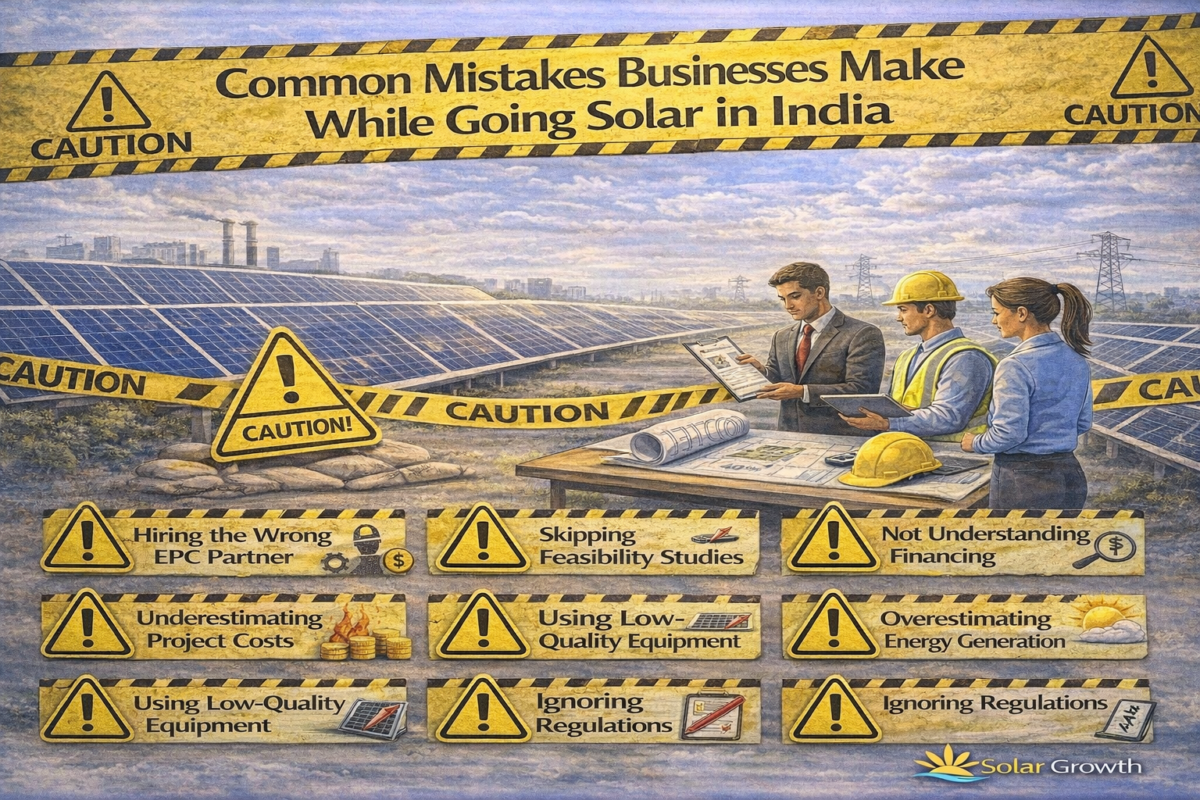
However, despite the financial and environmental benefits, many businesses make critical mistakes when adopting solar power.
These mistakes often occur due to poor planning, lack of technical understanding, or choosing the wrong partners for project execution. The result can be lower energy generation, delayed payback periods, unexpected costs, or operational inefficiencies.
This guide explains the most common mistakes businesses make when going solar in India and how companies can avoid them to ensure a successful and profitable solar investment.
Why Planning Is Critical for Commercial Solar Projects
Commercial solar installations are long-term investments that typically operate for 20–25 years.
Decisions made during the planning stage can affect:
- System efficiency
- Financial returns
- Regulatory compliance
- Maintenance requirements
Businesses that approach solar projects strategically usually achieve faster payback and better long-term results.
1. Choosing the Wrong Solar EPC Partner
One of the most common mistakes businesses make is selecting the wrong Solar EPC (Engineering, Procurement, and Construction) contractor.
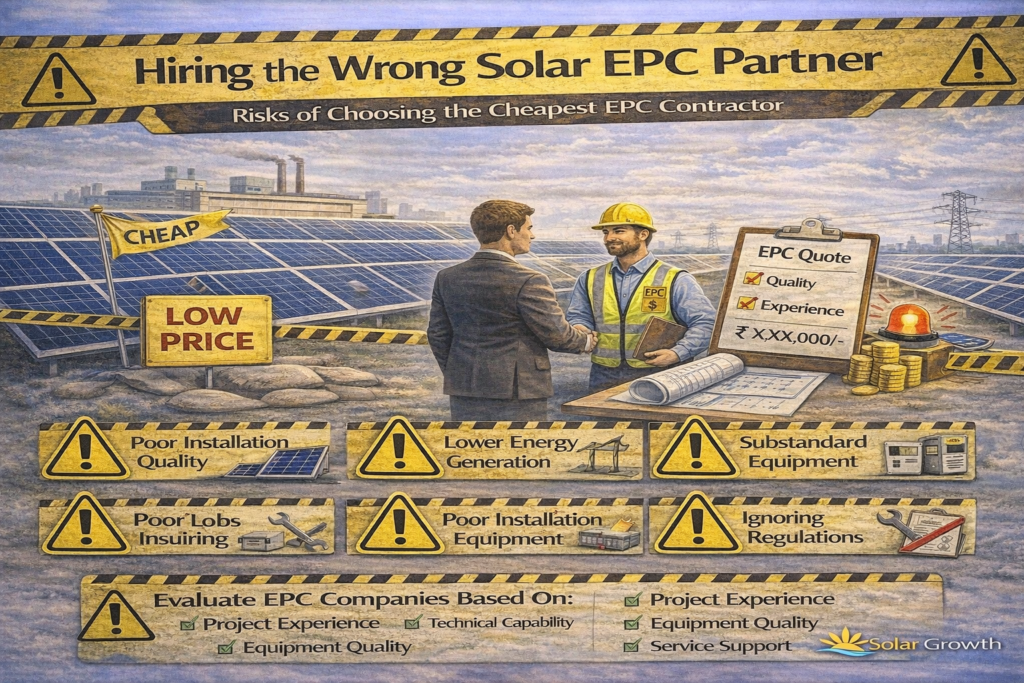
Some companies choose EPC contractors based solely on the lowest price.
Risks of Choosing the Cheapest EPC
- Poor installation quality
- Lower energy generation
- Use of substandard equipment
- Limited maintenance support
Best Practice
Businesses should evaluate EPC companies based on:
- Project experience
- Technical capability
- Equipment quality
- Service support
Selecting an experienced EPC partner is critical for long-term system performance.
2. Ignoring Detailed Site and Energy Analysis
Solar systems must be designed based on the facility’s actual energy consumption.
Many companies skip proper feasibility studies.
Important Factors That Must Be Analyzed
- Rooftop structure and space
- Load profile and energy demand
- Shading impact
- Electrical infrastructure capacity
Failure to analyze these factors can lead to underperforming solar systems.
Professional EPC contractors conduct detailed solar feasibility studies and energy simulations before project implementation.
3. Underestimating Solar Project Costs
Some businesses evaluate solar projects only based on installation cost.
However, solar investments involve additional expenses such as:
- Grid interconnection costs
- Structural reinforcement
- Operation and maintenance
- Monitoring systems
- Financing costs
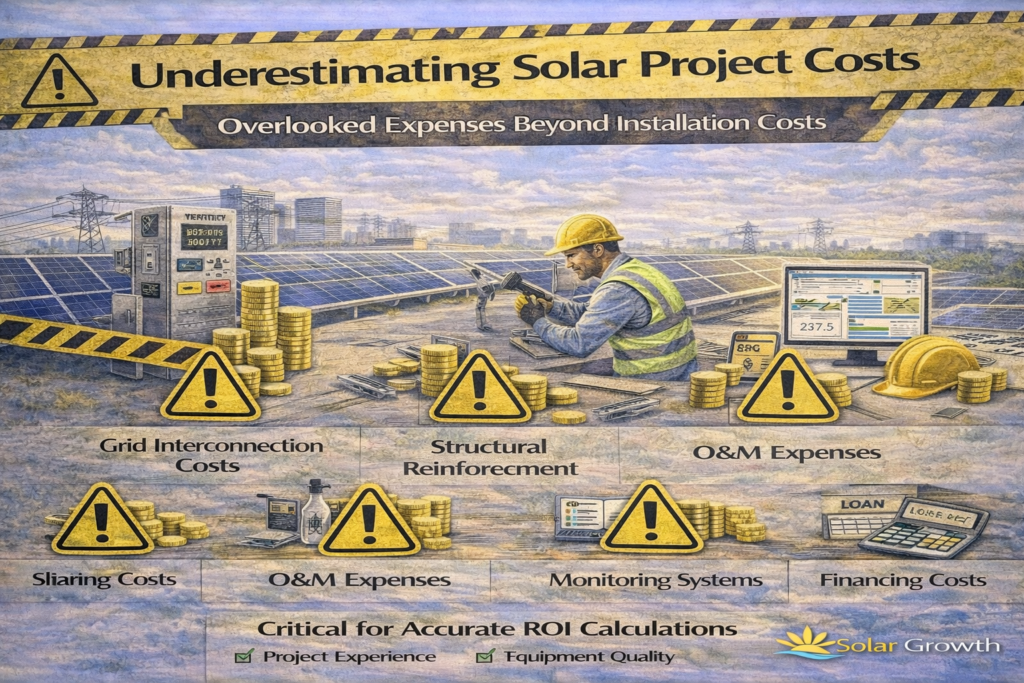
Ignoring these costs can distort ROI calculations.
A proper financial model should include the total lifecycle cost of the solar project.
4. Choosing Low-Quality Solar Equipment
Solar systems rely on multiple critical components.
Key equipment includes:
- Solar modules
- Inverters
- Mounting structures
- Electrical cables
- Monitoring systems
Choosing low-cost equipment may reduce initial investment but can significantly affect long-term performance.
Important Equipment Certifications
| Equipment | Certification |
| Solar Panels | IEC 61215 / IEC 61730 |
| Inverters | IEC 62109 |
| Electrical Systems | BIS / IEC standards |
High-quality equipment ensures reliable system performance for decades.
5. Not Understanding Solar Financing Options
Businesses often fail to evaluate different solar financing models.
Common solar financing structures include:
- Capex model (business owns system)
- Solar PPA model
- Group captive solar
- Open access solar procurement
Each model has different financial implications.
Companies should compare multiple options before finalizing the project structure.
6. Ignoring Maintenance and Performance Monitoring
Solar systems require regular maintenance to maintain optimal performance.
Some businesses assume solar plants require no maintenance.
However, regular maintenance activities include:
- Panel cleaning
- System inspection
- Inverter maintenance
- Performance monitoring
Neglecting maintenance can reduce system output significantly over time.
Many EPC companies provide annual maintenance contracts (AMC) for solar systems.
7. Overestimating Solar Energy Generation
Some companies rely on overly optimistic generation estimates.
Actual solar generation depends on factors such as:
- Geographic location
- Weather conditions
- System design
- Equipment quality
Businesses should request PVsyst or similar simulation reports to estimate realistic energy generation.
8. Not Understanding Regulatory Requirements
Solar projects must comply with several regulatory frameworks.
These may include:
- Net metering policies
- Grid interconnection approvals
- Electricity regulations
- Environmental standards
Failure to follow these regulations can cause project delays.
Experienced EPC contractors help manage regulatory compliance.
Example: Solar Planning Mistake
A logistics company installed a solar rooftop system without conducting a proper structural assessment.
After installation began, engineers discovered that the roof required additional reinforcement.
The project experienced delays and additional structural costs.
This example highlights the importance of comprehensive feasibility studies before installation.
Solar Project Risk Summary
| Common Mistake | Potential Impact |
| Wrong EPC selection | Poor system performance |
| Inadequate feasibility study | Low energy generation |
| Poor equipment quality | Reduced lifespan |
| Ignoring maintenance | System efficiency loss |
| Miscalculating project cost | Financial losses |
Understanding these risks helps businesses avoid costly mistakes.
Best Practices for Businesses Going Solar
Businesses can ensure successful solar adoption by following several best practices.
Conduct Detailed Energy Analysis
Evaluate electricity consumption patterns.
Work With Experienced EPC Contractors
Choose EPC partners with strong project portfolios.
Evaluate Multiple Financial Models
Compare capex, PPA, and open access options.
Use High-Quality Equipment
Ensure all components meet international certification standards.
Plan for Long-Term Maintenance
Develop a maintenance strategy before installation.
Industry Trends in Commercial Solar
Commercial solar adoption continues to grow rapidly in India.
Major industries adopting solar include:
- Manufacturing
- Warehousing and logistics
- IT and technology parks
- Food processing industries
Businesses increasingly view solar energy as a strategic investment rather than just an environmental initiative.
Conclusion
Solar energy offers significant financial and environmental benefits for businesses in India. However, successful solar adoption requires careful planning, technical evaluation, and strategic decision-making.
Common mistakes such as choosing the wrong EPC partner, ignoring feasibility studies, underestimating project costs, or using low-quality equipment can negatively impact project performance.
Businesses that conduct proper feasibility analysis, choose experienced EPC partners, and adopt best practices can maximize the financial returns of their solar investments.
With proper planning and execution, solar power can become a reliable and profitable long-term energy solution for businesses.
FAQs
1. What are the most common mistakes businesses make when installing solar?
The most common mistakes include choosing inexperienced EPC contractors, ignoring feasibility studies, and underestimating project costs.
2. Is choosing the cheapest solar EPC contractor risky?
Yes. Lower prices may compromise equipment quality or installation standards.
3. Do solar systems require maintenance?
Yes. Regular cleaning, monitoring, and system inspection are necessary to maintain performance.
4. How can businesses ensure successful solar project implementation?
By conducting proper feasibility studies, selecting experienced EPC partners, and planning long-term maintenance.
Written by Rohith Bingi
Solar Industry Analyst at Solar Growth, covering India’s solar value chain, policy landscape, and business growth trends