Rooftop solar adoption has increased rapidly in recent years as more households look for ways to reduce electricity bills and adopt cleaner energy. Despite this growth, many homeowners still hesitate to install solar panels because of outdated information and common myths.
The truth is that modern solar technology has advanced significantly. Better panel efficiency, government subsidies, and improved installation methods have made solar energy more accessible and reliable than ever before. Let us examine some of the most common solar myths and the reality behind them.
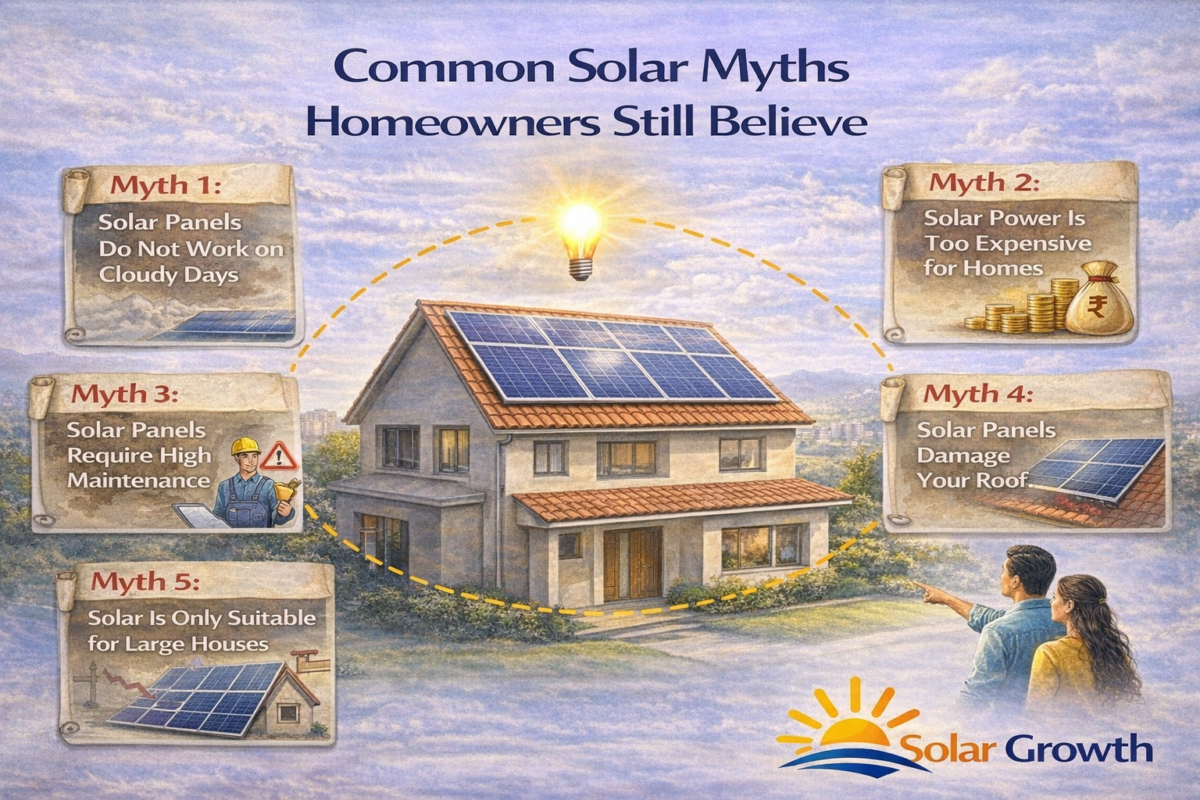
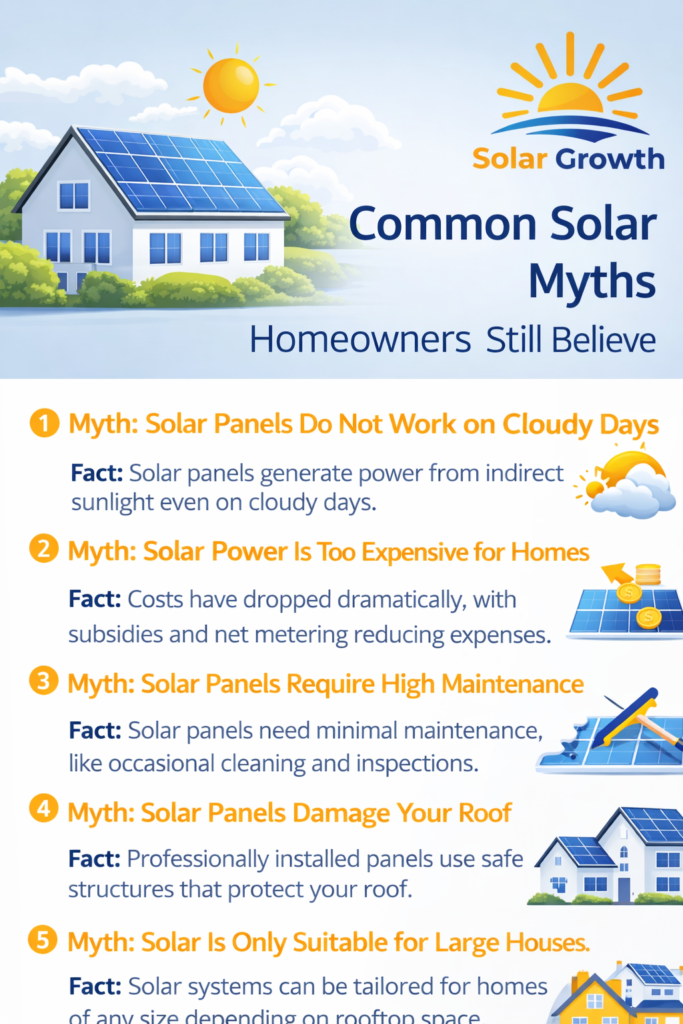
Myth 1: Solar Panels Do Not Work on Cloudy Days
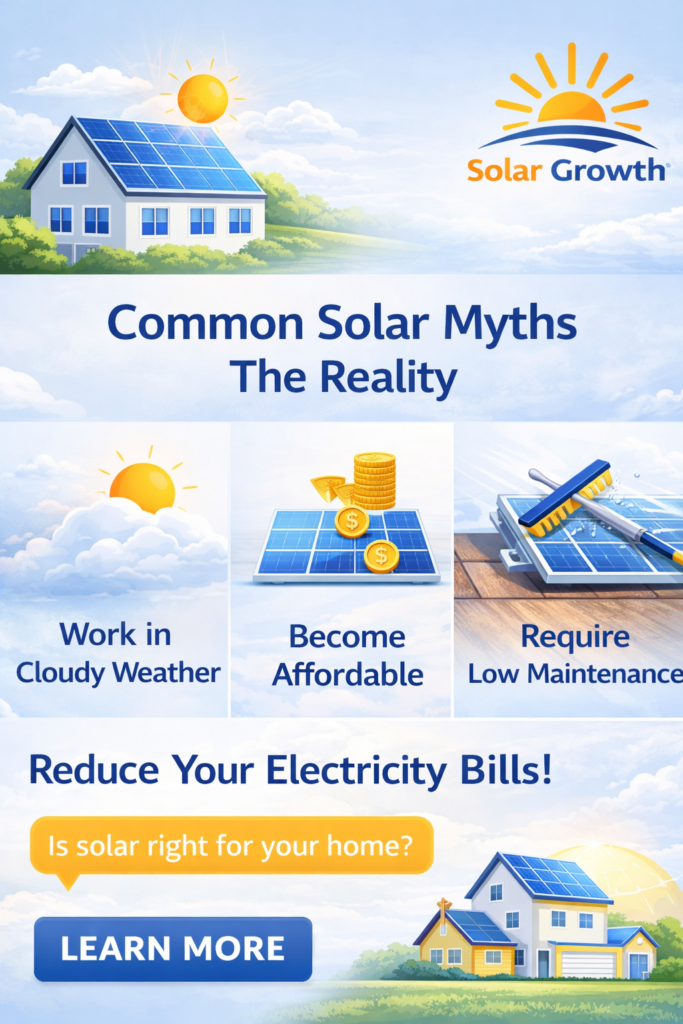
One of the most widely believed myths is that solar panels only work when the sun is shining brightly. In reality, solar panels generate electricity from sunlight, not heat. Even when the sky is cloudy, panels can capture indirect or diffused sunlight and continue producing power.
Although energy output may be slightly lower during cloudy weather, modern photovoltaic panels are designed to perform efficiently in different weather conditions. Countries with less sunshine than India still rely heavily on solar energy, proving its reliability throughout the year.
Myth 2: Solar Power Is Too Expensive for Homes
Years ago solar installations were costly, which is why many people still believe that rooftop solar is only for wealthy homeowners. However, the cost of solar technology has dropped dramatically in the past decade. In fact, solar system prices have fallen by more than 80 percent globally, making installations far more affordable.
In India, government initiatives such as rooftop solar subsidies and net metering policies further reduce installation costs. As a result, many residential solar systems recover their investment within four to seven years through electricity savings.
Myth 3: Solar Panels Require High Maintenance
Another common concern among homeowners is that solar systems require constant maintenance and expensive servicing. In reality, solar panels are among the lowest maintenance energy technologies available.Most systems simply require occasional cleaning to remove dust and debris.
With proper installation and periodic inspections, solar panels can operate efficiently for decades with minimal effort from homeowners. Many manufacturers also provide warranties of 20 to 25 years, ensuring long term reliability.
Myth 4: Solar Panels Damage Your Roof
Some homeowners worry that installing solar panels will harm their rooftop or cause leakage problems. This misconception usually arises from poor installation practices in the past.When installed by qualified professionals, solar panels are mounted on specially designed structures that do not damage the roof.
In fact, panels often protect the rooftop by shielding it from direct sunlight and harsh weather conditions. Proper installation techniques ensure both the roof and solar system remain safe and durable for many years.
Myth 5: Solar Is Only Suitable for Large Houses
Another misconception is that solar power is only practical for large homes with huge rooftops. The truth is that solar systems are highly scalable. Installations can be customized for small homes, apartments, and large properties alike.Even a modest rooftop space can accommodate a small solar plant that offsets a portion of the household’s electricity consumption. As technology improves, panels are becoming more efficient, meaning homeowners can generate more power from less space.
Why These Myths Still Exist
Many solar myths continue to circulate because of outdated information or lack of awareness about modern technology. Solar energy systems today are far more efficient, durable, and affordable than they were a decade ago.
As more homeowners adopt rooftop solar and share their experiences, these misconceptions are gradually disappearing. Reliable installers and accurate information play a crucial role in helping households make confident energy decisions.
Conclusion
Solar power has become one of the most practical solutions for homeowners seeking lower electricity bills and sustainable energy. While myths still exist, the reality is that modern solar systems are efficient, affordable, and long lasting.Understanding the truth behind these misconceptions allows homeowners to make informed decisions and take advantage of the benefits solar energy offers.
FAQ
1. Do solar panels work during rainy or cloudy weather?
Yes. Solar panels can still generate electricity from diffused sunlight, although production may be slightly lower than on bright sunny days.
2. Are solar panels expensive to maintain?
No. Solar systems require very little maintenance. Occasional cleaning and periodic inspection are usually enough to keep them operating efficiently.
3. How long do solar panels last?
Most solar panels have a lifespan of 20 to 25 years and often continue producing electricity beyond that period.
4. Will solar panels damage my roof?
No. Professionally installed panels are mounted using safe structures that do not damage the roof and can even protect it from weather exposure.
5. Is solar only suitable for large homes?
No. Solar systems can be customized for small or large homes depending on electricity consumption and rooftop space.
Continue Your Solar Journey
Now that some of the most common myths about solar energy have been clarified, homeowners can approach rooftop solar with greater confidence. Understanding how modern solar systems work, their affordability, and their long term benefits is an important step toward making informed energy decisions. However, many people still have practical questions about installation costs, system size, and electricity generation.
If you are exploring solar for your home, you may also find the following guides useful:
Home Solar Cost in India with Subsidy (Updated 2026)
3 kW vs 5 kW Solar System: Which Is Right for You
How Much Electricity Does a Home Solar Plant Produce
Rooftop Solar vs Diesel Generator Cost Comparison
These resources provide deeper insights into solar system sizing, savings potential, and the financial benefits of switching to renewable energy.