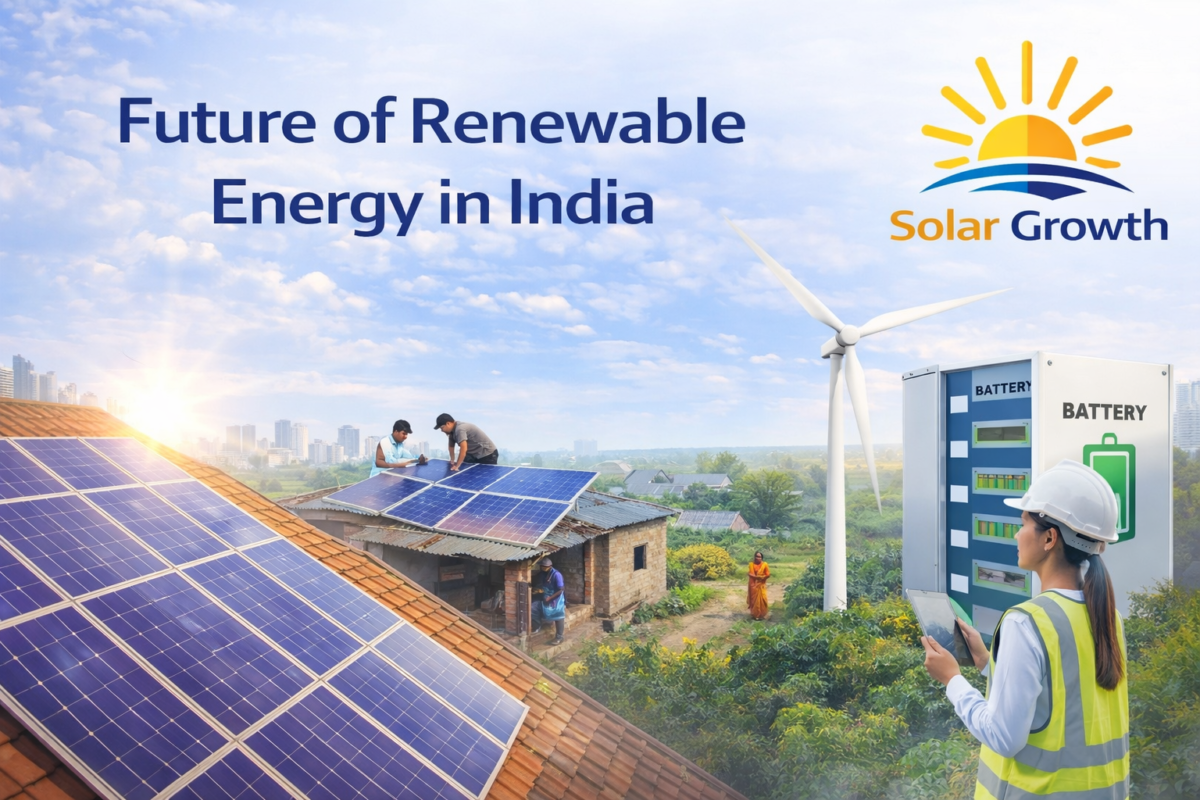
India is moving steadily toward a cleaner and more sustainable energy future. With rising energy demand, environmental concerns, and global climate commitments, renewable energy has become a national priority. Over the past decade, the country has made impressive progress, and the coming years are expected to bring even faster growth driven by innovation, policy support, and investment.
Rapid growth and ambitious targets
India is among the world’s fastest growing renewable energy markets. The government has set an ambitious target of achieving 500 GW of non fossil fuel capacity by 2030. Solar and wind energy are leading this transition, supported by large scale projects as well as increasing adoption at the residential level.
Solar energy, in particular, has seen remarkable expansion due to falling costs and improved technology. Rooftop solar is gaining traction in urban areas, while large solar parks are powering industries and cities. Wind energy continues to play a key role, especially in states with strong wind resources.
Government policies and incentives
Policy support has been a major driver of renewable growth in India. Subsidies, tax benefits, and schemes aimed at residential and commercial users are making clean energy more accessible. Initiatives like rooftop solar programs are encouraging households to generate their own electricity.
In addition, simplified approval processes and digital platforms are making it easier to install and connect renewable systems. These measures are expected to further boost adoption across both urban and rural regions.
Rise of energy storage and technology
One of the biggest challenges with renewable energy is variability. Solar depends on sunlight and wind depends on weather conditions. To address this, India is investing in energy storage solutions such as advanced batteries and grid scale storage systems.
Technological advancements are also improving efficiency. Modern solar panels generate more power in less space, while smart inverters and monitoring systems allow users to track performance in real time. These innovations are making renewable energy more reliable and user friendly.
Growth of green jobs and investments
The renewable energy sector is creating new employment opportunities across manufacturing, installation, maintenance, and research. As investments increase, both domestic and international companies are entering the market, bringing capital and expertise.
India is also focusing on local manufacturing of solar panels and components to reduce dependence on imports. This not only strengthens the supply chain but also supports economic growth.
Decentralized and rural electrification
Renewable energy is playing a crucial role in electrifying remote and rural areas. Decentralized systems such as mini grids and rooftop installations are providing reliable power where traditional infrastructure is limited.
This shift is improving quality of life, supporting small businesses, and enabling access to education and healthcare services in underserved regions.
Challenges to overcome
Despite strong progress, challenges remain. Land availability, grid integration, and financing can slow down large scale projects. There is also a need for better awareness among consumers, especially in smaller towns.
However, with continued policy focus and technological innovation, these challenges are gradually being addressed.
Be Part of India’s Clean Energy Future
Renewable energy is no longer a distant vision. With rapid growth in solar, wind, and energy storage, the shift toward cleaner power is already underway and full of opportunity.
Make the most of this transition by understanding what works best for your home and how you can benefit from modern solar solutions.
Start your free registration with Solar Growth to explore the right renewable options tailored to your energy needs.(https://solargrowth.in/solar-vs-wind-energy-which-is-better-for-india/)
You may also find these guides useful:
- Solar vs Wind Energy – Which Is Better for India?
- Solar EMI and Financing Options for Homes
- How to Choose the Best Solar Installer Near You
FAQs
1. What is the future of solar energy in India?
Solar energy is expected to dominate the renewable sector due to its scalability, affordability, and wide availability.
2. Will renewable energy replace fossil fuels completely?
It may not replace them entirely in the short term, but it will significantly reduce dependence on fossil fuels over time.
3. Are renewable energy systems reliable?
Yes, with advancements in storage and grid systems, reliability is improving steadily.
4. Is renewable energy affordable for households?
Yes, with subsidies and financing options, it has become increasingly affordable.
5. What role does technology play in renewable growth?
Technology improves efficiency, reduces costs, and enhances system monitoring and performance.
Final thoughts
The future of renewable energy in India looks promising and full of opportunity. With strong government backing, technological progress, and growing awareness, clean energy is set to become a central part of everyday life. The transition is not just about sustainability but also about economic growth and energy independence.