As India accelerates its transition toward clean energy, solar projects are drawing significant attention from lenders. Banks and financial institutions are playing a critical role in funding this expansion, but behind every approved loan lies a rigorous evaluation process designed to balance opportunity with risk. Understanding how banks assess solar project loans offers valuable insight for developers, investors, and businesses looking to enter the renewable energy space.
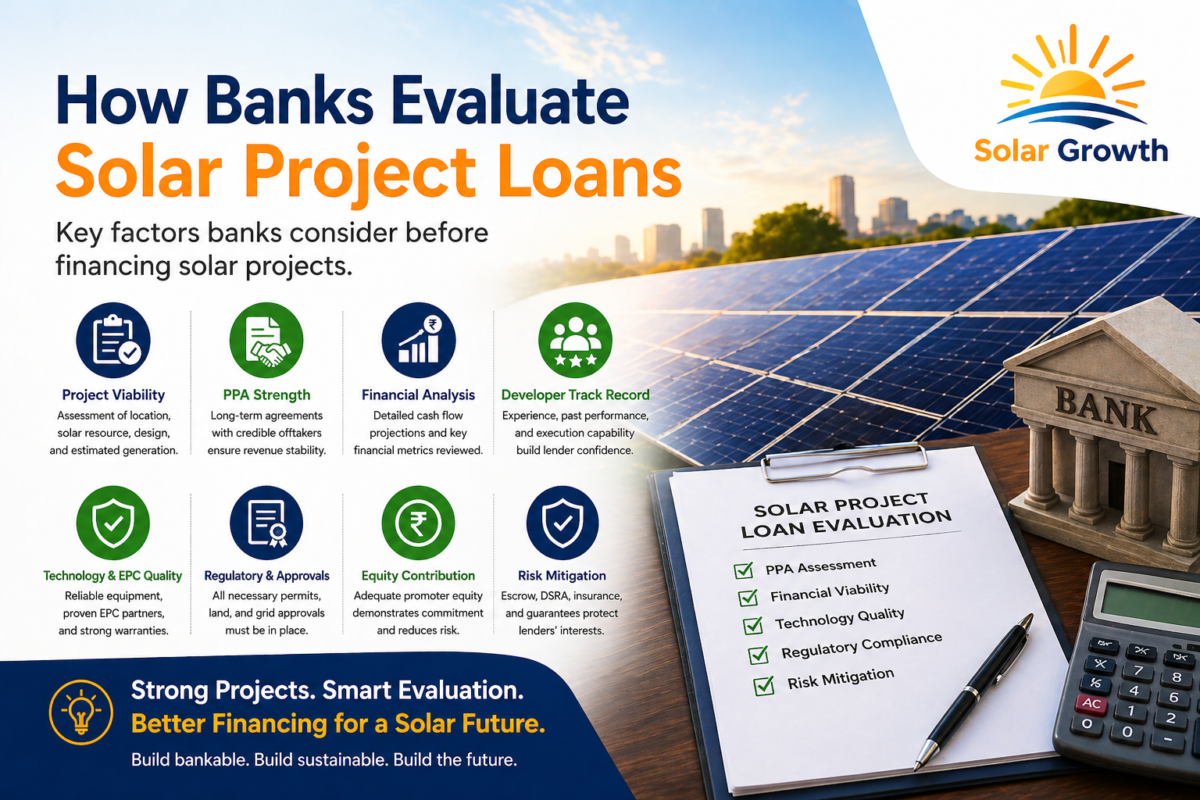
At the heart of any solar loan evaluation is project viability. Banks begin by analyzing whether the proposed project can generate consistent and predictable cash flows over its lifetime. Since solar assets typically operate for 20 to 25 years, lenders focus on long-term performance rather than short-term gains. Key considerations include location, solar irradiation levels, and the technical design of the plant. Projects in regions with high sunlight exposure and proven infrastructure tend to receive more favorable assessments.
One of the most critical elements in the evaluation process is the Power Purchase Agreement, or PPA. For lenders, a strong PPA acts as the backbone of the project’s revenue model. Banks closely examine the terms of the agreement, including tariff structure, duration, and the credibility of the offtaker. A long-term contract with a financially stable buyer significantly reduces risk and improves the chances of loan approval. Corporate PPAs with strong balance sheet companies are increasingly viewed as attractive alternatives to traditional utility agreements.
Financial modeling is another cornerstone of the lending decision. Banks assess detailed projections that estimate revenue, operating costs, debt servicing ability, and return on investment. Metrics such as the Debt Service Coverage Ratio and Internal Rate of Return are carefully evaluated to ensure that the project can comfortably meet its repayment obligations. Conservative assumptions are often applied to account for uncertainties such as weather variability and potential delays.
Equity contribution also plays a key role. Lenders typically expect developers to invest a certain percentage of the project cost as equity, ensuring they have a meaningful stake in the project’s success. A higher equity commitment not only reduces the loan burden but also signals confidence and financial discipline, which banks view positively.
Another major factor is the track record of the developer. Banks prefer working with experienced players who have successfully executed similar projects in the past. A strong portfolio, reliable engineering partners, and proven operational capabilities can significantly enhance a borrower’s credibility. New entrants may still secure financing, but they often face stricter scrutiny and may need to partner with established firms.
Technology and equipment quality are also under the spotlight. Banks evaluate whether the project uses reliable solar modules, inverters, and other components from reputable manufacturers. The performance and durability of these components directly impact energy generation and, ultimately, revenue. Insurance coverage and warranties further strengthen the project’s risk profile.
Regulatory compliance is another critical checkpoint. Solar projects must adhere to a range of approvals, including land acquisition, grid connectivity, and environmental clearances. Banks verify that all necessary permits are in place or are progressing smoothly. Any legal or regulatory uncertainty can delay or even derail loan approvals.
In recent years, environmental and social considerations have gained prominence in lending decisions. Many banks now integrate sustainability criteria into their evaluation frameworks. Solar projects naturally align with these priorities, but lenders still assess factors such as land use impact and community considerations to ensure responsible development.
The evolving policy landscape is also shaping how banks approach solar financing. Government initiatives promoting renewable energy, improved payment security mechanisms, and clearer open access regulations have strengthened lender confidence. At the same time, banks remain cautious about risks such as payment delays from distribution companies and changes in tariff policies.
Risk mitigation strategies are central to the evaluation process. Banks often require safeguards such as escrow accounts, debt service reserves, and guarantees to protect their exposure. These mechanisms ensure that even in challenging scenarios, loan repayments remain secure.
Despite the detailed scrutiny, the outlook for solar financing remains highly positive. Falling technology costs, increasing demand for clean energy, and growing participation from corporate buyers are creating a strong pipeline of bankable projects. Financial institutions are gradually becoming more comfortable with the sector, leading to faster approvals and more competitive lending terms.
For businesses and developers, aligning with these evaluation criteria can make a significant difference in securing funding. A well-structured project with strong fundamentals not only attracts financing but also ensures long-term success in an increasingly competitive market.
If you are planning to develop a solar project or explore financing options, understanding what lenders look for is the first step toward success. Get started with your solar journey through this free registration.
FAQs
1. What do banks look for in a solar project loan?
Banks evaluate project viability, cash flow stability, PPA strength, developer experience, and regulatory compliance before approving a loan.
2. Why is the PPA important for financing?
It provides revenue certainty, which helps banks assess the project’s ability to repay the loan over time.
3. How much equity is required for a solar project?
Typically, developers are expected to contribute a portion of the total project cost as equity, though the exact percentage can vary.
4. Can new developers get solar project loans?
Yes, but they may face stricter evaluation and may need to collaborate with experienced partners.
5. What risks do banks consider?
Common risks include payment delays, regulatory changes, equipment performance, and project execution challenges.
6. How long does loan approval take?
The timeline can vary depending on project complexity, documentation, and regulatory approvals.
7. Is solar financing becoming easier in India?
Yes, with improved policies and growing confidence in the sector, banks are increasingly open to funding solar projects.