Introduction
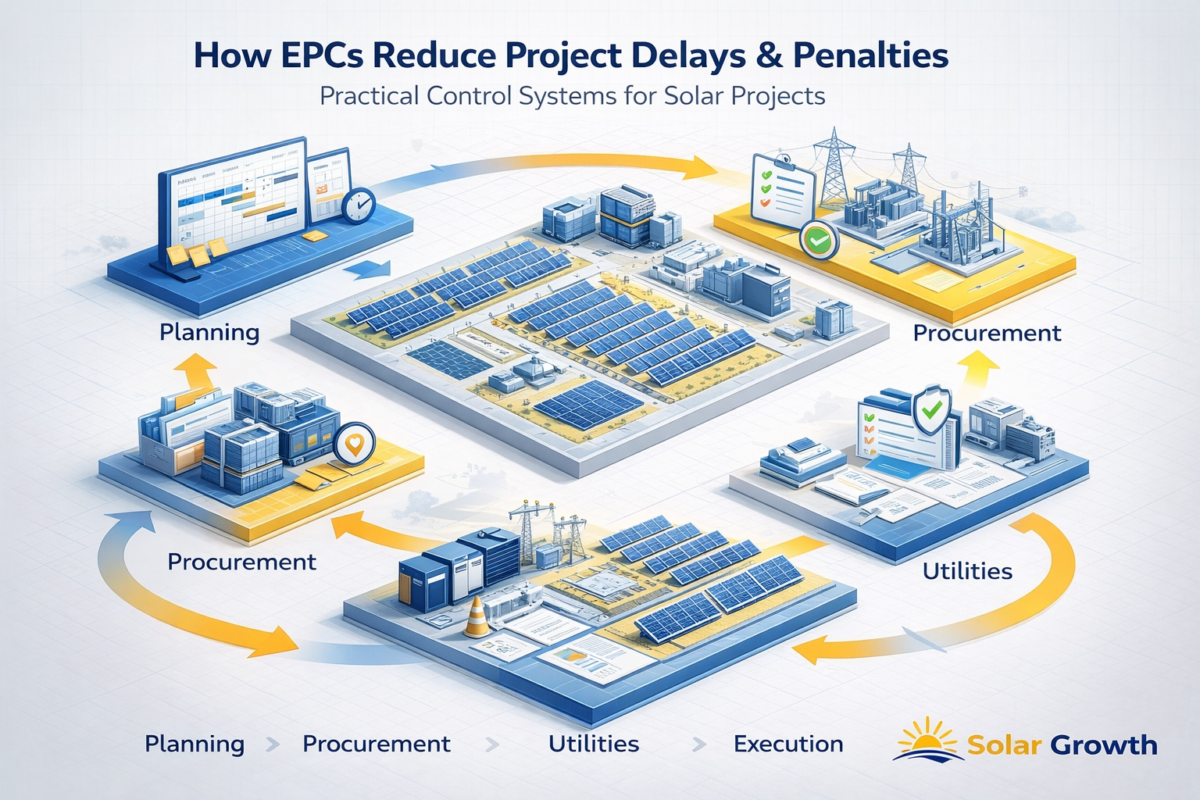
Project delays are one of the biggest profit killers in the solar EPC business. Delays don’t just affect timelines they trigger penalties, block cash flow, damage client trust, and quietly erase margins.
In India and global solar markets, EPC contracts now include strict milestones, liquidated damages (LDs), and performance guarantees. Even well-priced projects can turn unprofitable if delays are not controlled.
This guide explains how solar EPC companies can systematically reduce project delays and penalties, using real-world practices, industry standards, and proven execution strategies.
Why Solar EPC Projects Get Delayed
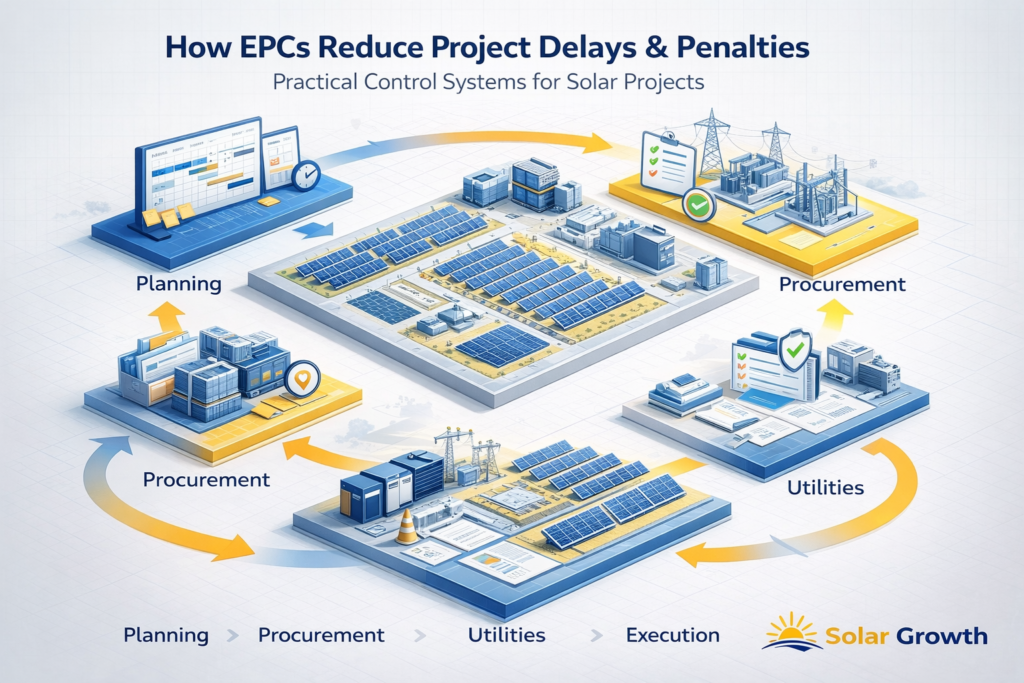
Delays are rarely caused by a single issue. They usually come from multiple small failures compounding over time.
Common Causes of EPC Project Delays
- Incomplete site surveys
- Delayed approvals and permits
- Equipment delivery issues
- Poor coordination with utilities
- Scope changes during execution
- Weak project planning and tracking
- Unrealistic timelines committed during bidding
Reality check:
Most delays are predictable, not accidental.
Understand Delay Clauses and Penalties Clearly
Before execution starts, EPCs must fully understand what causes penalties contractually.
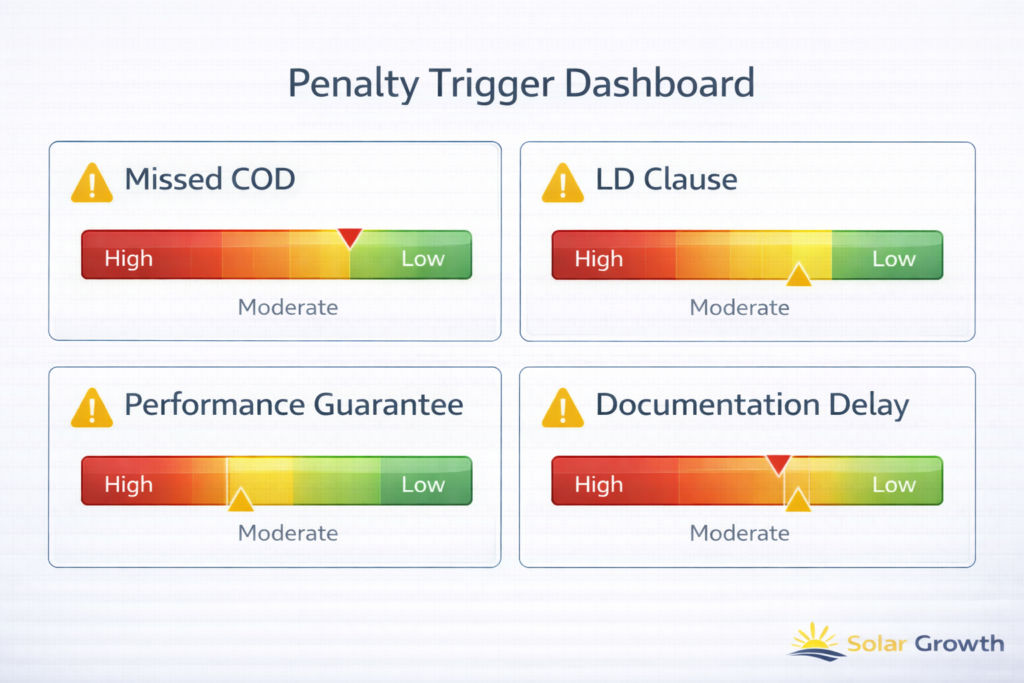
Typical Penalty Triggers
- Missed commissioning dates
- Delay in achieving COD
- Underperformance during testing
- Failure to meet documentation timelines
Industry Benchmark
- LDs usually range from 0.1%–0.5% per week
- Capped at 5%–10% of contract value
Best practice:
Project managers and sales teams should jointly review penalty clauses before signing—not after delays begin.
Start with Realistic Project Planning
Many EPC delays originate in over-optimistic planning.
What Good Planning Looks Like
- Detailed site survey before final schedule
- Clear activity sequencing (civil → structure → electrical)
- Buffer time for weather and approvals
- Supplier lead times confirmed in writing
Example
If inverter delivery takes 10 weeks, don’t build a schedule assuming 7 weeks “to be safe on paper.” That’s how penalties start.
Lock Design Early to Avoid Rework
Design changes mid-project are a major delay driver.
Common Design Mistakes
- Incomplete SLDs at kickoff
- Structural designs without soil testing
- Cable sizing changes after procurement
Best Practices
- Freeze design before ordering materials
- Conduct soil and shading analysis early
- Validate drawings with execution teams
Experience insight:
Rework delays cost 2–3× more time than initial execution.
Strengthen Procurement and Supply Chain Control
Procurement delays often sit outside EPC control—but only if managed poorly.
How EPCs Reduce Procurement Delays
- Approved vendor lists with backups
- Advance purchase for long-lead items
- Written delivery commitments
- Tracking shipments weekly
Table: High-Risk Procurement Items
| Item | Risk Level | Mitigation |
| Inverters | High | Dual vendors |
| Transformers | Very High | Early booking |
| Modules | Medium | ALMM planning |
| Cables | Medium | Local sourcing |
Industry practice:
Top EPCs treat procurement as a project-critical function, not a back-office task.
Coordinate Early with Utilities and Authorities
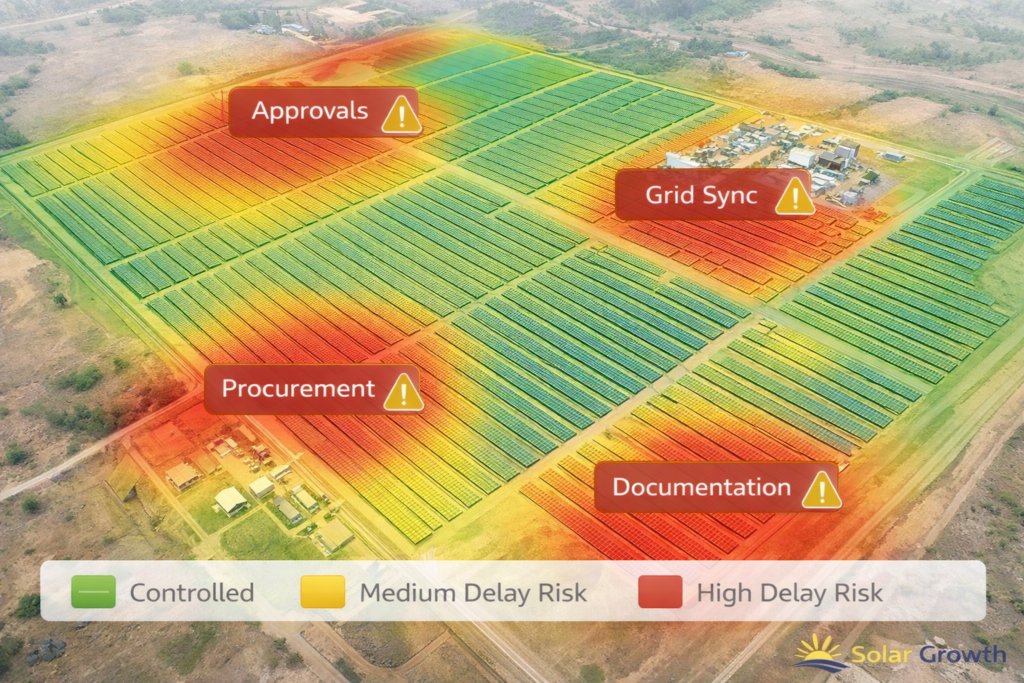
Grid-related delays are among the most expensive.
Typical Utility Delay Areas
- Substation readiness
- Meter availability
- Protection relay approvals
- Grid synchronization scheduling
Best Practices
- Initiate utility coordination at project kickoff
- Track approvals as separate milestones
- Document all communication
Example:
Many EPCs finish plant installation on time but wait weeks for grid approval—still triggering penalties.
Improve On-Site Execution Discipline
Execution delays are usually operational, not technical.
What Strong Execution Looks Like
- Daily task planning
- Clear contractor responsibilities
- Quality checks at every stage
- Immediate issue escalation
Common Execution Mistakes
- Overlapping work without coordination
- Ignoring minor deviations
- Poor labor productivity tracking
Best practice:
Daily site reports reduce delay risks more than any software.
Use Documentation to Protect Against Penalties
Documentation is a delay defense tool, not paperwork.
Critical Documents EPCs Must Maintain
- Daily progress reports
- Delay justification records
- Weather logs
- Utility correspondence
- Variation and scope change approvals
These documents are essential to:
- Claim extensions
- Defend against LDs
- Negotiate penalty waivers
Build Delay Buffers into Pricing and Contracts
Smart EPCs price delays before they happen.
Pricing Buffers That Help
- Contingency for civil uncertainties
- Escalation clauses for material delays
- Force majeure definitions
Contract Best Practices
- Clearly define delay responsibility
- Avoid unlimited penalty clauses
- Link penalties only to critical milestones
Founder-level insight:
Bad contracts destroy good execution.
Track Progress with Simple, Effective Systems
Complex tools don’t prevent delays—discipline does.
What Actually Works
- Weekly milestone tracking
- Red-flag reporting for delays
- One-page project dashboards
Avoid
- Over-engineered project software
- Reports nobody reads
Execution truth:
If delays are visible early, they are fixable.
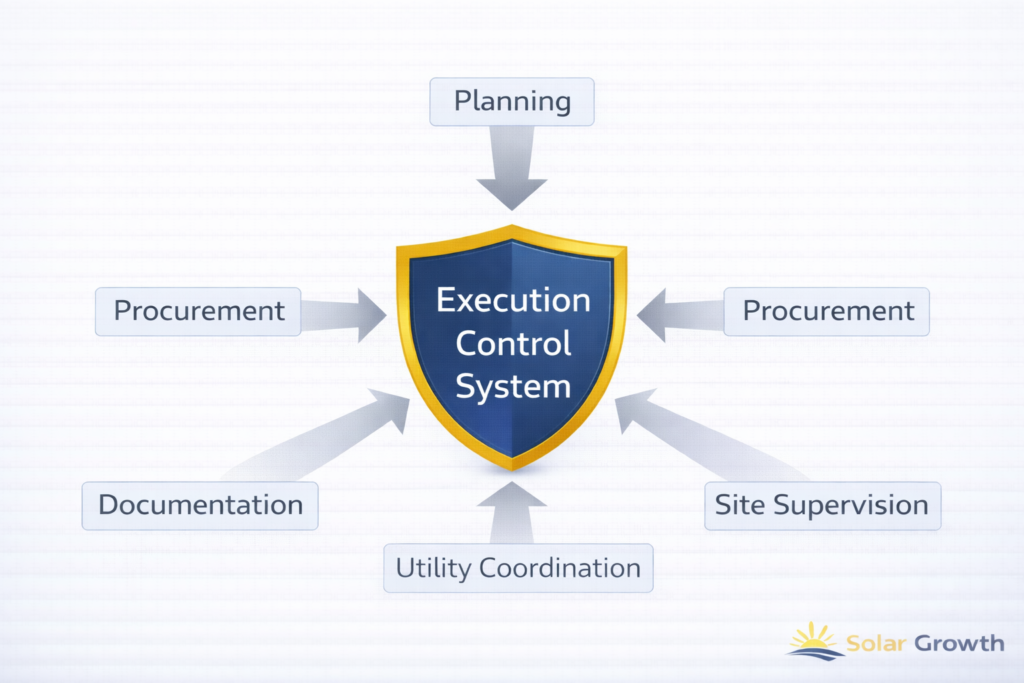
Learn from Past Projects
Experience is the strongest EEAT signal.
Post-Project Review Must Answer
- What caused delays?
- Which assumptions were wrong?
- Where did penalties come from?
EPCs that don’t review past delays repeat them.
Common EPC Mistakes That Cause Penalties
- Committing unrealistic timelines to win bids
- Ignoring utility readiness
- Underestimating documentation effort
- Treating delay clauses lightly
- Reacting late instead of early
Reducing delays is about discipline, not heroics.
Conclusion
Solar EPC project delays are not inevitable. They are usually the result of poor planning, weak coordination, and avoidable assumptions.
EPCs that reduce delays and penalties focus on:
- Realistic scheduling
- Early risk identification
- Strong procurement control
- Execution discipline
- Documentation and contract awareness
In today’s competitive solar market, on-time delivery is a profit strategy, not just an operational goal.
Written by Rohith
Solar Industry Analyst at Solar Growth, covering India’s solar value chain, policy landscape, and business growth trends