Introduction
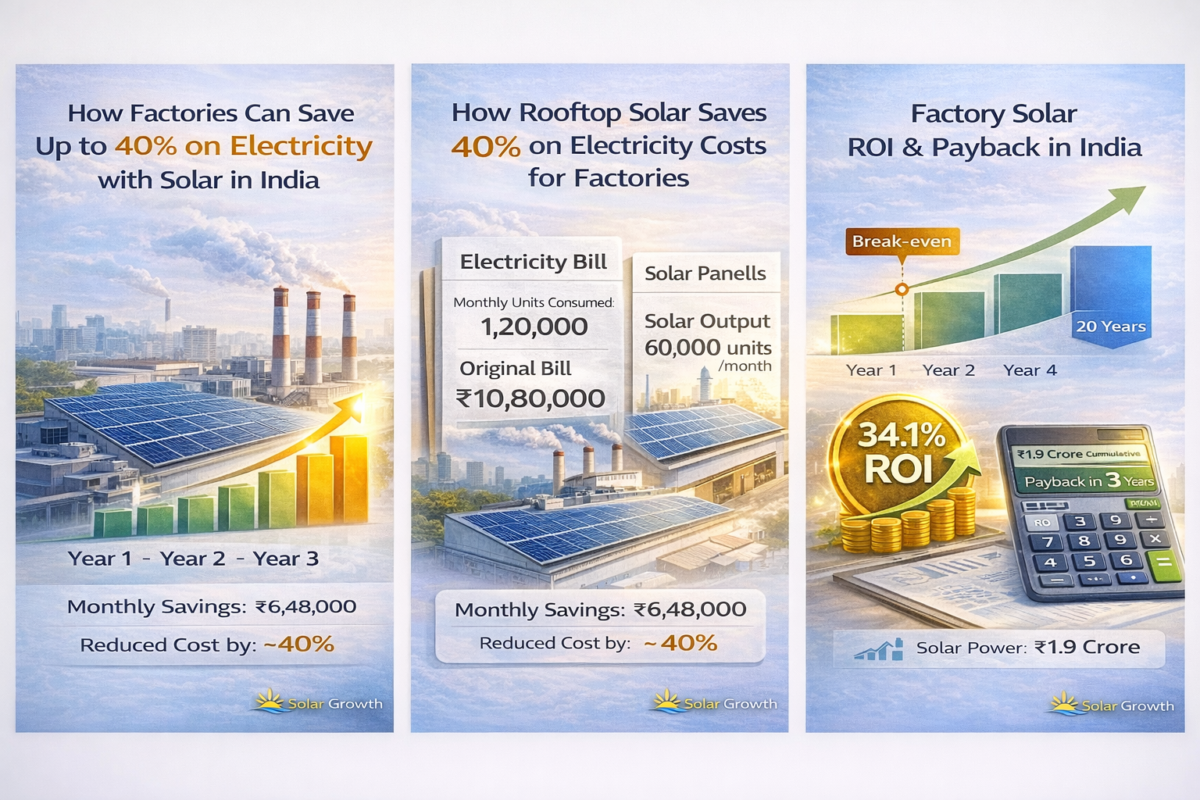
Electricity is one of the largest operating costs for factories in India. Manufacturing units run heavy machinery, motors, compressors, and HVAC systems for long hours every day. As power tariffs continue rising, energy costs increasingly affect profitability.
Many factories now use industrial rooftop solar systems to reduce electricity expenses and protect themselves from future tariff increases. With the right system size and design, factories can reduce electricity bills by 30 – 40% or even more.
This guide explains how factories in India can achieve significant electricity savings using solar power, including cost estimates, ROI calculations, industry benchmarks, and practical examples.
Why Electricity Costs Are Rising for Factories in India
Industrial electricity tariffs vary by state but usually range between:
- ₹7 to ₹11 per unit
- Additional demand charges
- Time-of-day tariffs in some states
These costs rise almost every year due to fuel price fluctuations and infrastructure investments by DISCOMs.
For factories operating 12–24 hours daily, electricity becomes a major cost driver.
Solar power offers a long-term hedge against these rising tariffs.
How Solar Power Reduces Factory Electricity Bills
Solar panels generate electricity during daylight hours, which is when many factories operate at peak load.
Instead of buying expensive electricity from the grid, factories can use solar-generated power directly.
Benefits include:
- Reduced grid electricity consumption
- Lower peak demand charges
- Protection from tariff increases
- Predictable energy costs for 25 years
When designed properly, solar systems can supply 20–50% of a factory’s energy demand.
Example: Factory Electricity Savings with Solar
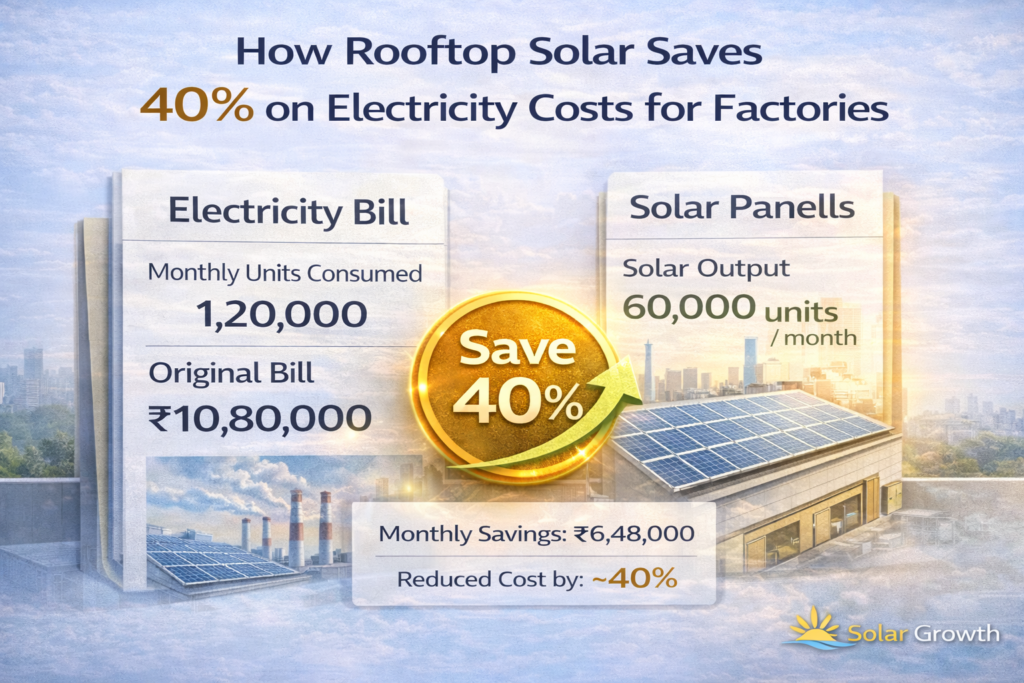
Consider a medium-sized factory consuming:
- 1,20,000 units/month
Average industrial tariff:
- ₹9 per unit
Monthly Electricity Bill
1,20,000 × ₹9 = ₹10,80,000
Now assume the factory installs a 500 kW rooftop solar system.
Expected Solar Generation
Approx yearly generation:
7,20,000 units
Monthly average:
60,000 units
Electricity Savings
60,000 × ₹9 = ₹5,40,000/month
Annual Savings
₹5,40,000 × 12 = ₹64,80,000
This represents nearly 40–50% reduction in electricity costs.
Industrial Rooftop Solar System Cost in India
Solar installation cost depends on system size, technology, and installation complexity.
| System Size | Cost per kW | Approx Total Cost |
| 100 kW | ₹40,000–₹48,000 | ₹40–48 lakh |
| 250 kW | ₹36,000–₹44,000 | ₹90 lakh–1.1 crore |
| 500 kW | ₹34,000–₹42,000 | ₹1.7–2.1 crore |
| 1 MW | ₹32,000–₹40,000 | ₹3.2–4 crore |
Larger systems typically have lower per-kW cost due to economies of scale.
ROI and Payback Period for Factory Solar Systems
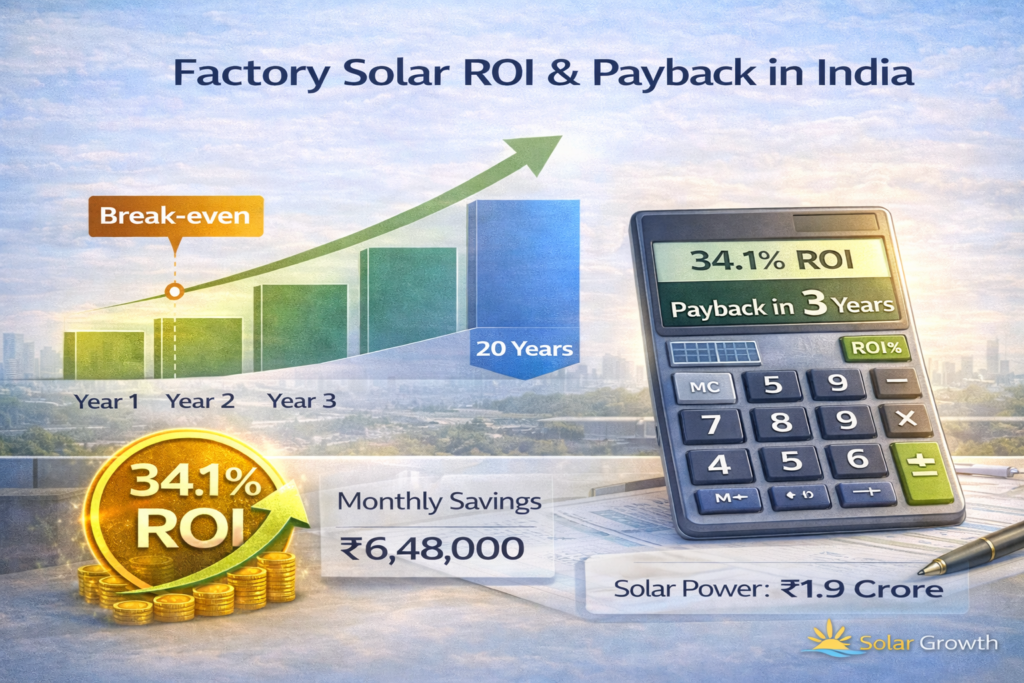
The payback period for industrial solar systems is usually 3–5 years depending on electricity tariffs.
Example Calculation
System size: 500 kW
Total project cost: ₹1.9 crore
Annual savings: ₹64.8 lakh
Payback Period
₹1.9 crore ÷ ₹64.8 lakh ≈ 3 years
After payback, factories continue saving electricity costs for 20+ years.
Typical internal rate of return (IRR) for industrial solar projects ranges between 18–25%.
Factors That Influence Factory Solar Savings
1. Electricity Tariff
Higher tariffs create faster payback.
Factories paying ₹10/unit achieve faster ROI than those paying ₹6/unit.
2. Roof Space Availability
Solar requires approximately:
- 100 kW = 10,000 sq ft roof area
Factories with large rooftops gain more solar generation capacity.
3. Daytime Energy Consumption
Solar produces energy during daytime hours.
Factories with daytime operations benefit the most.
4. Net Metering Policy
Net metering allows exporting excess electricity to the grid.
State policies vary, so check DISCOM guidelines before installation.
Solar Technology Used in Industrial Projects
Modern industrial solar systems use high-efficiency modules such as:
- Mono PERC
- TOPCon
- Bifacial modules
These technologies improve generation efficiency and system lifespan.
Modules must comply with:
- IEC 61215
- IEC 61730
- MNRE ALMM requirements
Compliance ensures long-term reliability and eligibility for certain projects.
Operational and Maintenance Requirements
Solar plants require minimal maintenance.
Typical O&M includes:
- Panel cleaning
- Inverter monitoring
- Electrical inspection
- Performance monitoring
Annual maintenance costs typically range between:
₹800–₹1,500 per kW
Neglecting maintenance can reduce power output over time.
Financing Options for Factory Solar Systems
Factories can install solar through multiple financial models.
Capex Model
Factory invests upfront.
Advantages:
- Highest long-term savings
- Full ownership of plant
Opex / RESCO Model
Third-party developers install the system.
The factory pays per unit electricity.
Advantages:
- No upfront investment
- Reduced operational risk
However, savings are lower than the capex model.
Common Mistakes Factories Make When Adopting Solar
- Choosing the cheapest EPC contractor
- Ignoring roof structural analysis
- Not verifying solar panel quality
- Overestimating power generation
- Poor maintenance planning
Solar projects should be designed carefully to achieve expected ROI.
For quality checks, refer to our guide on How to Avoid Fake or Low-Quality Solar Panels in India.
Industry Trend: Solar Adoption in Manufacturing
Manufacturing industries leading solar adoption in India include:
- Textile factories
- Automotive component plants
- Food processing units
- Warehousing and logistics facilities
Many companies adopt solar to reduce costs and meet sustainability commitments.
Long-Term Benefits Beyond Cost Savings
Apart from electricity savings, solar offers additional advantages.
Environmental Impact
Solar reduces carbon emissions significantly.
Energy Security
Factories become less dependent on grid electricity.
Brand Value
Sustainable energy improves corporate reputation.
Conclusion
Industrial rooftop solar systems provide one of the most effective ways for factories in India to reduce electricity expenses.
With installation costs falling and electricity tariffs rising, solar projects now offer 3–5 year payback periods and decades of savings.
Factories that adopt solar power today gain long-term cost stability, improved sustainability, and a strong competitive advantage.
For many manufacturing businesses, solar is no longer just an environmental decision it is a smart financial strategy.
FAQs
1. How much electricity can a factory save using solar?
Factories can typically reduce electricity bills by 30–40%, depending on system size and energy consumption patterns.
2. What is the payback period for factory solar systems in India?
Most industrial solar installations achieve payback within 3–5 years.
3. Do factories need subsidies for solar installations?
Most industrial projects are financially viable without subsidies because of high electricity tariffs.
4. Can factories run entirely on solar power?
Usually not. Solar supplements grid electricity, but hybrid systems can supply a significant portion of demand.
Written by Rohith Bingi
Solar Industry Analyst at Solar Growth, covering India’s solar value chain, policy landscape, and business growth trends