Introduction
Rooftop solar adoption in India is growing rapidly as homeowners look for ways to reduce electricity bills and switch to clean energy. However, installing a solar system requires an upfront investment, which can be a concern for many households.
To encourage residential solar adoption, the Government of India provides financial incentives through rooftop solar subsidy programs. These subsidies significantly reduce the cost of installing solar panels for homes.
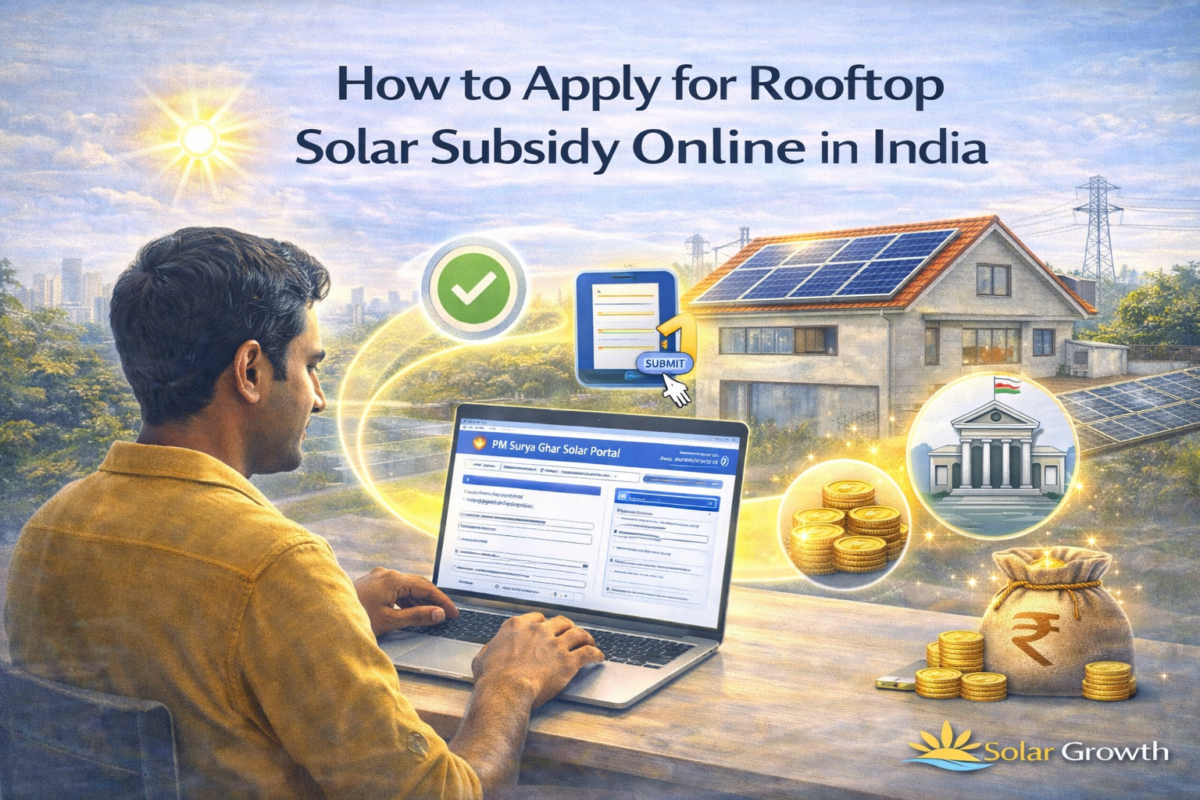
One of the most prominent programs is the PM Surya Ghar: Muft Bijli Yojana, which allows homeowners to apply for rooftop solar subsidies through an online portal.
This guide explains how to apply for rooftop solar subsidy online in India, including eligibility criteria, application steps, documents required, and common mistakes to avoid.
Before applying, it’s important to understand how a complete rooftop solar system works for your home.
What Is the Rooftop Solar Subsidy Scheme?
The rooftop solar subsidy scheme is a government initiative that helps homeowners install solar panels by providing financial assistance.
The scheme aims to:
- Promote renewable energy adoption
- Reduce household electricity bills
- Increase India’s rooftop solar capacity
Under this program, eligible homeowners receive subsidies based on the capacity of their rooftop solar system.
PM Surya Ghar Solar Subsidy Scheme
The PM Surya Ghar: Muft Bijli Yojana is one of the largest rooftop solar subsidy initiatives in India.
The scheme encourages residential consumers to install rooftop solar systems and generate their own electricity.
Key objectives include:
- Supporting rooftop solar installations for homes
- Providing financial assistance to homeowners
- Reducing dependence on conventional electricity
The program is implemented through a centralized online portal.
Solar Subsidy Amount in India
Subsidy amounts depend on the capacity of the rooftop solar system installed.
Typical Subsidy Structure
| System Capacity | Subsidy Amount |
| Up to 2 kW | Up to 40% |
| 2–3 kW | Up to 20% |
| Above 3 kW | Fixed subsidy cap |
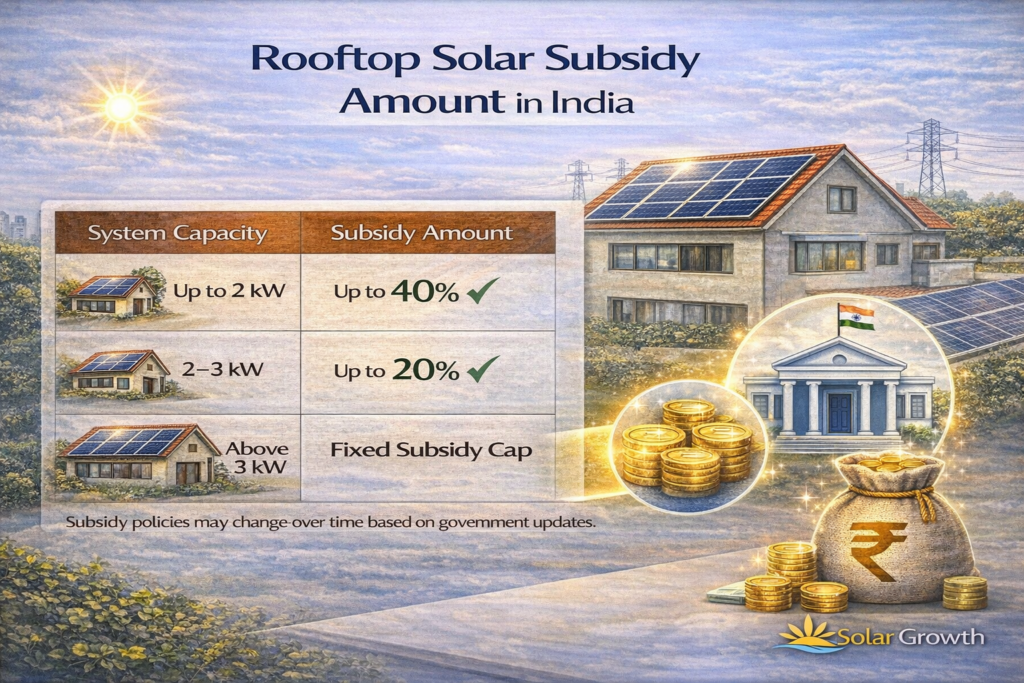
Subsidy policies may change over time based on government updates.
Eligibility Criteria for Solar Subsidy
Not all solar installations qualify for subsidy benefits.
Eligibility Requirements
To qualify for rooftop solar subsidy in India:
- The solar system must be installed on a residential property.
- The homeowner must be an electricity consumer with a valid electricity connection.
- The system must be installed through approved solar vendors.
- The installation must comply with grid connectivity and net metering regulations.
Commercial and industrial solar systems generally do not qualify for residential subsidies.
The type of solar system you choose can affect subsidy eligibility and long-term savings.
Documents Required for Subsidy Application
Homeowners must submit certain documents during the application process.
Common Documents Required
- Electricity bill
- Identity proof (Aadhaar card or PAN card)
- Property ownership documents
- Bank account details
- Solar installation proposal
Providing accurate documentation helps avoid application delays.
Step-by-Step Process to Apply for Rooftop Solar Subsidy Online
Homeowners can apply for the rooftop solar subsidy through the official government portal.
Step 1: Visit the Official Solar Subsidy Portal
Go to the government rooftop solar portal under the PM Surya Ghar program.
Step 2: Register as a Residential Consumer
Create an account using:
- Mobile number
- Email ID
- Electricity consumer details
Step 3: Submit Rooftop Solar Application
Fill in details such as:
- Address and location
- Electricity consumption
- Proposed solar system capacity
Step 4: Select Approved Solar Vendor
Choose a government-approved solar installer from the portal.
Approved vendors ensure compliance with subsidy requirements.
Step 5: Install the Solar System
After application approval, the selected installer installs the solar system.
Step 6: Net Meter Installation and Inspection
The electricity distribution company inspects the installation and installs the net meter.
Net metering is an important part of rooftop solar systems and directly impacts how much you save on electricity bills.
Step 7: Subsidy Disbursement
Once the installation and inspection are complete, the subsidy amount is transferred directly to the homeowner’s bank account.
Example: Solar Subsidy Savings
A homeowner installs a 3 kW rooftop solar system costing ₹2 lakh.
Subsidy Received
20% subsidy = ₹40,000
Effective System Cost
₹2,00,000 – ₹40,000 = ₹1,60,000
Combined with electricity savings, the system can recover its cost within a few years.
Common Mistakes Homeowners Make
Some homeowners face delays or rejection of subsidy applications due to avoidable mistakes.
Common mistakes include:
- Choosing non-approved solar installers
- Submitting incorrect documents
- Installing systems before subsidy approval
- Not following net metering requirements
Understanding the process helps prevent these issues.
Best Practices for Rooftop Solar Subsidy Application
Homeowners should follow these best practices when applying for solar subsidies.
Verify Vendor Approval
Choose only government-approved solar vendors.
Submit Accurate Documentation
Ensure all documents match electricity connection details.
Check State Policies
Some states have additional solar incentives.
Monitor Application Status
Track the subsidy application through the online portal.
Industry Trends in Residential Solar Subsidies
Government initiatives continue to expand rooftop solar adoption in India.
Programs such as PM Surya Ghar aim to bring solar power to millions of households.
With growing policy support and declining solar costs, residential solar installations are expected to grow significantly in the coming years.
Subsidy is only one part of the process for a complete understanding, read this complete rooftop solar system guide in India.
Conclusion
Rooftop solar subsidies make solar installations more affordable for homeowners in India. By reducing the upfront cost of solar systems, these programs encourage households to switch to clean and sustainable energy.
Understanding the subsidy application process, eligibility requirements, and documentation helps homeowners avoid delays and successfully receive financial assistance.
With proper planning and the support of government-approved installers, rooftop solar combined with subsidy benefits can provide significant electricity savings for decades.
Apply for Solar Subsidy with Expert Support
Applying for rooftop solar subsidy can be confusing if you’re doing it for the first time. Choosing the right system, vendor, and documentation process is critical to avoid delays.
Sign up with us now to get expert assistance in solar installation and subsidy application. Free Registration – Solar Growth
FAQs
1. Who is eligible for rooftop solar subsidy in India?
Residential homeowners with valid electricity connections are eligible for rooftop solar subsidies under government programs.
2. How much subsidy is available for rooftop solar systems?
Subsidy depends on system capacity, with higher subsidies typically available for smaller residential systems.
3. Can homeowners apply for solar subsidy online?
Yes. Homeowners can apply through the official government rooftop solar portal.
4. How long does it take to receive the solar subsidy?
Subsidy disbursement usually occurs after installation approval and net meter verification.
Written by Rohith Bingi
Solar Industry Analyst at Solar Growth, covering India’s solar value chain, policy landscape, and business growth trends