Introduction
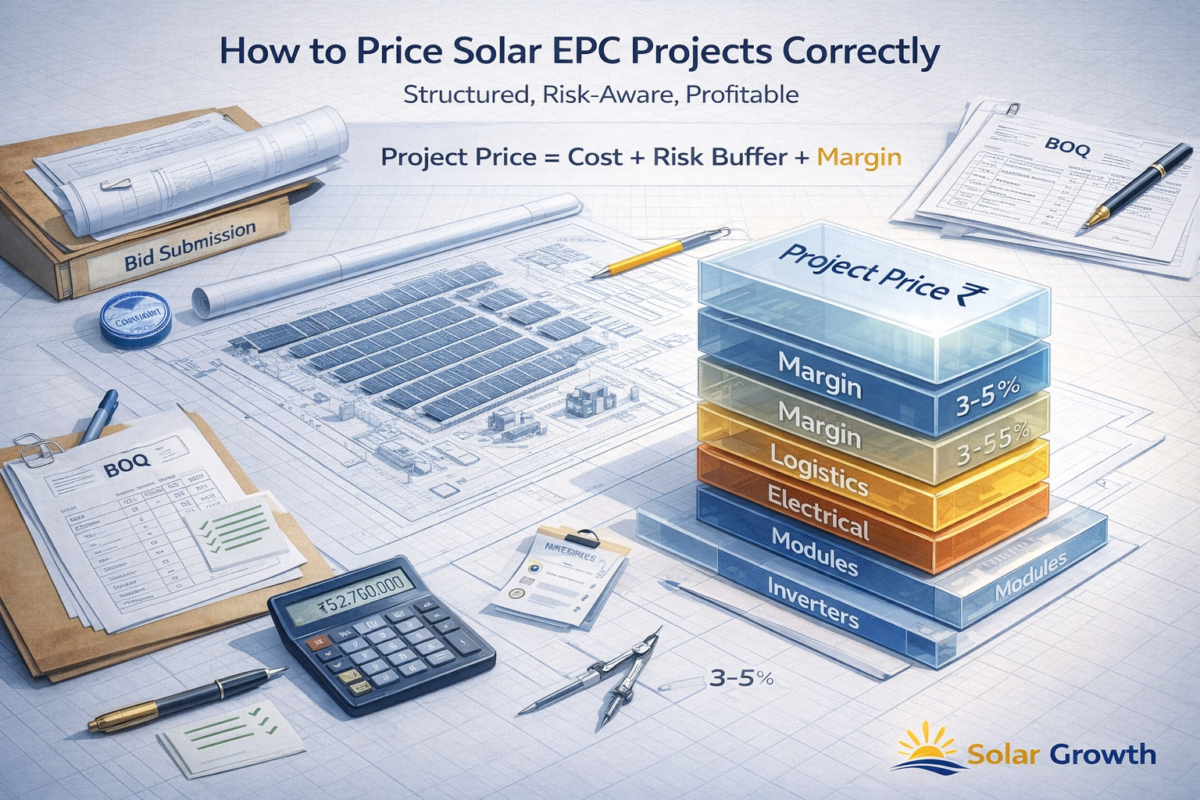
Pricing a solar EPC project correctly is one of the biggest challenges for EPC companies in India. The price is too high, and you lose the bid. The price is too low, and you risk losses, delays, or poor execution.
With rising equipment costs, tight tender conditions, and intense competition, solar EPC pricing today must be data-driven, risk-aware, and realistic. This guide explains how to price solar EPC projects correctly in India while staying competitive and profitable.
Understand the Project Scope Clearly
Incorrect pricing often starts with misunderstanding the scope.
Before calculating costs, review:
- Project capacity (MW)
- Location and terrain
- Grid connectivity scope
- Module and inverter specifications
- Civil and electrical work details
- O&M duration and responsibilities
Example 1:
A rooftop project and a ground-mounted plant of the same capacity will have very different BOS and civil costs.
Example 2:
Projects in remote locations increase logistics, labor, and timeline costs.
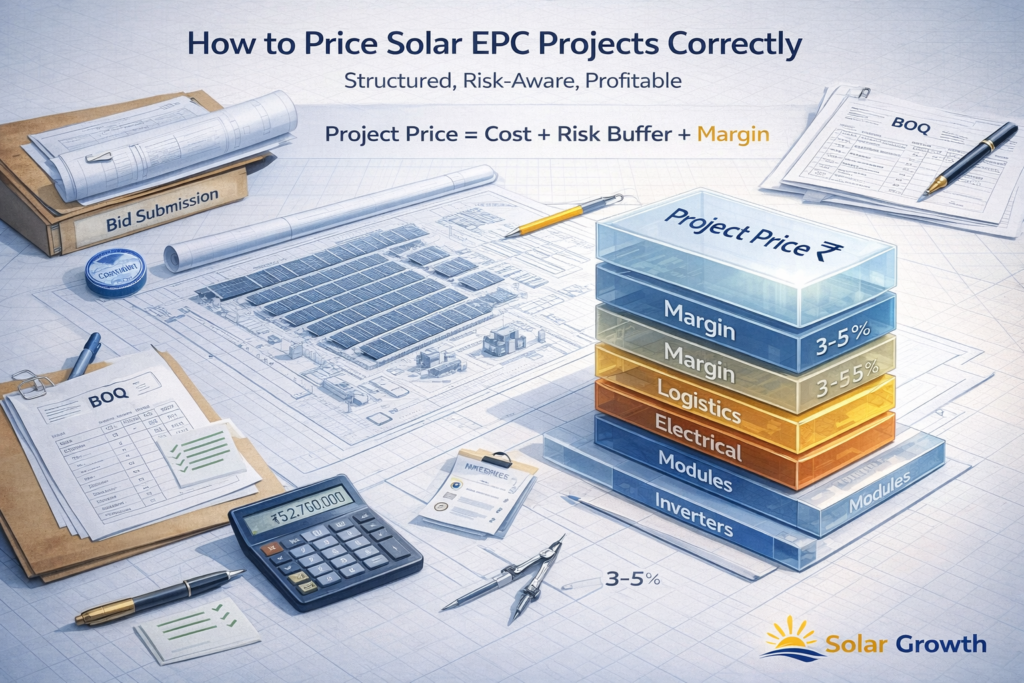
Break Down Costs in a Structured Manner
Never price a project as a lump sum guess.
Key Cost Components
- Modules
- Inverters
- Mounting structures
- Cables and BOS
- Civil works
- Electrical works
- Labor and manpower
- Logistics and transportation
- Engineering and design
- Project management
- O&M (if applicable)
Sample Cost Structure Table
| Cost Head | Impact on Price |
| Modules | High |
| Inverters | High |
| BOS | Medium |
| Civil & Electrical | Medium |
| Logistics | Variable |
| O&M | Long-term |
Factor in Market-Driven Equipment Pricing
Solar equipment prices fluctuate frequently.
You must:
- Track current module and inverter prices
- Account for import duties and GST
- Lock prices with suppliers where possible
- Include price fluctuation buffers
Practical insight:
A 3–5% buffer helps absorb sudden price increases without killing margins.
Don’t Ignore Site-Specific Risks
Every solar site has unique challenges.
Common risk factors:
- Soil conditions
- Water availability
- Weather conditions
- Local labor availability
- Right-of-way and approvals
Example:
Rocky soil increases foundation costs. Ignoring this leads to losses later.
Add Realistic Margin, Not Greed
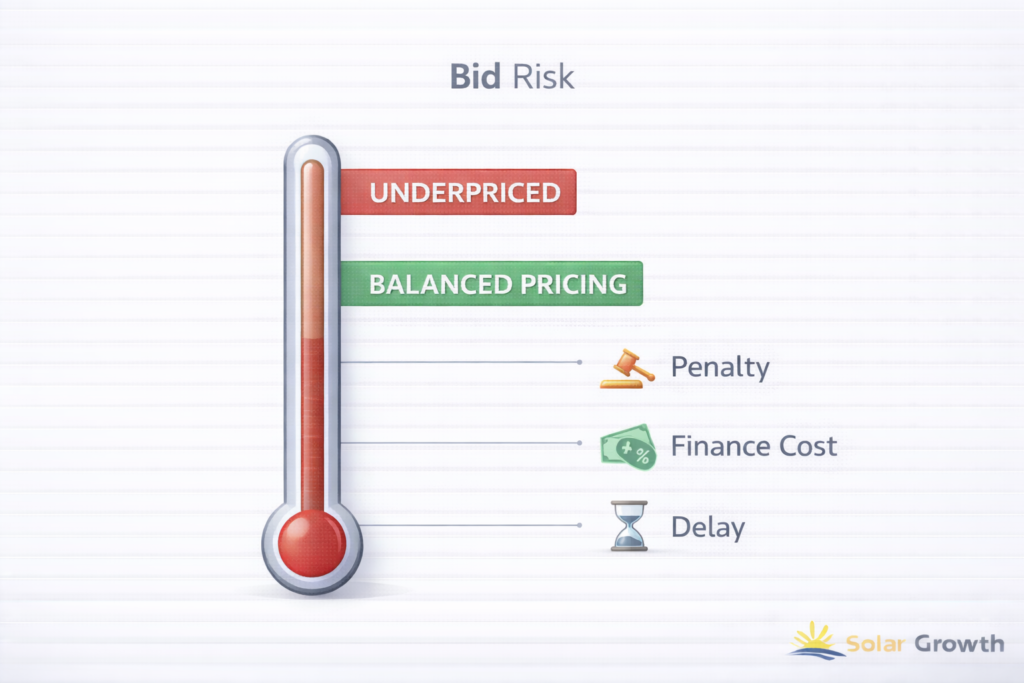
Margins should reflect project risk, not desperation.
Pricing Approaches Comparison
| Approach | Result |
| Lowest price | High risk, low survival |
| Balanced pricing | Sustainable growth |
| Value-based pricing | Better long-term profits |
Government and PSU tenders increasingly reject unrealistically low bids.
Include Compliance and Penalty Costs
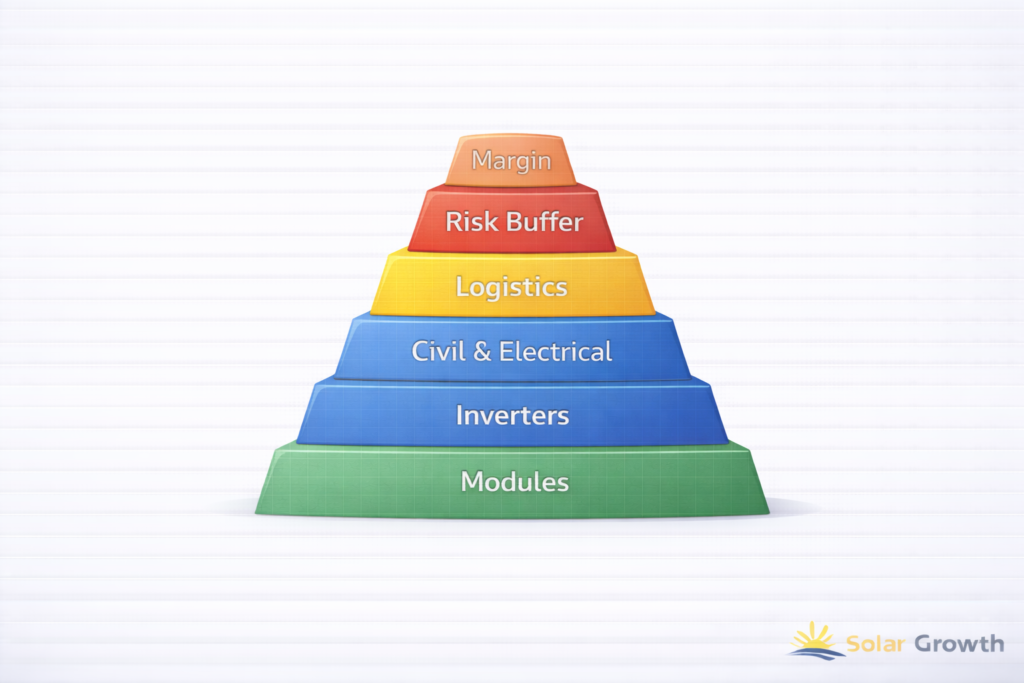
Many EPCs fail to price compliance correctly.
Consider:
- Performance bank guarantees
- Liquidated damages
- Delay penalties
- Insurance costs
- Warranty obligations
Ignoring these can wipe out profits even on “won” projects.
Learn from Past Project
Experience is your biggest pricing advantage.
Track:
- Actual vs estimated costs
- Delay reasons
- Margin leakage points
Experience-based pricing always beats theoretical pricing.
Price Differently for Tender Types
Not all tenders are equal.
- Government / PSU: Lower margins, strict compliance
- Private IPPs: Flexibility, negotiation scope
- C&I projects: Higher margins, faster execution
Pricing strategy must change accordingly.
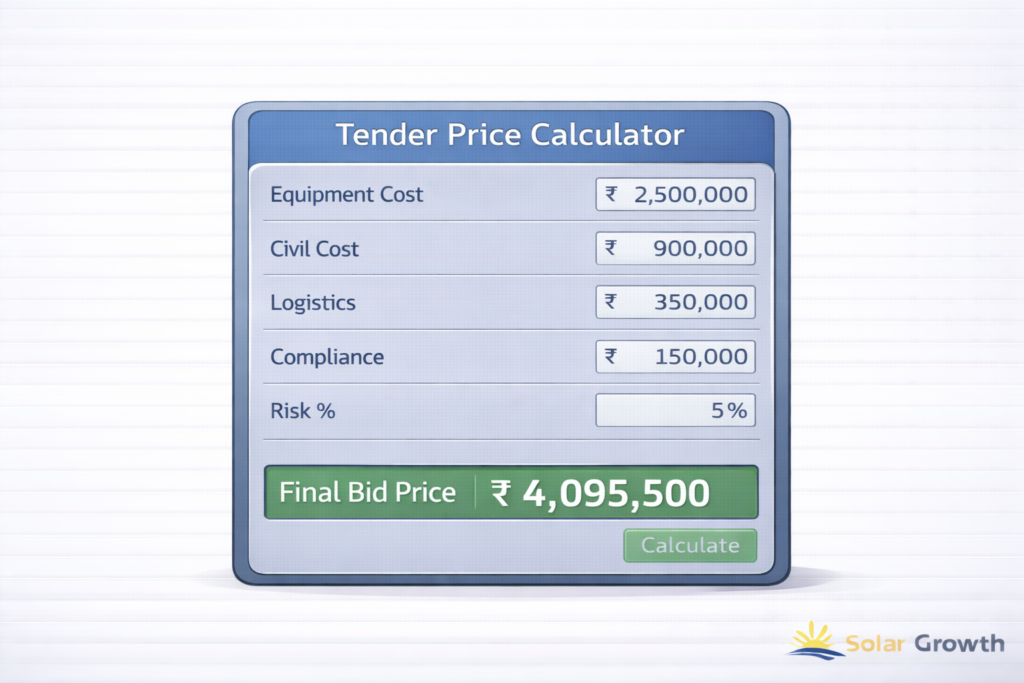
Use a Pricing Checklist Before Submission
Before final submission, confirm:
- All BOQ items included
- Risks accounted for
- Margins realistic
- Compliance costs added
- Payment terms reviewed
Pricing errors usually come from haste, not lack of knowledge.
Conclusion
Correct solar EPC pricing is about balance, not aggression. EPC companies that price based on data, experience, and risk awareness consistently outperform competitors.
Winning projects profitably requires structured costing, realistic margins, and disciplined execution not just the lowest quote.
Written by Rohith Bingi
Solar Industry Analyst at Solar Growth, covering India’s solar value chain, policy landscape, and business growth trends