Introduction
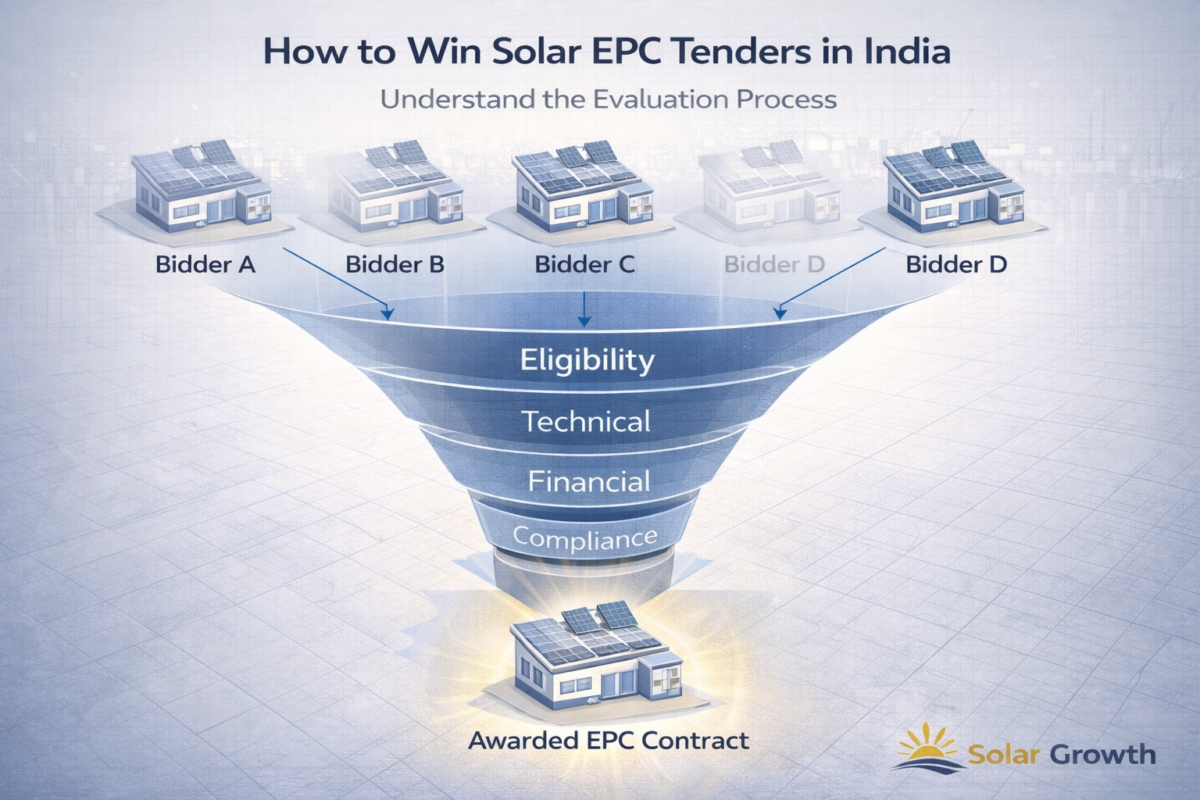
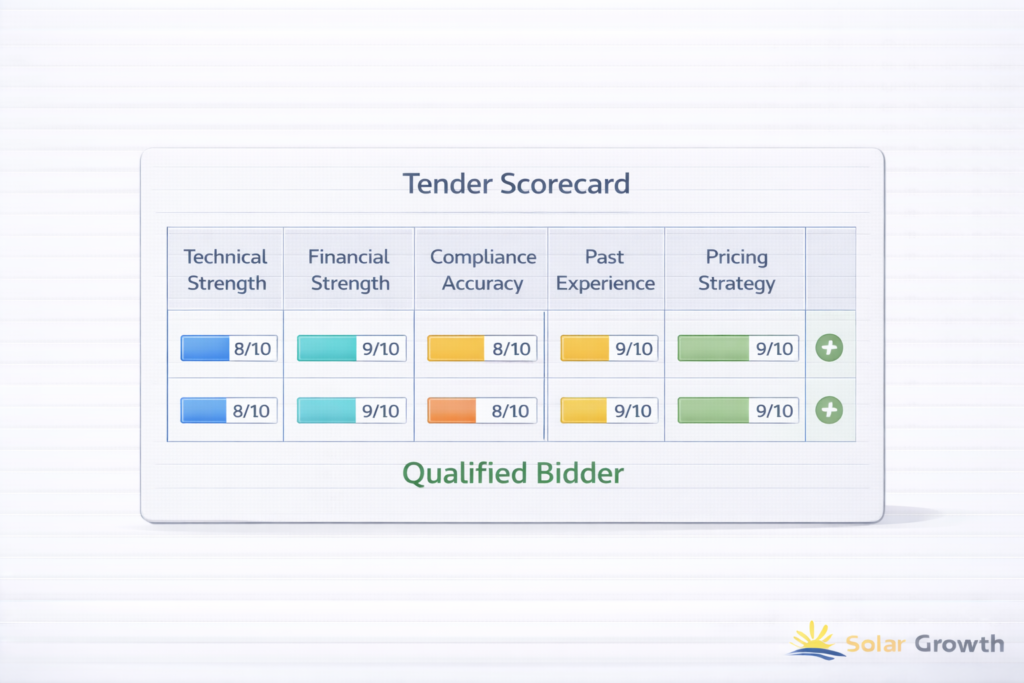
Winning solar EPC tenders in India is no longer just about quoting the lowest price. Government bodies, PSUs, and large private developers now evaluate technical strength, financial credibility, execution capability, and compliance history before awarding contracts.
With intense competition and tighter margins, Solar EPC companies must adopt a structured approach to tendering. This guide explains how solar EPC firms can improve their tender success rate in India using proven, practical strategies.
Understanding the Solar EPC Tender Landscape in India
India’s solar EPC tenders are issued by multiple authorities, including:
- SECI (Solar Energy Corporation of India)
- State DISCOMs
- NTPC and other PSUs
- Private developers and IPPs
- Industrial and commercial clients
Each tender follows strict evaluation criteria, and missing even one requirement can lead to disqualification.
Key Eligibility Requirements You Must Get Right
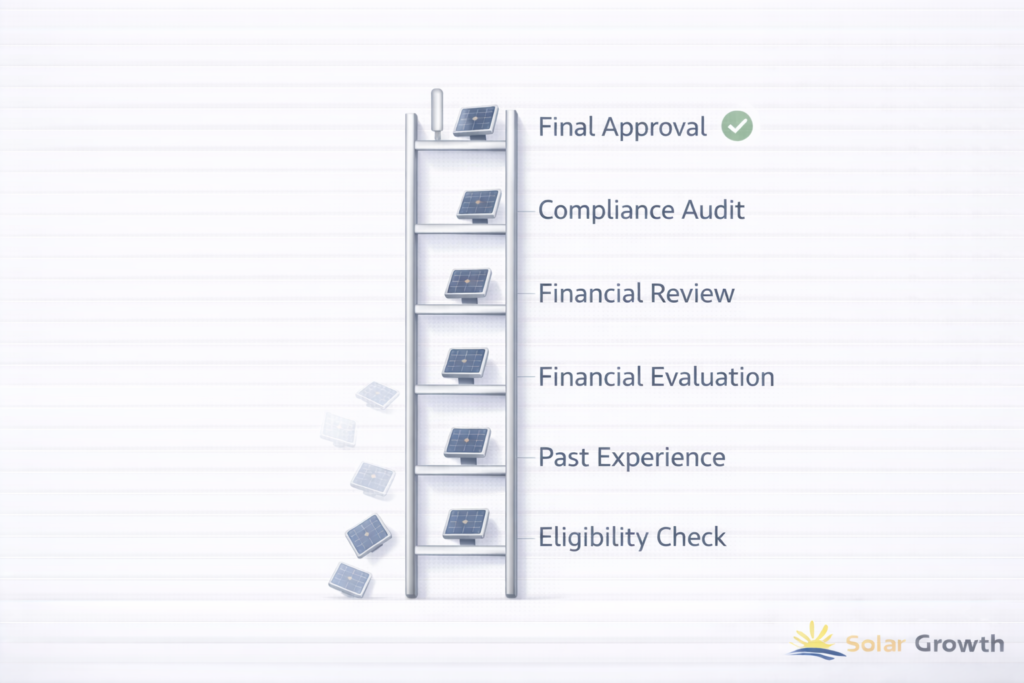
Before bidding, ensure your company meets basic eligibility criteria.
Common requirements include:
- Minimum years of EPC experience
- Completed project capacity (MW scale)
- Financial turnover thresholds
- Net worth requirements
- Valid certifications and registrations
Practical tip:
Maintain a ready eligibility checklist for different tender categories to avoid last-minute rejections.
Strengthen Your Technical Documentation
Technical evaluation carries significant weight in solar EPC tenders.
Your technical bid should clearly include:
- Detailed system design and SLDs
- Module and inverter specifications
- Compliance with MNRE and IEC standards
- Construction methodology
- Quality assurance and safety plans
Example:
A bidder with a well-documented execution plan often scores higher than a cheaper but poorly explained bid.
Financial Bid Strategy: Price Smart, Not Low
Quoting the lowest price is risky and often unsustainable.
Instead, focus on:
- Accurate BOQ calculations
- Realistic execution costs
- Long-term O&M considerations
- Risk buffers for delays and price fluctuations
| Pricing Approach | Outcome |
| Lowest bid only | High risk, low margins |
| Balanced pricing | Higher win rate |
| Value-based bid | Better long-term profitability |
Authorities increasingly prefer value-based bids over aggressive undercutting.
Build Strong Past Performance Credentials
Past performance is a major trust factor.
How to strengthen it:
- Maintain detailed completion certificates
- Highlight similar project experience
- Showcase performance data
- Include client testimonials where allowed
If your company is new, consider:
- Joint ventures
- Consortium bidding
- Subcontracting on large projects initially
Compliance and Documentation Accuracy Matters
Many bids fail due to documentation errors, not technical weakness.
Common mistakes to avoid:
- Missing affidavits or undertakings
- Incorrect formats
- Expired certificates
- Mismatched financial data
Action step:
Create standardized document folders for:
- Legal
- Technical
- Financial
- Statutory compliance
Improve Bid Presentation and Clarity
Tender evaluators review hundreds of bids.
Make yours easy to understand:
- Use clear headings
- Add tables for specifications
- Keep explanations concise
- Avoid unnecessary marketing language
A clean, professional bid builds confidence in your execution capability.
Leverage Digital Presence for Private Tenders
Private and corporate solar EPC tenders increasingly evaluate online credibility.
Strengthen your digital footprint:
- Professional website with project portfolio
- Case studies and certifications
- Clear EPC service pages
- Strong SEO visibility
Companies with strong online presence often receive direct tender invitations.
Invest in Long-Term Relationships
Many solar EPC contracts are repeat business.
Build relationships with:
- Developers
- Consultants
- OEMs
- Government agencies
Consistent performance leads to preferred vendor status and closed-bid tenders.
Common Reasons Solar EPC Bids Get Rejected
Avoid these frequent issues:
- Non-compliance with tender clauses
- Weak technical justification
- Unrealistic pricing
- Poor documentation quality
- Lack of relevant experience
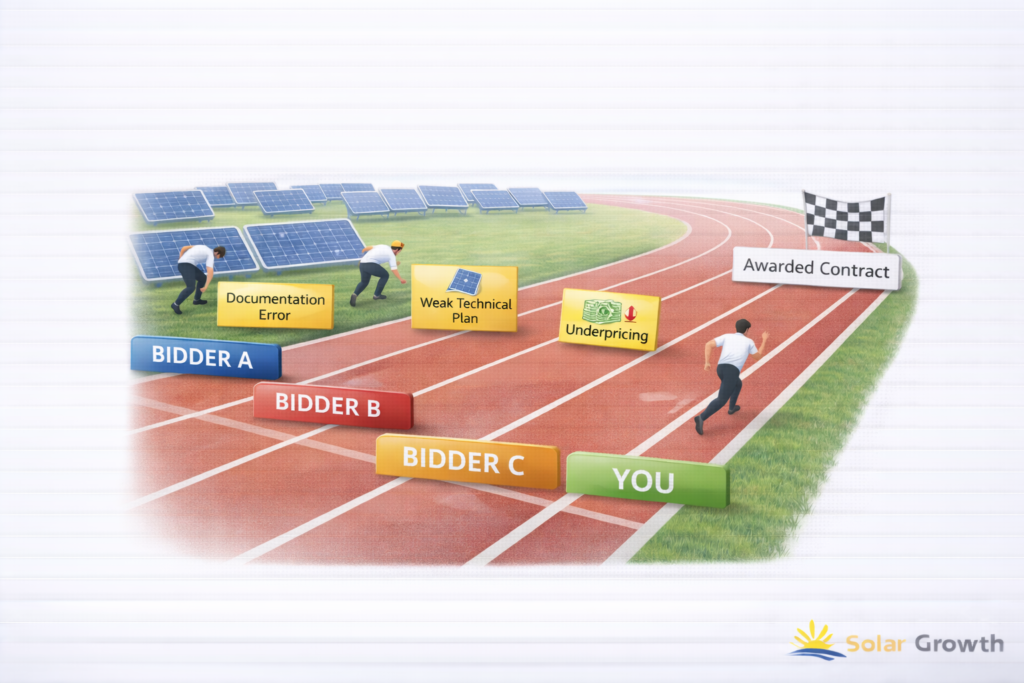
Winning tenders is about reducing rejection risk, not just bidding more.
Conclusion
Winning more solar EPC tenders in India requires a disciplined approach. EPC companies that focus on technical strength, financial clarity, compliance accuracy, and professional presentation consistently outperform competitors.
By improving documentation, pricing strategy, and credibility, solar EPC firms can increase both win rates and long-term profitability.
Written by Rohith Bingi
Solar Industry Analyst at Solar Growth, covering India’s solar value chain, policy landscape, and business growth trends