Introduction
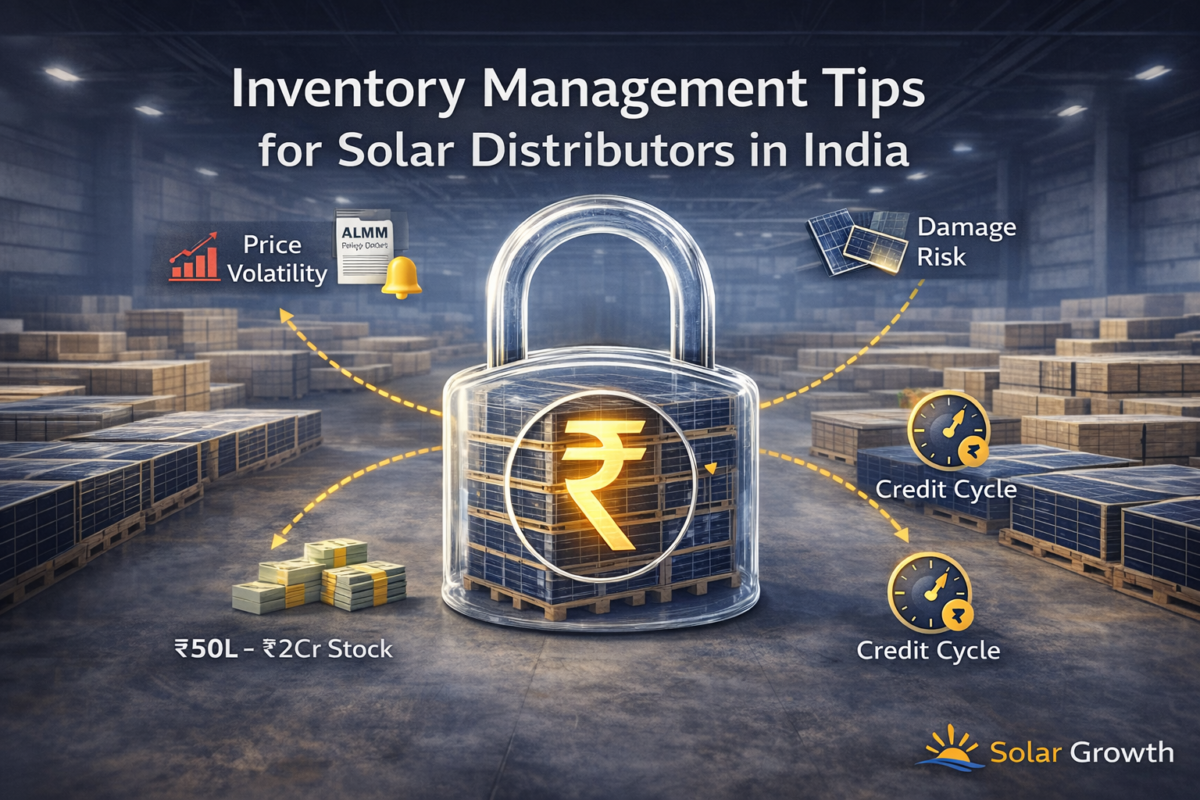
For solar distributors in India, inventory is not just stock it is working capital. A single wrong purchase decision can block crores of rupees. A sudden module price drop can wipe out margins overnight.
In today’s volatile solar market, inventory management for solar distributors has become a survival skill, not an operational task. With ALMM regulations, fluctuating import duties, logistics risks, and tight credit cycles, stock discipline directly impacts profitability.
This guide explains practical inventory management strategies for solar distributors in India, backed by industry practices, real-world scenarios, and proven risk controls.
Why Inventory Management Is Critical in Solar Distribution
Unlike FMCG or fast-moving retail, solar panels:
- Require high capital investment
- Move in bulk quantities
- Are vulnerable to price volatility
- Are sensitive to policy changes
Real Scenario
During the 2022 module price correction, many Indian distributors who had stocked heavily at peak rates faced 5–8% inventory value erosion within months.
Inventory risk is financial risk.
Understand Solar Inventory Risk Categories
Solar distributor inventory control begins by understanding risk layers.
1. Price Risk
Module prices fluctuate due to:
- Global polysilicon pricing
- Import duty revisions
- Currency fluctuations
2. Policy Risk
ALMM updates can:
- Remove certain models
- Affect project eligibility
- Freeze certain stock categories
3. Damage Risk
Solar modules are fragile. Improper stacking or moisture exposure leads to micro-cracks.
4. Credit Risk
Stock supplied on credit blocks cash flow.
Strong inventory management reduces exposure across all four risks.
Tip 1: Track Inventory Turnover Ratio Monthly
Inventory turnover ratio shows how quickly stock moves.
Formula:
Cost of Goods Sold ÷ Average Inventory Value
Benchmark for Solar Distribution (India)
| Turnover Ratio | Meaning |
| < 4 times/year | Slow-moving, capital blocked |
| 4–6 times/year | Moderate efficiency |
| 6+ times/year | Healthy stock velocity |
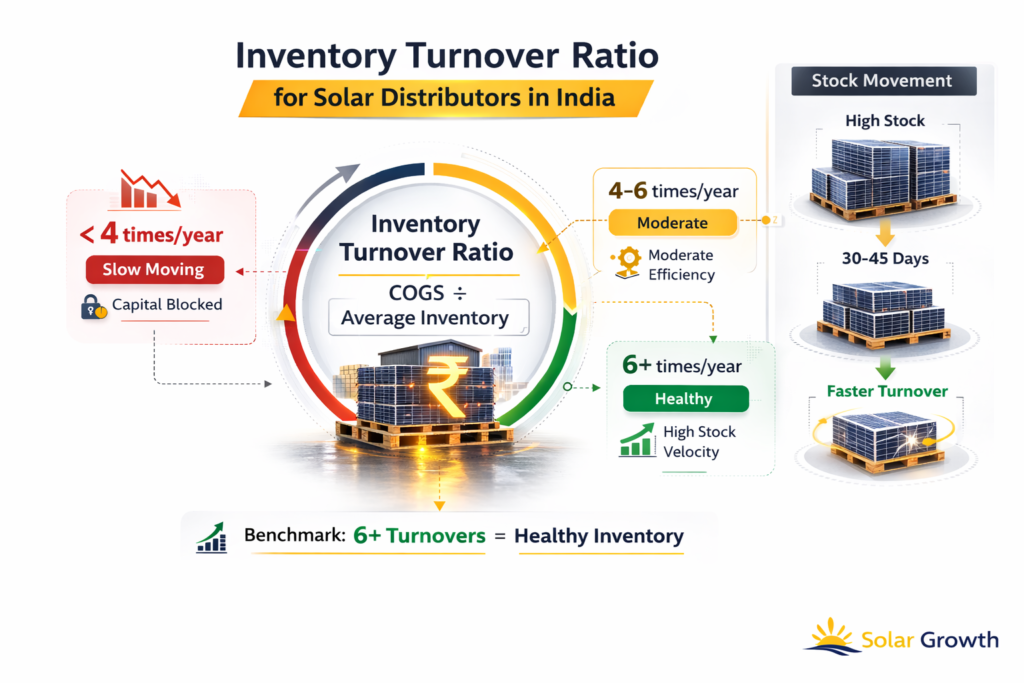
If modules are not moving within 60–90 days, investigate demand immediately.
Tip 2: Avoid Over-Stocking During Price Peaks
Solar panel stock management in India must align with price cycles.
Common Mistake
Buying 3–4 months of stock when prices appear stable.
Better Strategy
- Maintain 30–45 days rolling inventory
- Confirm large EPC orders before bulk purchase
- Track global price signals weekly
Inventory speculation is not strategy. It’s gambling.
Tip 3: Align Procurement with Confirmed Orders
Top-performing solar distributors in India avoid speculative stocking.
Best practices:
- Back-to-back purchase against EPC POs
- Partial advance collection before dispatch
- Tiered stock planning (fast-moving vs slow-moving SKUs)
Example
If 550Wp modules move faster than 540Wp in your region, reduce legacy SKU exposure.
Dead SKUs silently kill margins.
Tip 4: Implement Warehouse Discipline
Solar warehouse management best practices include:
- Covered storage
- Vertical stacking limits
- Shock-resistant pallet handling
- Humidity monitoring
Practical Control System
- Weekly physical stock audit
- Damage log register
- Barcode or ERP tracking
- FIFO (First In, First Out) rotation
Warehouse mismanagement is avoidable loss.
Tip 5: Segment Inventory by Risk
Not all inventory carries equal risk.
Recommended Segmentation
| Inventory Type | Risk Level | Strategy |
| Fast-moving modules | Medium | Rolling stock |
| Transformers | High | Order-based only |
| Inverters | Medium-High | Confirmed demand |
| BOS components | Low | Moderate buffer |
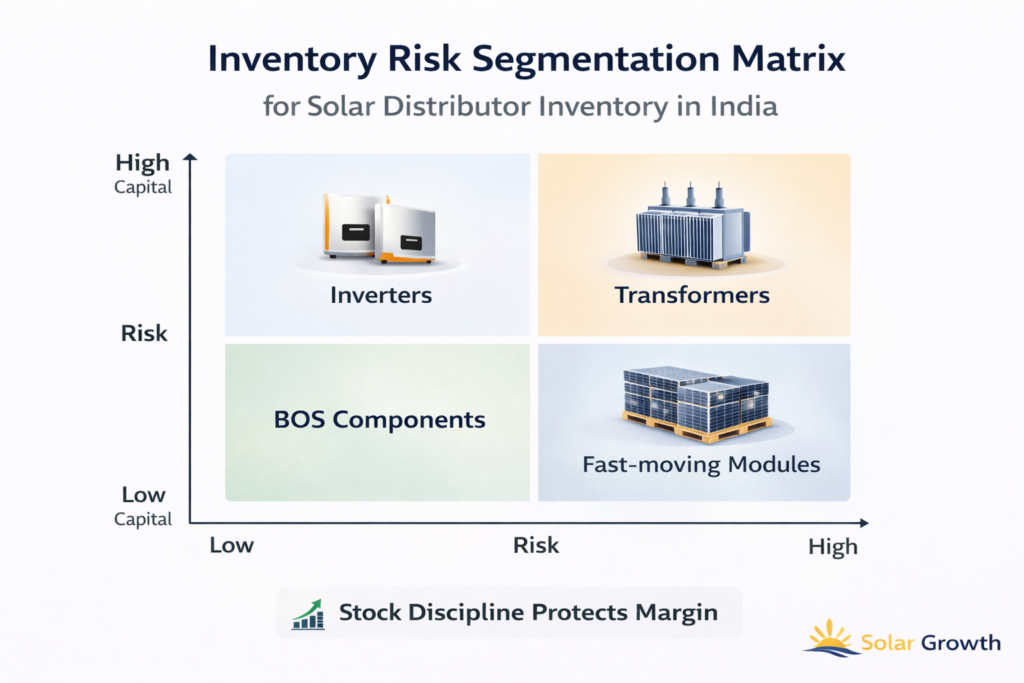
Transformers and HT equipment should rarely be stocked without confirmed orders.
Tip 6: Monitor Working Capital Exposure
Solar distribution working capital management is tightly linked to stock discipline.
Warning Signs
- Inventory value > 3 months revenue
- Increasing receivables with stagnant stock
- High interest cost eating margin
Example
An 8% distributor margin becomes 4% net after 6 months interest on blocked inventory.
Inventory mismanagement is often invisible until finance costs rise.
Tip 7: Use Basic ERP or Stock Tracking Software
Excel sheets are not enough at scale.
Recommended controls:
- Real-time stock levels
- Ageing analysis report
- Batch tracking
- Credit-linked dispatch approval
Data reduces guesswork.
Tip 8: Build Strong Supplier Communication
Good relationships reduce inventory risk.
Ask manufacturers for:
- Rolling price updates
- Price protection policies
- Delivery flexibility
- Return or swap options (where possible)
Some Tier-1 brands offer limited price protection within short windows.
Negotiate intelligently.
Common Inventory Mistakes Solar Distributors Make
- Hoarding stock during subsidy announcements
- Ignoring ALMM updates
- Offering extended credit without analysis
- Mixing fast and slow SKUs
- Ignoring damage audits
Inventory losses are usually self-inflicted.
Best Practices Used by Successful Solar Distributors in India
- Maintain weekly demand forecasting
- Limit stock ageing to 60–75 days
- Separate warehouse and sales accountability
- Use conservative credit extension
- Track gross margin vs inventory cost
Profit is protected before sales, not after.
Inventory and Margin Protection
Inventory discipline directly impacts:
- Gross margin stability
- Cash flow cycles
- Ability to scale
- Risk exposure
If you want to understand margin dynamics further, explore our guide on Solar EPC Margins Explained and how supply chain decisions impact profitability.
For broader distribution insights, see How to Become a Solar Panel Distributor in India.
Conclusion
Inventory management for solar distributors in India is a financial control system, not a storage function. High capital intensity, volatile pricing, and strict compliance requirements demand disciplined stock planning.
Solar distributors who treat inventory scientifically outperform those who rely on instinct. In India’s competitive solar market, stock velocity, working capital control, and risk awareness define long-term success.
Inventory discipline protects margin. Margin protects survival.
FAQs
1. What is the ideal inventory holding period for solar distributors?
Most efficient distributors maintain 30–60 days of stock to reduce capital blockage.
2. How does ALMM impact solar inventory?
If a module model is removed from ALMM, it may become ineligible for government projects, reducing demand.
3. How can distributors reduce module damage risk?
By maintaining covered warehouses, proper stacking, regular inspections, and controlled logistics handling.
4. What is a healthy inventory turnover ratio for solar distributors in India?
A turnover ratio of 6 or more annually is considered healthy for fast-moving markets.
Written by Rohith Bingi
Solar Industry Analyst at Solar Growth, covering India’s solar value chain, policy landscape, and business growth trends