Introduction
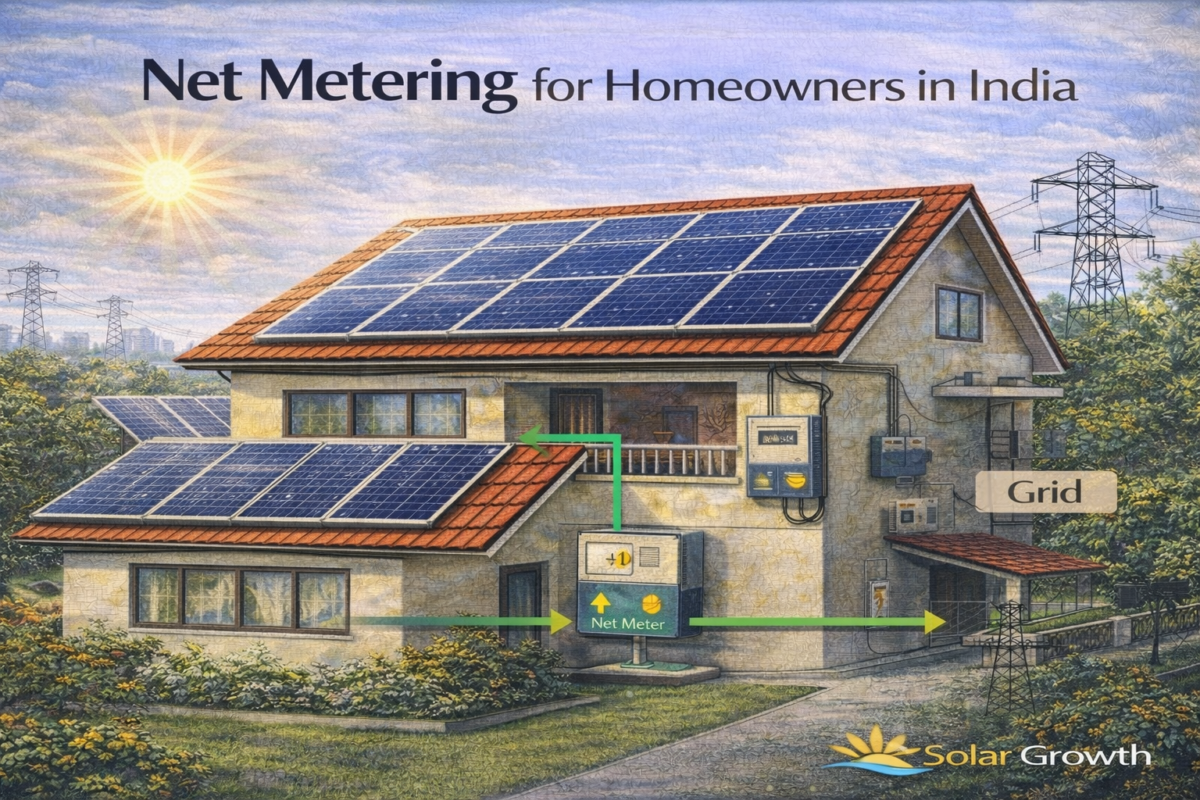
Rooftop solar systems are becoming increasingly popular among homeowners in India. With rising electricity tariffs and growing interest in clean energy, many households are installing solar panels to generate their own electricity.
However, one important concept that every solar homeowner must understand is net metering.
Net metering allows homeowners to send excess solar electricity back to the grid and receive credits on their electricity bills. This system makes rooftop solar more financially attractive because it ensures that no solar energy goes to waste.
This guide explains how net metering works in India, how homeowners benefit from it, and what rules and policies apply to residential solar installations.
What Is Net Metering?
Net metering is a billing mechanism that allows solar system owners to export excess electricity to the grid and receive credits in return.
When a rooftop solar system generates more electricity than the home consumes, the excess power flows back into the electricity grid.
The electricity meter records both:
- Electricity imported from the grid
- Electricity exported to the grid
At the end of the billing cycle, the consumer pays only for the net electricity consumed.
How Net Metering Works
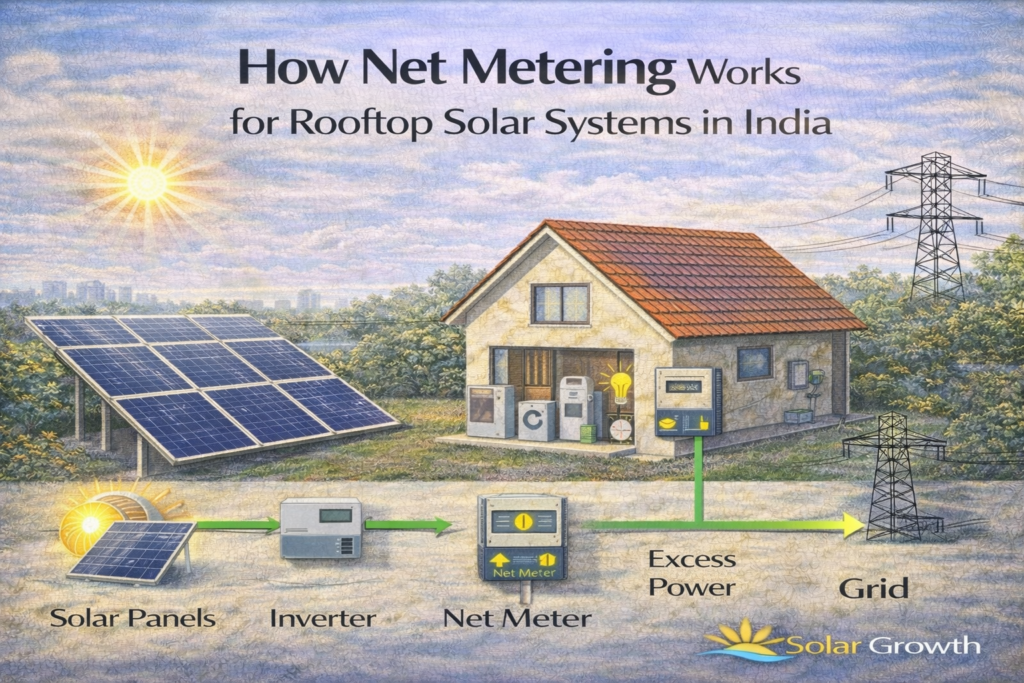
Net metering works through a special bi-directional electricity meter.
This meter tracks two types of electricity flow:
- Power drawn from the grid
- Solar electricity exported to the grid
Example of Net Metering
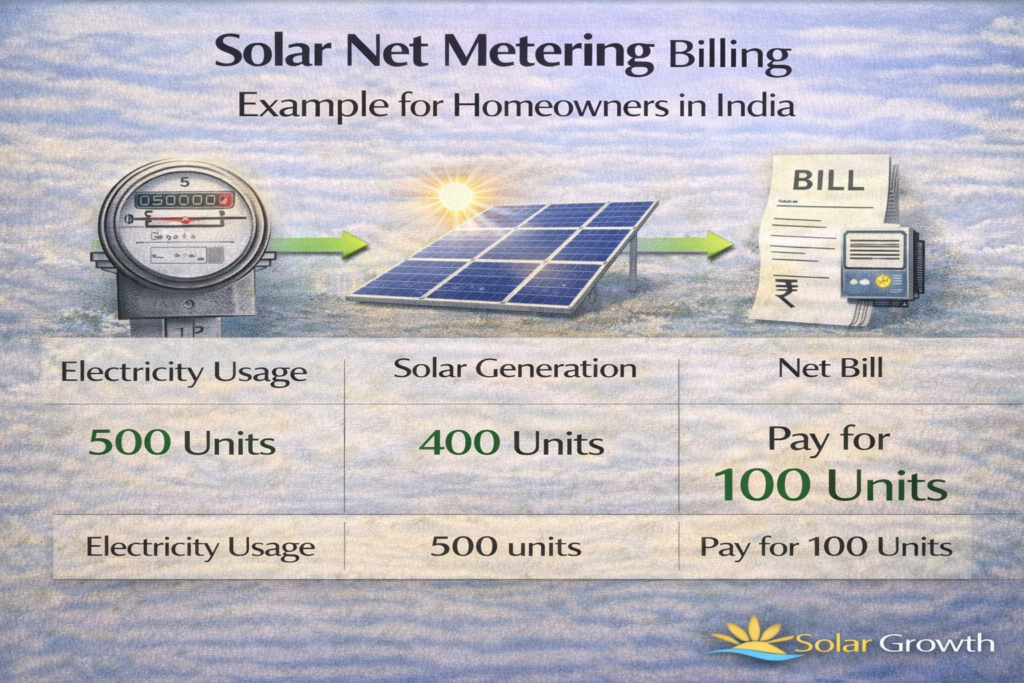
Suppose a household uses 500 units of electricity in a month.
If the rooftop solar system generates 400 units, the electricity bill will be calculated for only 100 units.
If solar production exceeds consumption, excess energy may be carried forward to the next billing cycle depending on local policies.
Components Required for Net Metering
To enable net metering, certain components are required in a residential solar installation.
Key System Components
- Rooftop solar panels
- Solar inverter
- Net meter (bi-directional meter)
- Grid connection infrastructure
The local electricity distribution company installs the net meter after approving the solar installation.
Net Metering Policy in India
Net metering regulations are governed by state electricity regulatory commissions.
While policies vary slightly across states, most net metering frameworks include:
- Capacity limits for rooftop solar systems
- Approval procedures for solar installation
- Billing and credit settlement rules
In many states, residential consumers can install rooftop solar systems up to 10 kW capacity under net metering.
Net Metering vs Gross Metering
Some states offer different solar billing mechanisms.
Comparison Table
| Feature | Net Metering | Gross Metering |
| Electricity usage | Solar used first in home | All solar power exported |
| Billing | Pay for net electricity | Paid fixed tariff for exports |
| Savings | Higher for homeowners | Lower savings potential |
Net metering is usually more beneficial for residential consumers.
Benefits of Net Metering for Homeowners
Net metering makes rooftop solar financially attractive.
Lower Electricity Bills
Homeowners pay only for the difference between electricity consumed and electricity generated.
Better Solar Utilization
Excess solar energy is not wasted.
Faster Solar Payback
Net metering significantly improves solar project ROI.
Encourages Renewable Energy Adoption
Policies promote decentralized clean energy generation.
Example: Net Metering Savings
A homeowner installs a 3 kW rooftop solar system.
Average electricity consumption = 400 units per month.
Solar generation = 350 units per month.
Monthly Electricity Bill
Without solar = 400 units
With solar net metering = 50 units
This results in major electricity bill savings.
Net Metering Installation Process
The process usually involves several steps.
Step 1: Apply for Solar Installation
Submit rooftop solar application to the electricity distribution company.
Step 2: System Design and Installation
Install the rooftop solar system through a certified installer.
Step 3: Inspection and Approval
The distribution company inspects the solar installation.
Step 4: Net Meter Installation
A bi-directional net meter is installed.
Step 5: System Activation
The solar system is connected to the grid.
Common Mistakes Homeowners Make
Some homeowners misunderstand net metering policies.
Common mistakes include:
- Installing solar systems without understanding state regulations
- Overestimating electricity generation
- Choosing inexperienced solar installers
- Ignoring net meter approval procedures
Proper planning helps avoid these issues.
Best Practices for Homeowners
Homeowners planning rooftop solar systems should follow several best practices.
Understand Local Net Metering Rules
Policies differ between states.
Choose Certified Solar Installers
Professional installers help with approvals and system design.
Size the Solar System Properly
System size should match household electricity consumption.
Monitor Solar System Performance
Use monitoring apps to track electricity generation.
Future of Net Metering in India
India aims to significantly expand rooftop solar adoption.
Government initiatives such as PM Surya Ghar Yojana aim to encourage residential solar installations.
Net metering will continue to play an important role in supporting distributed solar energy generation.
Conclusion
Net metering is one of the most important policies supporting rooftop solar adoption in India. By allowing homeowners to export excess solar electricity to the grid and receive billing credits, net metering makes residential solar systems more financially viable.
Understanding how net metering works helps homeowners maximize the benefits of their solar installations and reduce long-term electricity expenses.
With the right system design and proper policy awareness, rooftop solar combined with net metering can provide significant savings and contribute to a cleaner energy future.
FAQs
1. What is net metering in solar systems?
Net metering is a billing system that allows solar system owners to export excess electricity to the grid and receive credits on their electricity bills.
2. Is net metering available across India?
Yes, but policies are regulated by individual states and may vary slightly.
3. How much electricity can be exported through net metering?
The export depends on solar generation and household consumption patterns.
4. Do homeowners get paid for excess solar electricity?
In most cases, excess electricity is credited against future electricity consumption rather than paid as cash.
Written by Rohith Bingi
Solar Industry Analyst at Solar Growth, covering India’s solar value chain, policy landscape, and business growth trends