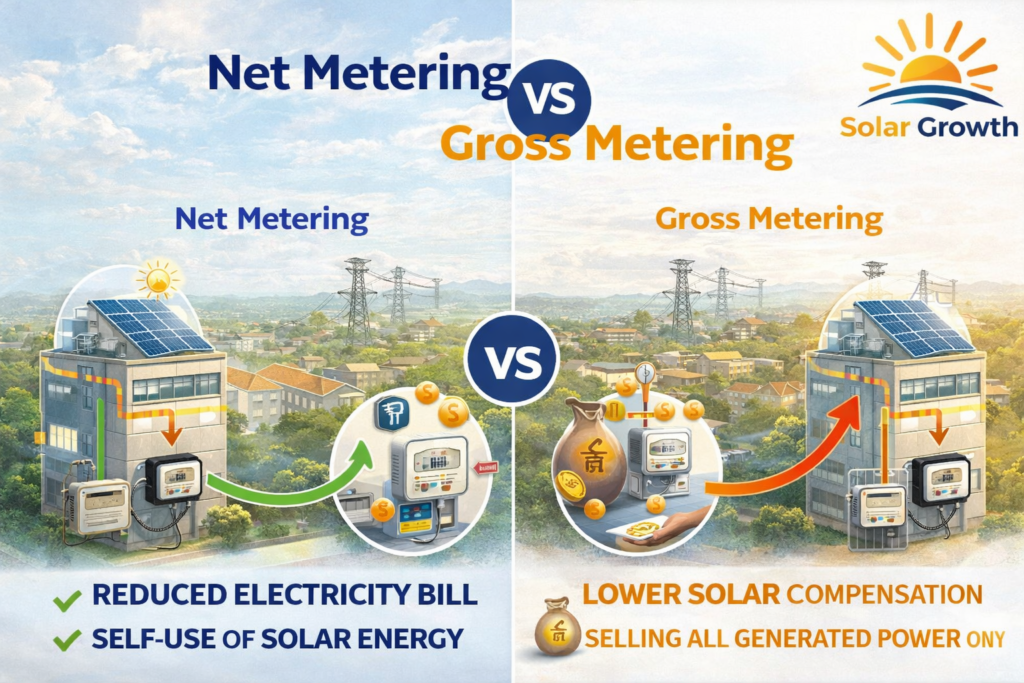
As commercial and industrial electricity consumption continues to rise, businesses are increasingly turning to solar power to reduce operating costs and meet sustainability goals. However, the financial benefits of commercial solar systems depend heavily on the type of metering arrangement used. Two common models dominate the solar industry: net metering and gross metering. Understanding the difference between these systems is essential for businesses planning to install rooftop solar.
What is Net Metering?
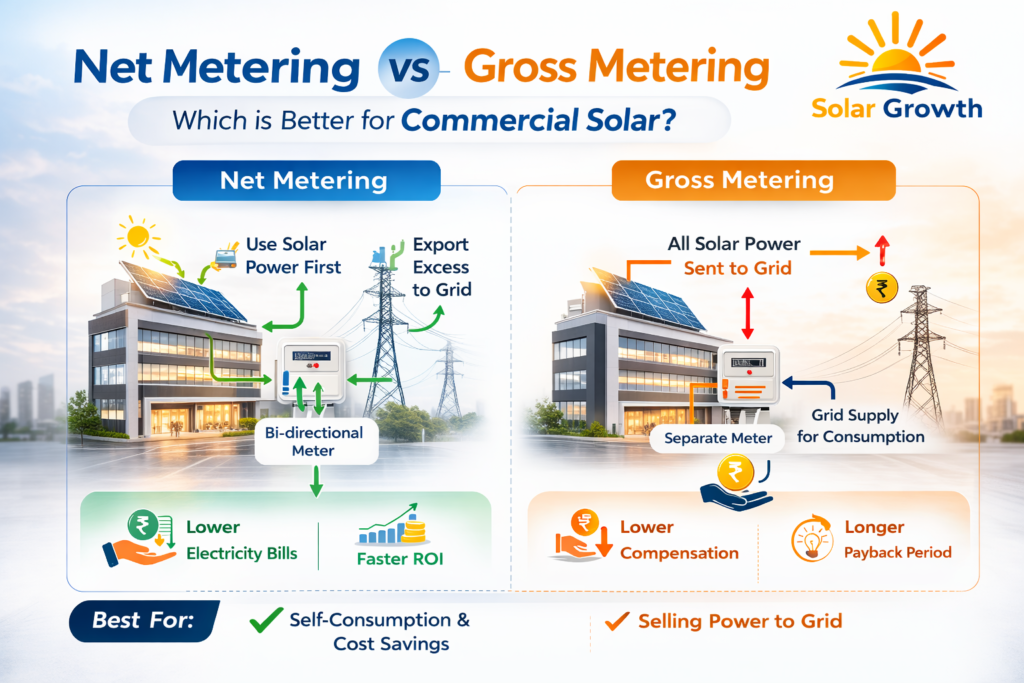
Net metering is a billing mechanism that allows businesses to consume the solar energy they generate and send excess electricity to the grid. A bi-directional meter records both the electricity imported from the grid and the surplus power exported back to the utility. At the end of the billing cycle, the business only pays for the net electricity consumed, which is the difference between imported and exported energy.
For example, if a commercial building consumes 1,000 units of electricity in a month but its solar system generates 700 units, the business pays the utility only for the remaining 300 units. If generation exceeds consumption, the extra units may be credited or compensated depending on state policies.
Net metering has become the most widely adopted system for rooftop solar installations, especially in commercial and industrial sectors because it directly reduces electricity bills and improves the return on investment.
What is Gross Metering?
Gross metering works differently. Under this arrangement, all the electricity generated by the solar plant is exported to the grid, and the business purchases all its electricity separately from the utility. The solar energy supplied to the grid is compensated at a predetermined feed-in tariff, which is usually lower than the retail electricity tariff.
In this system, two meters are typically used:
• One meter records the total electricity exported from the solar plant
• Another meter records the electricity consumed from the grid.
For instance, if a company generates 1,000 units of solar power, the utility pays the company for those units at the feed-in tariff rate. At the same time, the company still pays the full retail tariff for the electricity it consumes from the grid.
Gross metering is often used when the primary objective is selling electricity rather than reducing internal consumption.
Key Differences Between Net and Gross Metering
Energy usage
In net metering, solar energy is first used for self-consumption and only surplus energy goes to the grid. In gross metering, all generated power is sent directly to the grid.
Billing structure
Net metering adjusts exported electricity against imported electricity, reducing the overall bill. Gross metering treats solar generation and electricity consumption as two separate transactions.
Financial benefits
Net metering generally provides better financial returns because businesses offset electricity at retail tariff rates. In gross metering, the compensation for solar power is typically lower than the price paid for grid electricity.
System purpose
Net metering is ideal for businesses aiming to cut electricity costs. Gross metering suits investors or large developers who want to generate solar power mainly for sale to utilities.
Which Option is Better for Commercial Solar?
For most commercial and industrial consumers, net metering tends to be more attractive because it significantly reduces electricity bills and shortens the payback period of solar installations. Many companies operate primarily during daylight hours, which means they can directly use the solar power they generate.
Gross metering may be useful for large projects where the solar plant is designed primarily as a power-generation asset rather than an energy-saving solution.
However, solar policies vary by state and utility provider. Some regions may limit system capacity for net metering or offer different compensation rates, which can influence which model is more profitable.
Latest Trends in Solar Metering
Solar policies in India continue to evolve as governments try to balance renewable growth with grid stability. Some states are experimenting with virtual net metering and group net metering, which allow businesses or housing societies to share solar generation even if they lack rooftop space.
Additionally, utilities occasionally revise compensation rates for exported solar energy to encourage rooftop adoption while maintaining grid economics.
Frequently Asked Questions (FAQs)
1. Is net metering allowed for commercial solar projects in India?
Yes. Net metering is generally allowed for rooftop solar installations up to around 500 kW or the sanctioned load, though rules vary by state.
2. Why do many businesses prefer net metering?
Because it allows companies to offset their electricity consumption with solar generation, reducing power bills and improving return on investment.
3. When is gross metering a good option?
Gross metering works best when a solar plant is designed mainly to sell electricity to the grid rather than for self-consumption.
4. Can policies change between states?
Yes. Solar regulations, feed-in tariffs, and capacity limits are set by state electricity regulators, so businesses should always check local policies before installing a system.