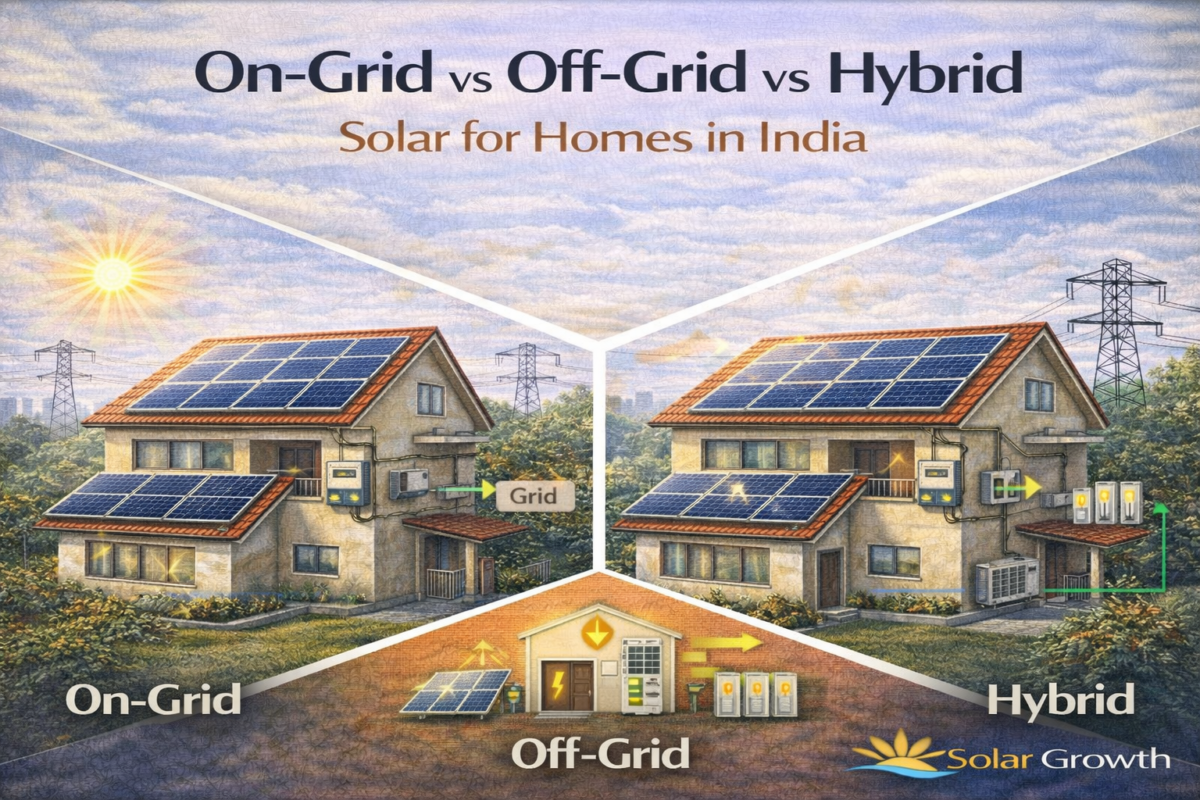
Introduction
Residential solar adoption in India has grown rapidly in recent years. Rising electricity tariffs, government incentives, and increasing environmental awareness are encouraging homeowners to install rooftop solar systems
However, when homeowners begin researching solar installations, they often encounter three common system types:
- On-grid solar systems
- Off-grid solar systems
- Hybrid solar systems
Each system works differently and suits different energy needs. Choosing the wrong system type can affect electricity savings, backup power availability, and overall system cost.
This guide explains the differences between on-grid, off-grid, and hybrid solar systems for homes in India. It helps homeowners understand how each system works and which option may be most suitable.
Understanding Residential Solar System Types
Residential solar systems convert sunlight into electricity using photovoltaic panels.
However, the way electricity is stored, used, or connected to the grid determines the type of system installed.
The three main residential solar configurations include:
- On-grid solar system
- Off-grid solar system
- Hybrid solar system
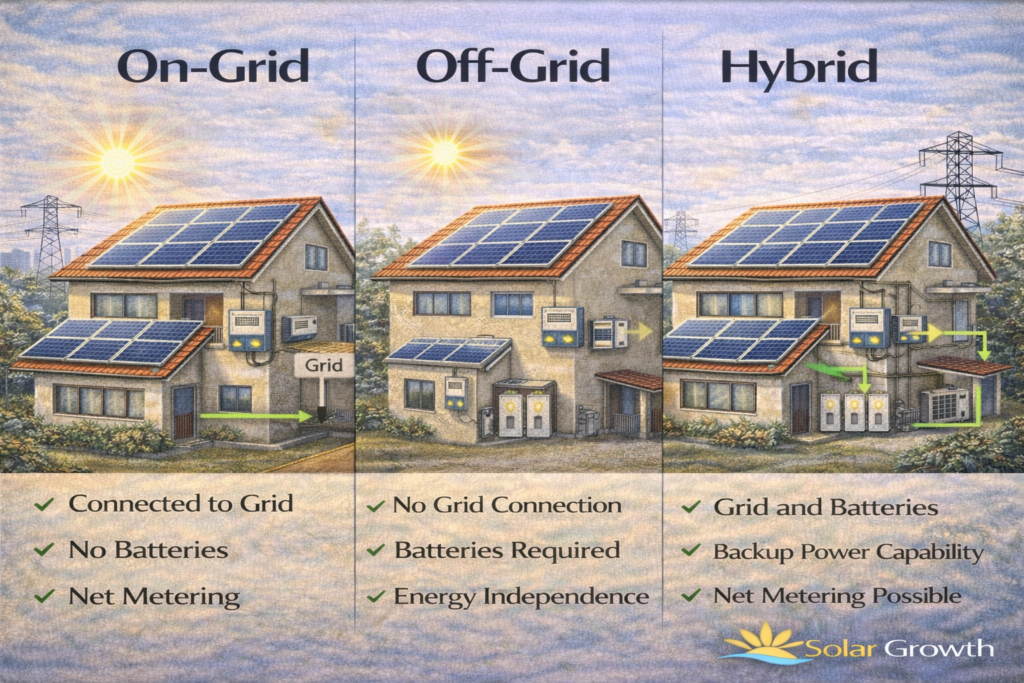
Each has distinct advantages and limitations.
What Is an On-Grid Solar System
An on-grid solar system, also called a grid-tied solar system, is connected directly to the local electricity grid.
How It Works
- Solar panels generate electricity during the day.
- Electricity powers the home.
- Excess power is exported to the grid through net metering.
If the solar system produces less electricity than needed, the home draws power from the grid.
Key Components of On-Grid Systems
Typical components include:
- Solar panels
- Grid-tied inverter
- Net meter
- Electrical protection devices
These systems do not include battery storage.
Advantages of On-Grid Solar
On-grid solar is the most common residential system in India because it offers several benefits.
Lower Installation Cost
Without batteries, system costs are lower.
Net Metering Benefits
Homeowners receive electricity credits for excess solar power exported to the grid.
Faster Payback Period
Lower installation costs and electricity savings improve ROI.
Limitations of On-Grid Solar
The main limitation is that these systems do not provide backup power during outages.
When the grid fails, on-grid systems automatically shut down for safety reasons.
What Is an Off-Grid Solar System?
An off-grid solar system operates completely independent of the electricity grid.
These systems rely on battery storage to supply electricity when solar generation is not available.
How Off-Grid Solar Works
- Solar panels generate electricity during daylight hours.
- Electricity powers the home and charges batteries.
- Stored energy is used during nighttime or cloudy periods.
Key Components of Off-Grid Systems
Typical off-grid systems include:
- Solar panels
- Hybrid inverter
- Battery storage
- Charge controller
Advantages of Off-Grid Solar
Energy Independence
Homes are not dependent on the electricity grid.
Reliable Backup Power
Battery storage provides electricity during outages.
Ideal for Remote Areas
Off-grid systems are useful where grid infrastructure is unavailable.
Limitations of Off-Grid Solar
Off-grid systems have higher installation costs because batteries are required.
Battery replacement costs must also be considered.
What Is a Hybrid Solar System?
A hybrid solar system combines features of both on-grid and off-grid systems.
These systems remain connected to the grid but also include battery storage.
How Hybrid Systems Work
- Solar panels generate electricity.
- Electricity powers the home.
- Excess energy charges batteries.
- Additional excess energy may be exported to the grid.
Hybrid systems offer both net metering benefits and backup power capability.
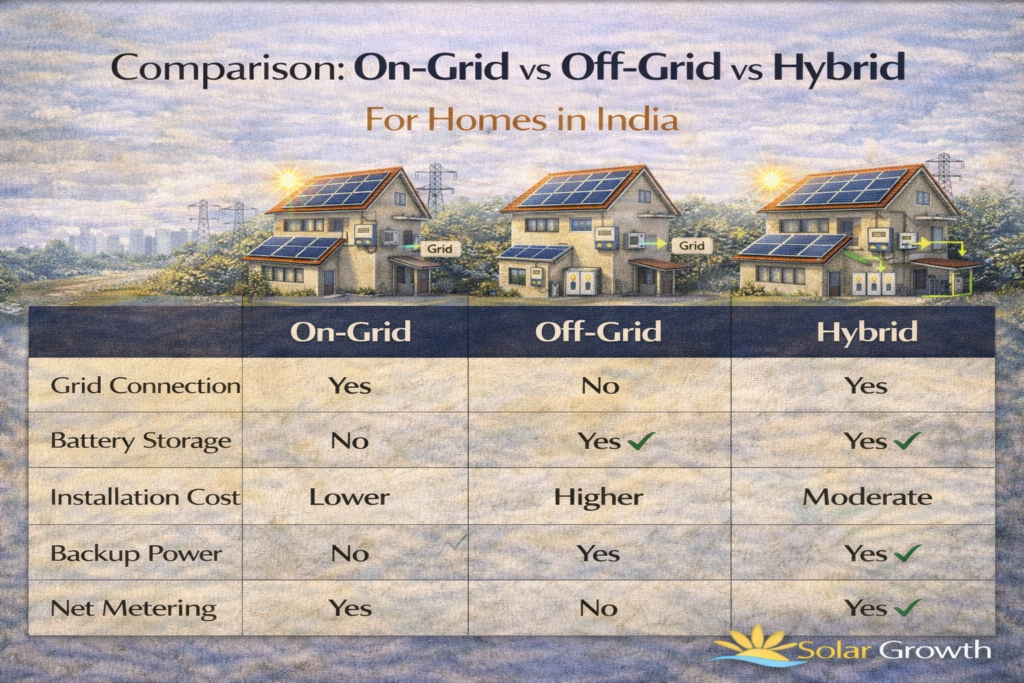
Comparison: On-Grid vs Off-Grid vs Hybrid Solar
| Feature | On-Grid | Off-Grid | Hybrid |
| Grid Connection | Yes | No | Yes |
| Battery Storage | No | Yes | Yes |
| Installation Cost | Lower | Higher | Moderate |
| Backup Power | No | Yes | Yes |
| Net Metering | Yes | No | Sometimes |
This comparison helps homeowners evaluate which system fits their needs.
Which Solar System Is Best for Homes in India?
The best system depends on several factors.
Electricity Reliability
If power outages are frequent, hybrid or off-grid systems may be better.
Budget
On-grid systems are typically more affordable.
Location
Remote areas may require off-grid systems.
Energy Usage
Homes with high electricity consumption may benefit from hybrid systems.
Example: Residential Solar System Selection
A homeowner in Bangalore installs a 3 kW on-grid solar system.
Because the city has reliable electricity supply and net metering policies, an on-grid system provides maximum cost savings.
However, a homeowner in a rural area with unreliable grid supply may prefer a hybrid or off-grid system.
Common Mistakes Homeowners Make
Many homeowners choose solar systems without proper evaluation.
Common mistakes include:
- Selecting system types based only on price
- Ignoring battery backup needs
- Not understanding net metering rules
- Using inexperienced solar installers
These mistakes can affect system performance and long-term savings.
Best Practices Before Installing Solar
Homeowners should follow these steps before installing solar systems.
Conduct an Energy Assessment
Analyze household electricity consumption.
Evaluate Grid Reliability
Determine whether backup power is necessary.
Compare Solar System Types
Understand the advantages and limitations of each system.
Choose Experienced Installers
Professional solar installers help ensure correct system design.
Future of Residential Solar in India
Residential solar adoption is expected to grow significantly in India.
Government initiatives such as PM Surya Ghar Yojana aim to encourage rooftop solar installations.
Advancements in battery storage technology are also making hybrid systems more attractive.
As solar technology improves and costs decline, more homeowners are likely to adopt residential solar systems.
Conclusion
Choosing the right solar system is an important decision for homeowners installing rooftop solar in India.
On-grid systems offer lower costs and faster payback, while off-grid systems provide complete energy independence. Hybrid systems combine both advantages by offering grid connectivity and battery backup.
Understanding the differences between these systems helps homeowners make informed decisions that match their electricity needs, budget, and long-term energy goals.
With proper planning and professional installation, residential solar systems can provide decades of clean and cost-effective electricity.
FAQs
1. Which solar system is best for homes in India?
On-grid solar systems are the most common for homes with reliable electricity supply and net metering availability.
2. Do on-grid solar systems work during power outages?
No. On-grid systems shut down during outages unless they include battery storage.
3. Are hybrid solar systems expensive?
Hybrid systems cost more than on-grid systems but provide backup power through battery storage.
4. How long do residential solar systems last?
Most solar panels have a lifespan of 20–25 years.
Written by Rohith Bingi
Solar Industry Analyst at Solar Growth, covering India’s solar value chain, policy landscape, and business growth trends