Electricity reliability is critical for commercial and industrial operations. Many businesses rely on diesel generators as backup power during outages. However, rising fuel costs and growing sustainability concerns have encouraged companies to explore rooftop solar as a long term alternative.
A detailed cost comparison between rooftop solar systems and diesel generators shows that solar power is increasingly becoming the more economical and sustainable option for businesses.
Understanding Rooftop Solar and Diesel Generators
A rooftop solar system generates electricity using solar panels installed on the roof of a building. The system converts sunlight into electricity through photovoltaic technology. Once installed, solar energy can power commercial operations during the day and can also be connected to the grid through net metering.
Diesel generators, on the other hand, generate electricity by burning diesel fuel. They are commonly used as backup power sources in industries, commercial buildings, hospitals, and offices.
While diesel generators provide immediate power during outages, their long term operational costs are significantly higher compared to solar systems.
Upfront Investment Comparison
The initial investment for rooftop solar is typically higher than purchasing a diesel generator.
Commercial rooftop solar installations in India generally cost between ₹35,000 and ₹50,000 per kW depending on system size and equipment quality.
Diesel generators require a lower upfront investment. However, this advantage is often offset by ongoing fuel and maintenance expenses over time.
Businesses should therefore consider the total lifecycle cost rather than just the initial installation cost.
Cost Per Unit of Electricity
One of the most important factors in comparing rooftop solar and diesel generators is the cost per unit of electricity generated.
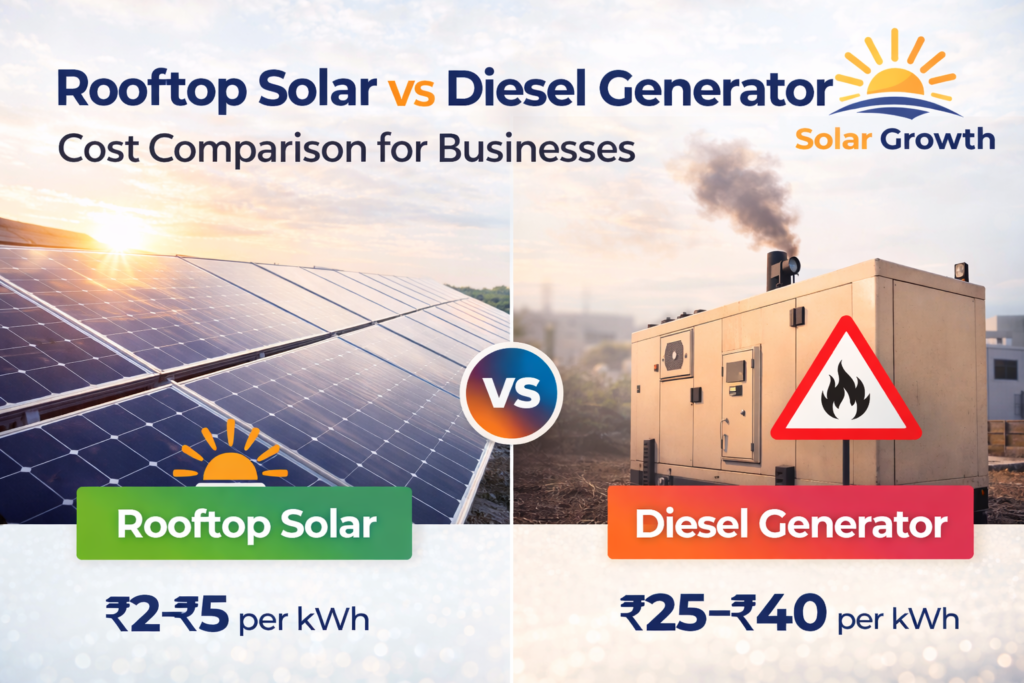
Rooftop solar typically produces electricity at around ₹2 to ₹5 per kWh over its lifetime.
In contrast, diesel generators can produce electricity at ₹25 to ₹40 per kWh depending on diesel prices and generator efficiency.
This means diesel generated electricity can be five to ten times more expensive than solar energy.
For businesses that rely heavily on backup power, switching to solar can significantly reduce electricity costs.
Operating and Maintenance Costs
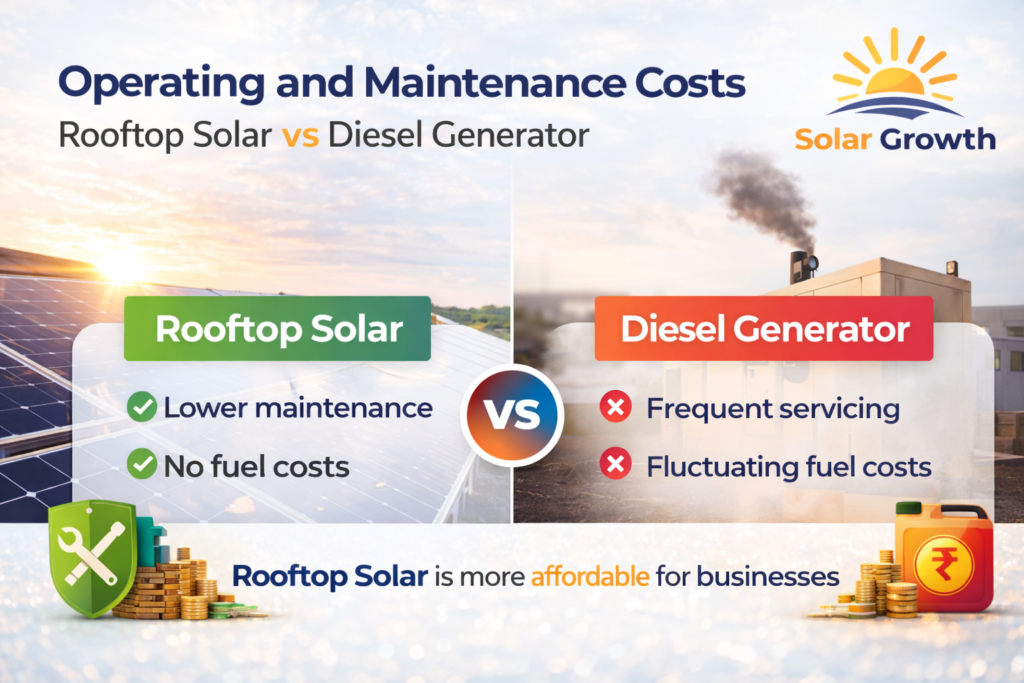
Solar power systems have relatively low maintenance requirements. Regular cleaning of panels and periodic system inspections are usually sufficient to keep the system functioning efficiently.
Diesel generators require frequent servicing, oil changes, and replacement of filters and mechanical components. Fuel procurement also adds to operational complexity.
In addition, fluctuations in global oil prices directly impact diesel power generation costs, making it less predictable for businesses.
Lifespan and Long Term Savings
A commercial rooftop solar system typically has a lifespan of 20 to 25 years. Diesel generators generally last between 5 and 10 years depending on usage and maintenance.
Because solar systems generate electricity from free sunlight, the majority of savings occur after the system recovers its initial investment. Many commercial solar installations achieve payback within three to five years.Over two decades, businesses can save a substantial amount on energy expenses compared to continuous diesel generator usage.
Environmental and Regulatory Impact
Another important factor in the comparison is environmental impact.Diesel generators emit carbon dioxide, particulate matter, and other pollutants that contribute to air pollution.
Many cities are tightening regulations on diesel generator usage due to environmental concerns.Solar power, in contrast, produces electricity without emissions during operation. By installing rooftop solar, companies can reduce their carbon footprint while also strengthening their sustainability and ESG initiatives.
Many companies are now adopting hybrid systems that combine rooftop solar with battery storage and diesel backup. This approach ensures reliable power supply while minimizing fuel consumption.
With falling solar panel prices and supportive government policies, rooftop solar is becoming one of the most cost effective energy solutions for commercial buildings.
The Future of Commercial Power Solutions
Conclusion
While diesel generators remain useful for emergency backup, they are increasingly expensive to operate over the long term. Rooftop solar offers businesses a cleaner, more economical, and future ready energy solution.By investing in rooftop solar systems, companies can reduce operational costs, improve sustainability performance, and protect themselves from rising fuel prices.
FAQ
1. Is rooftop solar cheaper than diesel generators?
Yes. Rooftop solar electricity typically costs ₹2 to ₹5 per kWh, while diesel generated electricity can cost ₹25 to ₹40 per kWh.
2. What is the payback period for commercial rooftop solar?
Most commercial solar installations recover their cost within three to five years depending on electricity tariffs and system size.
3. Can rooftop solar completely replace diesel generators?
In many cases solar can significantly reduce diesel usage, but businesses often keep generators as backup for nighttime or emergency power.
4. How long do solar panels last?
Most solar panels have a lifespan of 20 to 25 years with proper maintenance.
5. Why are businesses shifting from diesel generators to solar?
Businesses are switching because solar power is cheaper in the long term, reduces carbon emissions, and offers predictable energy costs.