Switching to solar energy is no longer a luxury reserved for eco-conscious homeowners. With evolving financing models and government-backed schemes, installing rooftop solar in India has become surprisingly accessible. If upfront costs once held you back, solar EMIs and flexible financing options are changing the game.
Why financing matters in solar adoption
A typical residential solar system can cost anywhere between ₹1 lakh to ₹6 lakh depending on size and usage. While the long-term savings on electricity bills are significant, the initial investment can feel heavy. This is where EMI-based financing steps in, allowing homeowners to spread the cost over manageable monthly payments.
Today, many banks, NBFCs, and solar providers offer tailored loan products that align with household cash flow. In fact, some financing structures are designed so that your EMI is close to or even lower than your current electricity bill.
Popular solar financing options in India
1. Solar Loans (Bank and NBFC financing)
Public sector banks and private lenders now offer dedicated solar loans with attractive interest rates. For instance, loans can range from ₹50,000 to several lakhs with repayment tenures between 3 to 7 years. Some schemes even offer collateral-free loans up to ₹2 lakh.
Interest rates can start from around 6.75% to 8% under government-supported programs, making them competitive with home loans.
2. EMI-based solar installation plans
Many solar companies partner with lenders to offer zero or low down payment options. You can install a system and pay through monthly EMIs, often structured to match your savings on electricity. This reduces financial strain while still delivering immediate benefits.
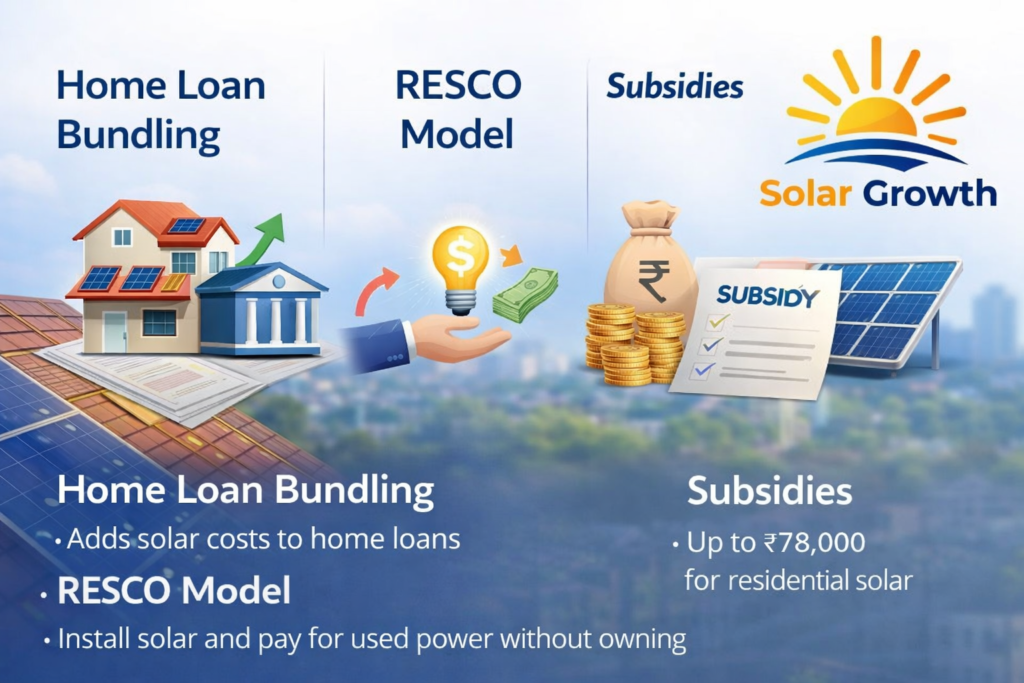
3. Solar financing bundled with home loans
If you are constructing or renovating a house, some banks allow solar installation costs to be included in your home loan. These loans typically offer longer tenures and lower interest rates compared to standalone solar loans.
4. RESCO model (pay-as-you-use)
Under this model, a third party installs and maintains the solar system, and you pay only for the electricity generated. While more common in commercial setups, it is gradually entering the residential segment as well.
Government support and subsidies
India’s solar push is heavily backed by subsidies and policy support. The PM Surya Ghar Muft Bijli Yojana is a major initiative offering subsidies up to ₹78,000 for residential rooftop systems.
Additionally, subsidies can cover up to 40% of installation costs for smaller systems, significantly reducing the loan burden.
The scheme also promotes easier financing through public sector banks and aims to bring solar power to one crore households by 2027.
Recent policy developments are further simplifying approvals and improving transparency, making adoption faster and more consumer-friendly.
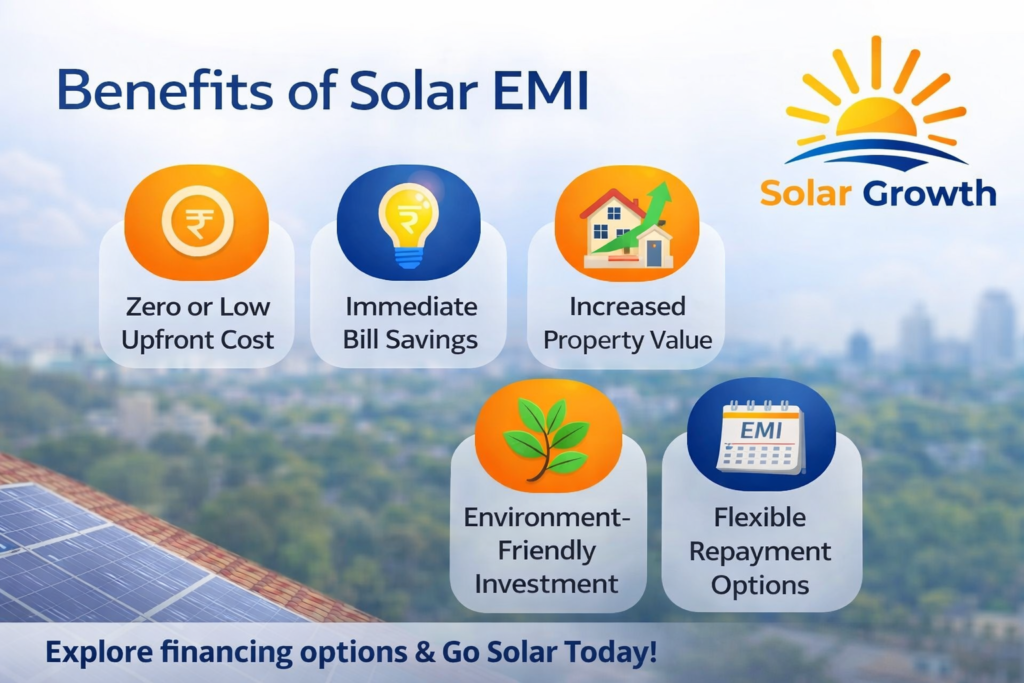
Benefits of choosing solar EMI
- Zero or low upfront cost
- Immediate savings on electricity bills
- Increased property value
- Environment-friendly investment
- Flexible repayment options
With the right financing plan, solar becomes a cash-flow positive asset rather than an expense.
FAQs
1. Can I install solar with zero upfront payment?
Yes, many lenders and solar providers offer zero down payment EMI plans, depending on your credit profile.
2. What is the typical EMI for a home solar system?
It varies based on system size and tenure, but EMIs are often structured to be close to your monthly electricity bill.
3. Are solar loans tax deductible?
In some cases, interest paid on loans for renewable energy installations may offer tax benefits. It is best to consult a tax advisor.
4. How long does it take to recover the cost?
With subsidies and EMI options, payback periods can range between 3 to 6 years.
5. Is collateral required for solar loans?
Not always. Many schemes offer collateral-free loans up to a certain limit.
Final thoughts
Solar financing in India has matured rapidly, making clean energy both affordable and practical. Whether you choose a bank loan, EMI plan, or subsidy-backed scheme, the barrier to entry has never been lower.
CTA
If you have been considering solar for your home, now is the time to explore financing options, compare EMIs, and take the first step toward energy independence.