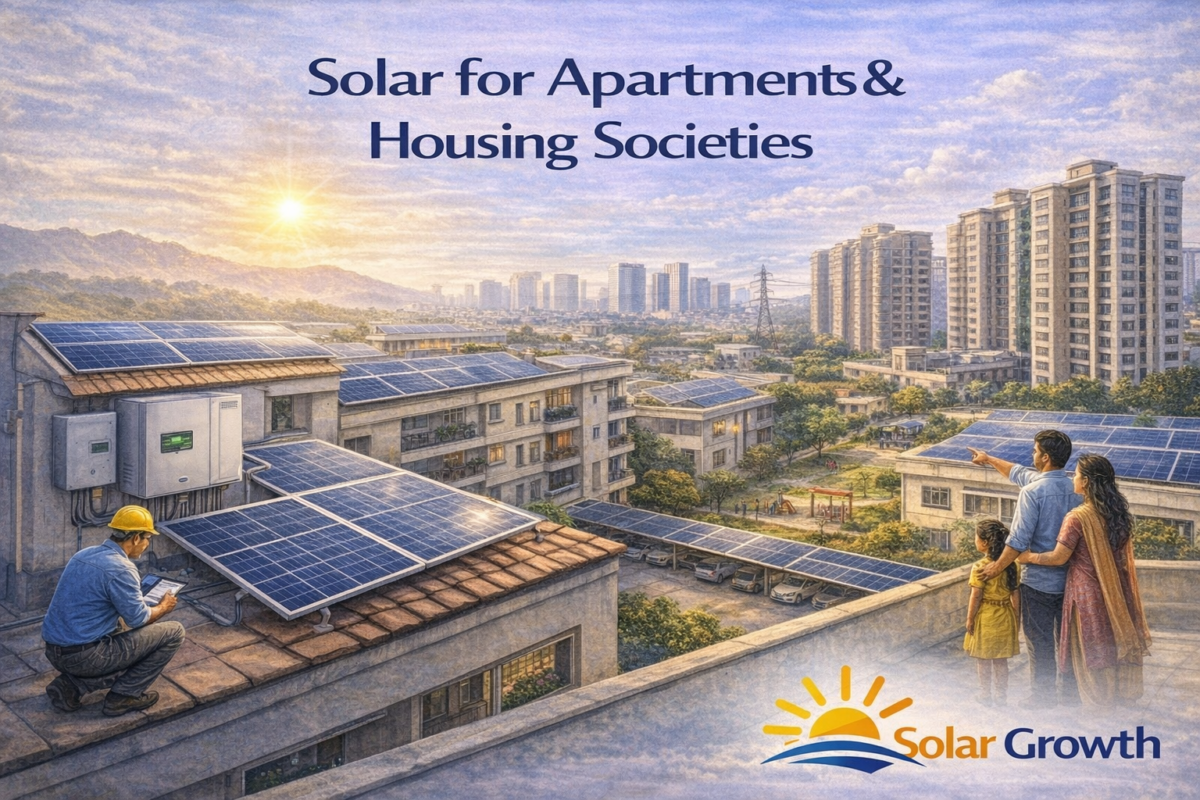
Electricity consumption in residential buildings continues to rise as more appliances, elevators, lighting systems, and security infrastructure are used every day. For apartment complexes and housing societies, this often leads to high monthly electricity bills and increasing dependence on conventional power sources.
Rooftop solar energy offers a practical and sustainable solution. By installing solar panels on available rooftop space, housing societies can generate their own electricity and significantly reduce common area electricity expenses. Solar systems are now widely adopted across India thanks to improved technology, government incentives, and growing awareness about renewable energy.
How Solar Works for Apartments and Housing Societies
In apartment buildings, solar panels are typically installed on the rooftop of the building or on a common terrace area. The electricity generated from the solar panels is usually used to power common facilities such as elevators, corridor lighting, water pumps, parking lights, and security systems.
This approach helps housing societies reduce their monthly electricity bills for shared services. In many cases, the savings are passed on to residents through lower maintenance charges.
Some societies also install larger systems that can support individual apartments through net metering. With net metering, any excess electricity generated by the solar system is exported to the grid and credited against future electricity consumption.
Benefits of Solar for Housing Societies
Reduced Common Electricity Costs
Common area electricity is one of the largest expenses for apartment associations. Solar power can reduce these costs significantly by generating clean energy during daylight hours.
Lower Maintenance Charges for Residents
When societies save money on electricity, the overall maintenance expenses decrease. This can benefit all residents by lowering monthly society charges.
Better Use of Rooftop Space
Most apartment rooftops remain unused. Installing solar panels allows societies to utilize this space productively while generating renewable energy.
Environmental Benefits
Solar energy reduces reliance on fossil fuels and lowers carbon emissions. Housing societies that adopt solar power contribute to a cleaner environment and more sustainable communities.
Government Support and Subsidies
Government initiatives and state policies encourage residential solar adoption. Housing societies may benefit from subsidies, incentives, and net metering policies depending on local regulations.
Key Factors to Consider Before Installation
Rooftop Space Availability
The amount of electricity a society can generate depends on the available rooftop area. A professional assessment helps determine the optimal system size.
Structural Safety
Before installing solar panels, it is important to ensure the building structure can support the mounting system and panels.
Electricity Consumption Patterns
Understanding the society’s power usage helps determine whether the system should be designed mainly for common loads or for individual apartments as well.
Professional Installation
Proper system design, panel placement, and inverter selection play a crucial role in long term performance. Working with experienced solar professionals ensures the system operates efficiently for many years.
Financial Savings Over Time
Solar systems are long term investments. Although there is an initial installation cost, the system can generate electricity for over 20 to 25 years.
For many housing societies, the payback period ranges from four to seven years depending on electricity usage and system size. After the payback period, the electricity generated is essentially free, which leads to significant savings for residents.
Conclusion
Solar energy is becoming an increasingly practical option for apartments and housing societies across India. By using rooftop space to generate clean electricity, societies can reduce operating costs, lower maintenance charges, and support sustainable living.
With modern solar technology and government incentives available, many residential communities are now making the transition to renewable energy.
If you want to understand how rooftop solar works for individual homes as well, you may find this guide helpful:
Best Direction and Angle for Solar Panels on Roof
FAQ
1. Can apartment societies install solar panels?
Yes. Housing societies can install rooftop solar systems to power common facilities such as elevators, pumps, and corridor lighting.
2. How much rooftop space is required for solar panels?
Typically, about 100 square feet of rooftop space is needed for every 1 kW of solar capacity. The exact requirement depends on the panel type and layout.
3. Do residents benefit from solar power in housing societies?
Yes. Reduced electricity expenses for common facilities often result in lower maintenance charges for residents.
4. How long do solar systems last?
Most solar panels have a lifespan of 20 to 25 years and continue producing electricity even beyond that period.
5. Can housing societies use net metering?
Yes. Many states in India allow net metering for residential solar installations, which helps offset electricity consumption with excess solar generation.
Call to Action
Thinking about installing solar for your apartment complex or housing society?
A professional assessment can help you determine the right system size and estimate your potential savings.