Introduction
Rooftop solar systems are becoming increasingly popular among homeowners in India. Rising electricity prices, government subsidies, and growing environmental awareness are encouraging households to adopt solar energy.
However, one of the most common questions homeowners ask before installing solar panels is:
How long do solar panels last, and how much maintenance do they require?
Solar panels are designed to operate for decades, but their performance depends on proper installation, environmental conditions, and regular maintenance.
Understanding solar panel lifespan and maintenance requirements helps homeowners protect their investment and ensure consistent electricity generation.
This guide explains how long solar panels typically last, what maintenance they require, and how homeowners in India can maximize system performance over time.
If you’re planning to install solar, it’s important to understand how a complete rooftop solar system works before considering long-term maintenance.
Average Lifespan of Solar Panels
Solar panels are built to operate for long periods with minimal performance degradation.
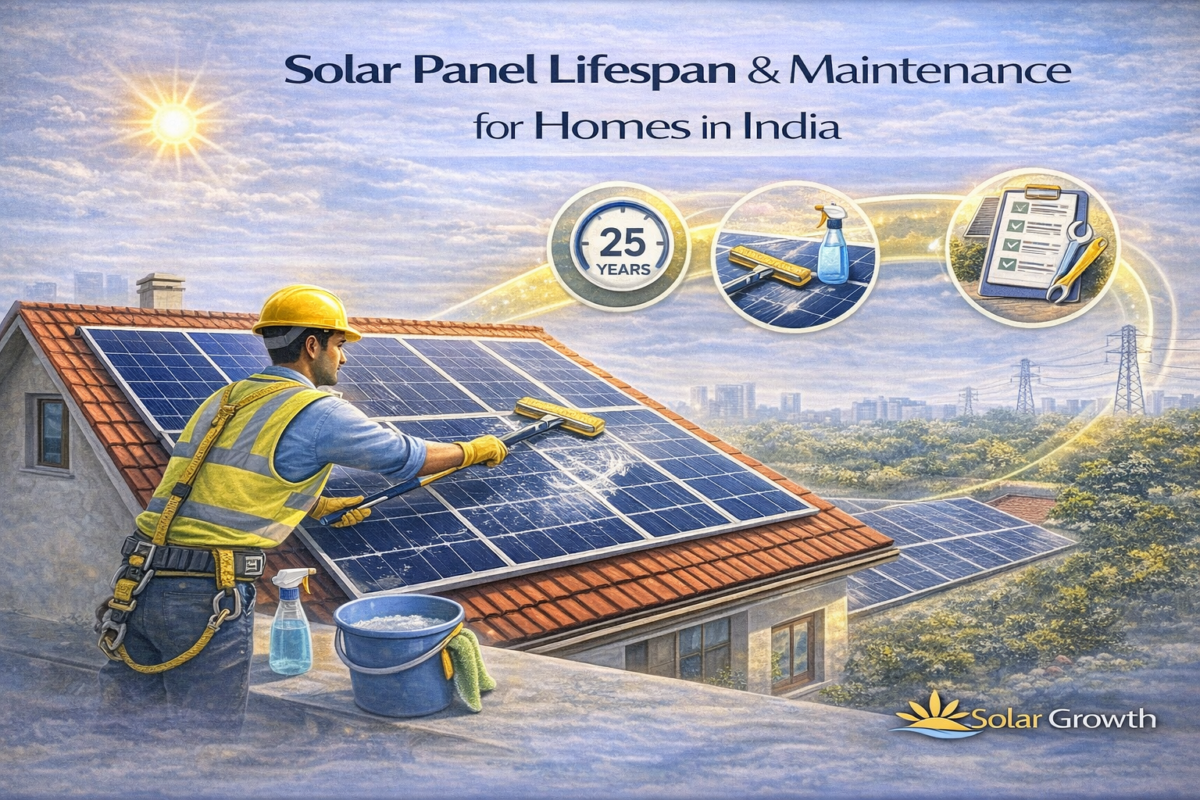
Most modern solar panels have an expected lifespan of 25 to 30 years.
However, this does not mean the panels stop working after this period. Instead, their electricity output gradually declines.
Typical Performance Degradation
Solar panels generally lose about 0.5% efficiency per year.
After 25 years, a panel may still operate at 80–85% of its original capacity.
This long lifespan makes solar systems a reliable long-term energy investment for homeowners.
Warranty Period for Solar Panels
Solar manufacturers typically provide two types of warranties.
Product Warranty
Covers manufacturing defects and equipment issues.
Typical duration: 10–12 years
Performance Warranty
Guarantees that the panel will maintain a certain electricity output level.
Typical duration: 25 years
Most manufacturers guarantee that panels will produce at least 80% of rated output after 25 years.
Factors That Affect Solar Panel Lifespan
Several factors influence how long solar panels last.
Panel Quality
High-quality solar panels usually have better durability and longer warranties.
Installation Quality
Improper installation can lead to structural damage or electrical issues.
Weather Conditions
Solar panels in India face extreme heat, dust, and monsoon conditions.
Proper mounting and maintenance help protect the system.
System Components
Solar panels last longer than other components such as inverters.
Inverters typically require replacement every 8–12 years.
The type of solar system you choose also affects maintenance requirements and overall system performance.
Solar Panel Cleaning for Homes
Dust accumulation is one of the most common reasons for reduced solar efficiency in India.
In regions with high dust levels, panels may lose 5–20% efficiency if not cleaned regularly.
Recommended Cleaning Frequency
| Location Type | Cleaning Frequency |
| Urban areas | Every 2–3 months |
| Dusty regions | Every 1–2 months |
| Rainy climates | Less frequent cleaning |
Cleaning panels with water and a soft cloth is usually sufficient.
Avoid harsh chemicals or abrasive materials.
Monitoring Solar System Performance
Modern solar systems include monitoring apps that allow homeowners to track electricity generation.
Monitoring helps identify issues such as:
- Unexpected drop in power output
- Inverter malfunction
- Shading problems
Early detection helps prevent long-term performance losses.
Monitoring your solar system regularly ensures accurate performance tracking and optimal energy savings.
Example: Solar Panel Performance Over Time
Consider a homeowner installing a 3 kW rooftop solar system.
Expected Generation
Annual electricity production: approximately 4,500 units.
After 20 years, panel output may decline slightly but still generate over 3,800 units annually.
This demonstrates how solar panels continue producing electricity for decades.
Solar Panel Maintenance Requirements
One of the biggest advantages of solar systems is that they require very little maintenance.
However, regular care helps maintain optimal performance.
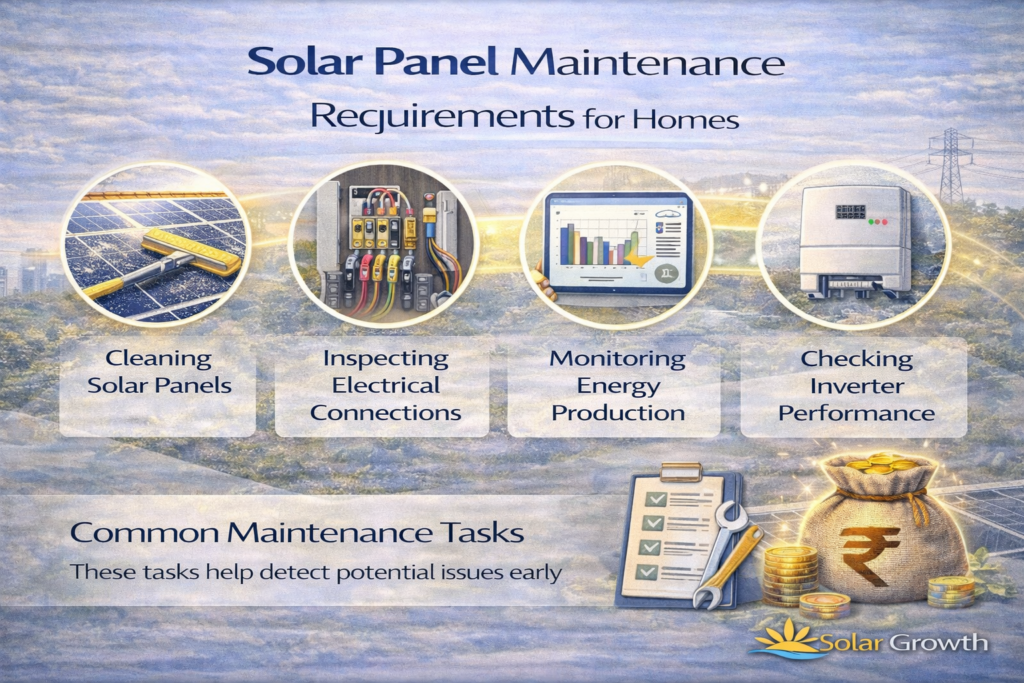
Common Maintenance Tasks
- Cleaning solar panels
- Inspecting electrical connections
- Monitoring energy production
- Checking inverter performance
These tasks help detect potential issues early.
Common Maintenance Mistakes Homeowners Make
Some homeowners unintentionally reduce solar system efficiency.
Common mistakes include:
- Ignoring regular panel cleaning
- Walking directly on solar panels
- Using harsh cleaning chemicals
- Delaying inverter servicing
These mistakes can affect system performance.
Best Practices for Maintaining Rooftop Solar Systems
Homeowners can extend solar system lifespan by following several best practices.
Schedule Regular Cleaning
Dust and debris reduce solar efficiency.
Monitor System Output
Regularly check generation data through solar monitoring apps.
Conduct Annual Inspection
Professional inspections help detect wiring or inverter issues.
Avoid Physical Damage
Do not place heavy objects or step on solar panels.
Industry Standards for Solar Panel Reliability
Solar panels are tested according to international standards to ensure durability.
Important Certifications
| Certification | Purpose |
| IEC 61215 | Performance testing |
| IEC 61730 | Safety testing |
| BIS certification | Indian safety compliance |
Panels meeting these standards are designed to withstand harsh environmental conditions.
Environmental Benefits of Long Solar Panel Lifespan
Long-lasting solar systems offer major environmental benefits.
Solar panels that operate for decades help:
- Reduce fossil fuel consumption
- Lower carbon emissions
- Promote sustainable energy generation
The longer solar panels operate efficiently, the greater the environmental impact.
Future of Residential Solar Technology
Solar technology continues to improve.
Advancements include:
- Higher efficiency solar panels
- Better dust-resistant coatings
- Advanced monitoring systems
- Improved inverter technologies
These innovations are expected to increase solar panel lifespan even further.
Conclusion
Solar panels are designed to last for decades, making them one of the most reliable energy solutions for homeowners in India.
With proper installation, regular cleaning, and periodic system monitoring, rooftop solar systems can continue generating electricity for 25 years or more.
Understanding solar panel lifespan and maintenance requirements helps homeowners maximize energy production and protect their investment.
As solar adoption continues to grow in India, well-maintained rooftop solar systems will play an important role in reducing electricity costs and promoting clean energy.
Maintenance is important, but understanding the full system matters more check this home solar system guide in India.
Learn More About Rooftop Solar for Your Home
Solar panel lifespan and maintenance are key to long-term savings, but choosing the right system and setup is just as important.
Explore our website to learn more about rooftop solar solutions and how to get started. Solar Growth | Solar Energy & Rooftop Solar Solutions
FAQs
1. How long do solar panels last in India?
Most solar panels last between 25 and 30 years, with gradual efficiency decline over time.
2. Do solar panels require frequent maintenance?
No. Solar systems require minimal maintenance, mainly periodic cleaning and monitoring.
3. How often should solar panels be cleaned?
In most parts of India, cleaning every 2–3 months is recommended.
4. Do solar panels stop working after 25 years?
No. Panels continue producing electricity but at slightly reduced efficiency.
Written by Rohith Bingi
Solar Industry Analyst at Solar Growth, covering India’s solar value chain, policy landscape, and business growth trends