Rooftop solar is rapidly becoming a preferred energy solution for Indian households. With rising electricity costs and increasing awareness around sustainability, more homeowners and apartment residents are exploring solar as a long-term investment.
Beyond system size and cost, there are practical questions that influence real decisions.
What is the right direction for panels
Can apartments install solar
Can solar run heavy appliances
What happens during power cuts
This guide brings all of it together in a clear, structured, and practical way.
Best Direction & Angle for Solar Panels on Roof
The efficiency of a solar system depends heavily on how the panels are positioned.
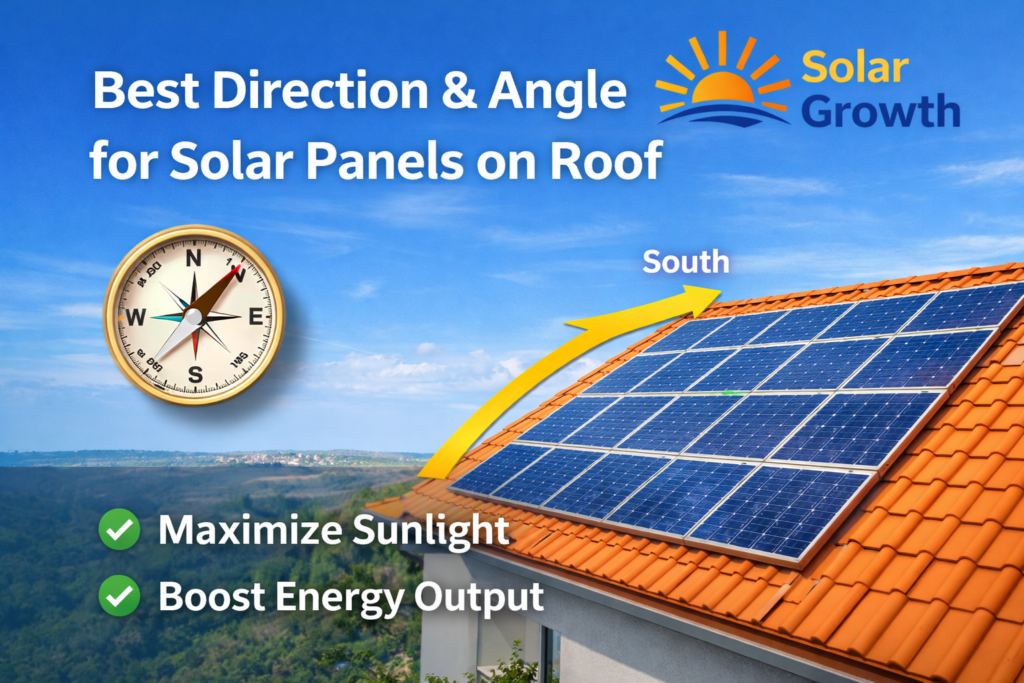
Ideal Direction
In India, south-facing panels deliver the best performance because they receive maximum sunlight throughout the day.
East and west orientations are also workable, though they may slightly reduce total energy output. North-facing installations are generally avoided unless there are no other options.
Optimal Tilt Angle
The tilt angle determines how effectively panels capture sunlight.
- The ideal tilt angle is usually close to the latitude of your location
- In most Indian regions, this falls between 15 to 30 degrees
- Proper tilt improves yearly energy generation
Even a small adjustment in angle can make a noticeable difference in performance.
Why It Matters
Correct direction and tilt ensure:
- Higher electricity generation
- Faster return on investment
- Stable performance across seasons
A poorly aligned system can reduce output even if the system size is correct.
Solar for Apartments & Housing Societies
Solar is no longer limited to independent homes. Apartment residents can also benefit significantly.
Common Area Solar Systems
Most housing societies install solar systems for shared usage.
This typically powers:
- Lifts
- Common lighting
- Water pumps
- Security systems
This reduces monthly maintenance costs for all residents.
Individual Installations
In certain cases, individuals can install solar systems if:
- Rooftop space is allocated
- Society approvals are obtained
- Policies allow individual metering
Why Societies Are Going Solar
- Reduced operational costs
- Increased property value
- Future-ready infrastructure
- Lower environmental impact
Apartment solar adoption is steadily growing as awareness increases.
Can Solar Run AC, Geyser & Fridge?
A major concern for homeowners is whether solar can handle real household usage.
Everyday Appliances
Solar systems easily support:
- Lights and fans
- Refrigerators
- Televisions
- Washing machines
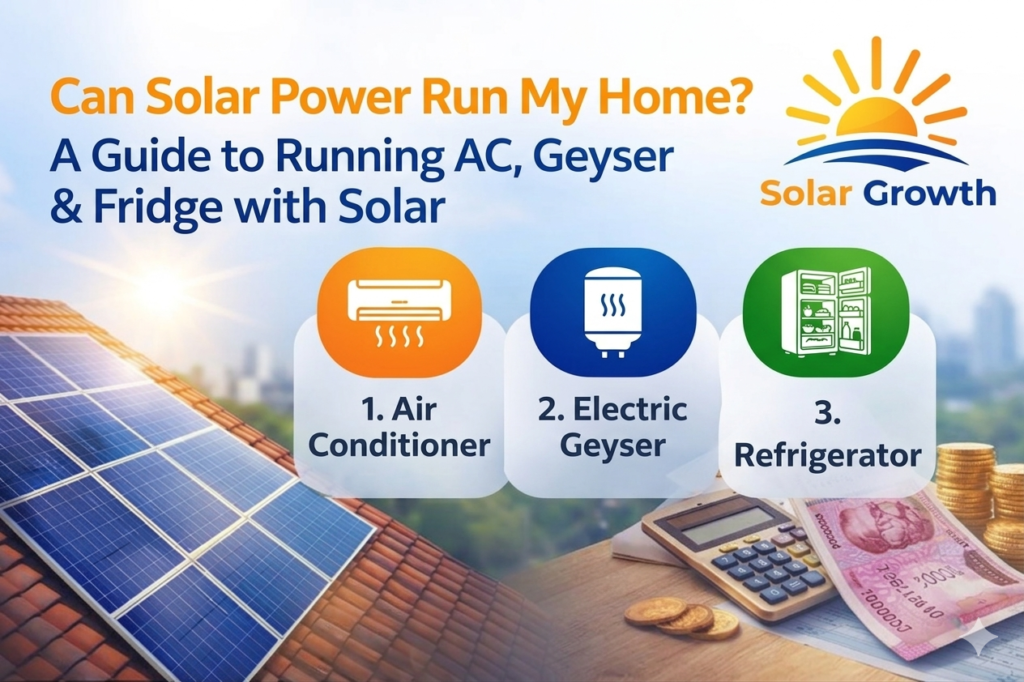
High Consumption Appliances
Air Conditioners
A 3kW system can support one AC with basic load
A 5kW system is more suitable for multiple ACs
Geysers
Geysers can run efficiently, especially during daytime usage
Refrigerators
They run continuously and are fully compatible with solar systems
What Matters Most
The key is system sizing. When your solar system is aligned with your electricity consumption, it can comfortably power both essential and heavy appliances.
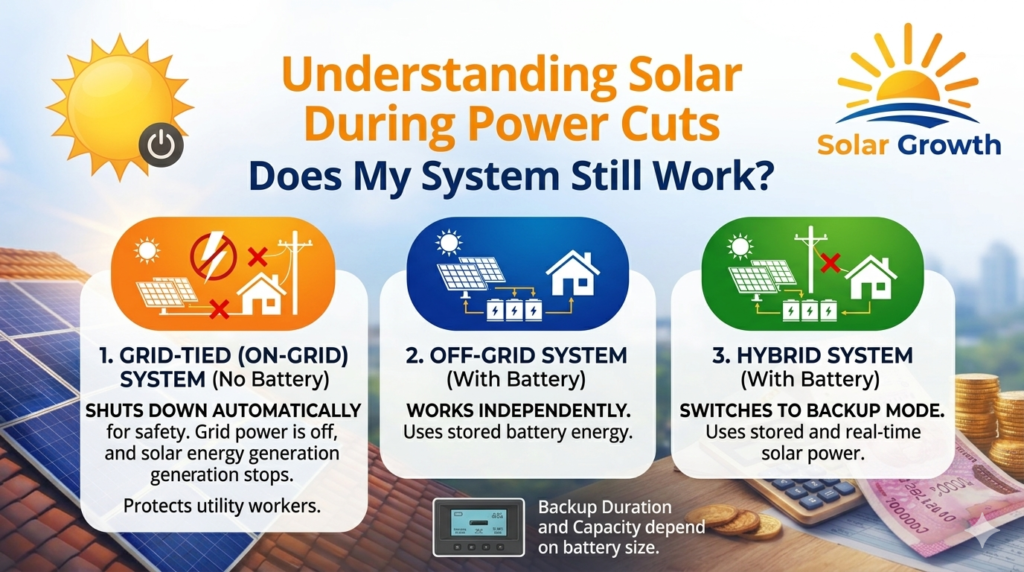
What Happens to Solar During Power Cuts?
This is one of the most misunderstood aspects of solar systems.
On-Grid Systems
Most residential systems are on-grid.
During a power cut:
- The system shuts down automatically
- This is a built-in safety feature
Hybrid Systems with Battery
Hybrid systems offer backup support.
- They store excess electricity
- They provide power during outages
- They support essential appliances
Choosing the Right Setup
If your area faces frequent outages, a hybrid system is a better choice.
If power cuts are rare, an on-grid system is more cost-effective.
Bringing It All Together
Solar is not just about installing panels. It is about designing a system that works efficiently for your lifestyle.
- Correct panel direction improves output
- Apartments can benefit through shared systems
- Solar can run most household appliances
- Backup depends on system type
A well-planned system delivers consistent savings and reliable energy for years.
Plan Your Solar Journey
If you are considering rooftop solar, the first step is understanding your electricity usage and available rooftop space. A well-designed system ensures better performance, long-term savings, and reliable energy generation.
Solar is not just an upgrade for today. It is an investment that continues to deliver value for decades.
Whether you are planning solar for your home or evaluating it for a housing society, making the right choices early leads to better outcomes over time.
Take the next step and explore what solar could look like for your space.
Start your solar journey here: Begin your free registration
Frequently Asked Questions
1. Which direction is best for solar panels in India?
South-facing panels provide the highest efficiency.
2. What is the ideal tilt angle for solar panels?
Usually between 15 to 30 degrees depending on location.
3. Can apartments install solar panels?
Yes, through common systems or individual setups with approvals.
4. Can solar run AC and geysers?
Yes, if the system size is properly planned.
5. Does solar work during power cuts?
On-grid systems shut down, while hybrid systems provide backup.