Costs, System Size, Electricity Generation and Common Myths Explained
Rooftop solar has evolved into one of the most practical and financially rewarding upgrades for Indian households. With rising electricity tariffs, abundant sunlight, and strong policy support such as the PM Surya Ghar Muft Bijli Yojana, more homeowners are transforming their rooftops into long-term energy assets.
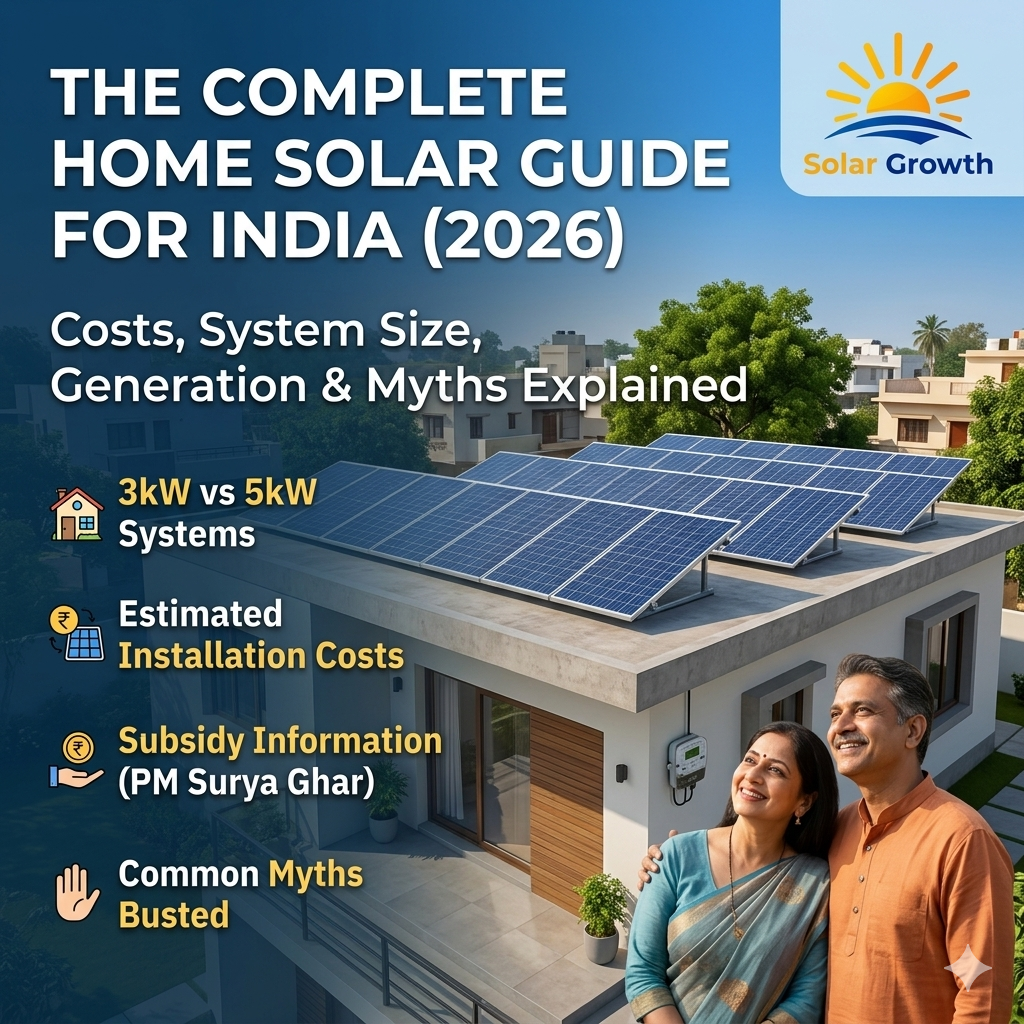
A solar system is not just about installing panels. It is a complete energy ecosystem that generates electricity, reduces dependence on the grid, and delivers consistent savings for decades.
If you are planning to switch to solar, there are four essential aspects to understand:
- Choosing the right system size
- Understanding installation costs
- Estimating electricity generation
- Separating myths from reality
This pillar guide brings everything together in a clear and structured format.
Understanding Rooftop Solar Systems
A rooftop solar system converts sunlight into usable electricity for your home.
Key Components
- Solar panels that capture sunlight
- Inverter that converts DC power into AC electricity
- Mounting structure for stability and durability
- Net meter that tracks electricity import and export
How It Works
During the day, solar panels generate electricity to power your home. Any excess electricity is sent to the grid. When your system is not producing enough power, electricity is drawn from the grid.
This two-way flow ensures efficient energy usage and optimized savings.
Types of Solar Systems for Home
On-Grid System
- Connected to the electricity grid
- Most affordable and widely used
- No battery required
Off-Grid System
- Completely independent
- Requires battery storage
- Suitable for areas with unreliable power supply
Hybrid System
- Combination of grid connection and battery backup
- Offers flexibility and power during outages
Choosing the Right Solar System Size
Selecting the correct system size is critical for maximizing savings and efficiency.
3kW Solar System
A 3kW system is suitable for moderate electricity consumption.
- Daily generation: 12 to 15 units
- Monthly generation: 360 to 450 units
- Rooftop space: 200 to 300 sq ft
Best suited for:
- Small to medium households
- 2 to 3 BHK homes
- Monthly bills between ₹2,500 and ₹4,000
- Basic appliances with occasional AC usage
5kW Solar System
A 5kW system is designed for higher electricity demand.
- Daily generation: 20 to 25 units
- Monthly generation: 600 to 750 units
- Rooftop space: 350 to 450 sq ft
Best suited for:
- Larger households
- Multiple air conditioners
- Heavy appliance usage
- Monthly bills above ₹4,000 to ₹6,000
Key Differences
Electricity Generation
3kW produces around 4,200 units annually
5kW produces around 7,000 units annually
Investment
3kW requires lower upfront cost
5kW delivers higher long-term savings
Space Requirement
3kW suits smaller rooftops
5kW needs larger installation area
Subsidy Benefit
Subsidy applies fully up to 3kW
Larger systems receive subsidy only for the first 3kW
Which One Should You Choose
Choose 3kW if your consumption is moderate and budget is limited.
Choose 5kW if your usage is higher or expected to increase.
A slightly larger system often provides better long-term value as electricity needs grow over time.
Home Solar Cost in India (2026
Understanding the cost structure helps you plan your investment effectively.
Average Installation Cost
Residential solar systems typically cost between ₹60,000 and ₹90,000 per kW before subsidy.
Estimated Pricing by System Size
1kW System
- ₹65,000 to ₹80,000 before subsidy
- ₹35,000 to ₹50,000 after subsidy
- 90 to 120 units per month
2kW System
- ₹1.2 lakh to ₹1.5 lakh before subsidy
- ₹60,000 to ₹90,000 after subsidy
3kW System
- ₹1.4 lakh to ₹1.8 lakh before subsidy
- ₹62,000 to ₹1.02 lakh after subsidy
Systems above 3kW receive subsidy only for the first 3kW portion.
Government Subsidy Structure
Under the PM Surya Ghar Muft Bijli Yojana:
- Up to 2kW: ₹30,000 per kW
- 2 to 3kW: additional ₹18,000 per kW
- Maximum subsidy: ₹78,000
Monthly Savings
- 1kW: ₹600 to ₹900
- 3kW: ₹1,800 to ₹2,700
- 5kW: ₹3,000 to ₹4,500
Payback Period
- With subsidy: 3 to 5 years
- Without subsidy: 4 to 7 years
After this period, electricity generated is effectively free for the remaining lifespan.
How Much Electricity Does a Solar Plant Produce?
Electricity generation depends on system size and environmental factors.
Average Generation in India
1kW System
- 4 to 5 units per day
- 120 to 150 units per month
3kW System
- 12 to 15 units per day
- 360 to 450 units per month
5kW System
- 20 to 25 units per day
- 600 to 750 units per month
Factors Affecting Generation
- Sunlight availability
- Panel efficiency
- Roof direction and tilt
- Shadow-free installation
- Regular maintenance
Matching System Size to Usage
- 150 to 200 units: 1 to 2kW
- 300 to 400 units: 3kW
- 600+ units: 5kW or higher
Net Metering Explained
Net metering allows you to export excess electricity to the grid and receive credits.
- Extra power is sent to the grid
- Credits are earned
- Credits are used when solar is not generating
This system ensures maximum utilization of your solar installation.
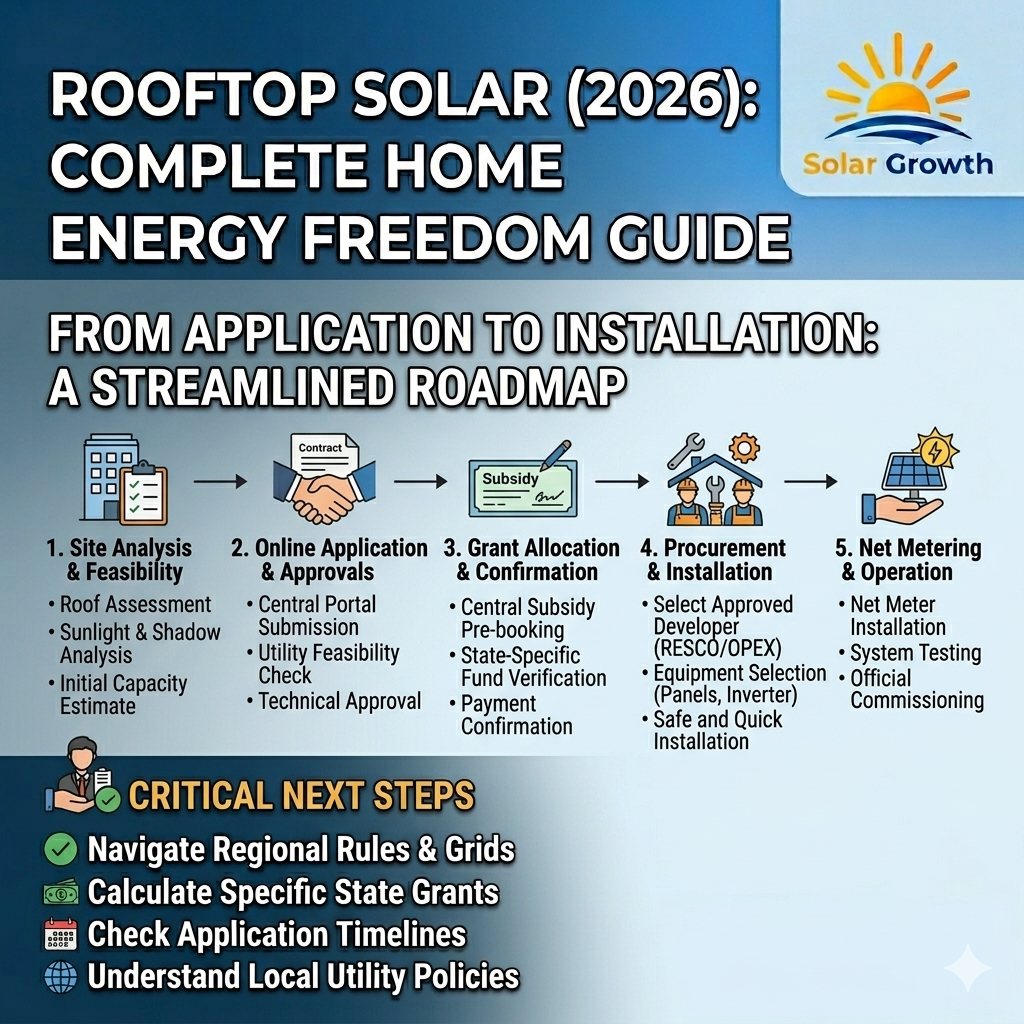
Solar Installation Process
The installation process typically includes:
- Electricity consumption analysis
- Site inspection and shadow analysis
- System design and quotation
- Approval and documentation
- Installation and testing
- Net meter installation and activation
Common Solar Myths Homeowners Still Believe
Solar panels do not work on cloudy days
They continue to generate electricity using diffused sunlight
Solar is too expensive
Costs have dropped significantly and subsidies improve affordability
Solar requires high maintenance
Only occasional cleaning is required
Solar damages the roof
Proper installation ensures safety and durability
Solar is only for large homes
Systems can be customized for any rooftop size
Why Rooftop Solar Is Growing in India
Solar adoption is increasing due to:
- Government incentives
- Rising electricity costs
- Improved technology
- Faster return on investment
Many households can reduce electricity bills by up to 80 to 90 percent.
Plan Your Solar Journey
If you are considering rooftop solar, the first step is understanding your electricity consumption and available rooftop space. A well-designed system can significantly reduce your energy costs while providing long-term stability.
Solar is not just an upgrade for today. It is an investment that delivers consistent value for decades. Choosing the right system ensures that your home is prepared for future energy needs as well.
Whether you are evaluating a 3kW system for moderate usage or a 5kW system for higher demand, making an informed decision will help you maximize both savings and efficiency.
[https://solargrowth.in/free-registration/]
Frequently Asked Questions
1. How many units does a 3kW solar system generate?
Approximately 360 to 450 units per month.
2. How many units does a 5kW solar system generate?
Around 600 to 750 units per month.
3. What rooftop space is required?
3kW requires 200 to 300 sq ft, while 5kW needs 350 to 450 sq ft.
4. Which system offers better savings?
A 5kW system provides higher long-term savings due to greater generation.
5. Can a 3kW system run an air conditioner?
Yes, it can support one AC along with basic appliances, but a 5kW system is better for heavier usage.
6. How long do solar panels last?
Typically 20 to 25 years with gradual efficiency reduction.
7. Do solar panels eliminate electricity bills completely?
They can reduce bills by 70 to 95 percent depending on system size and usage.