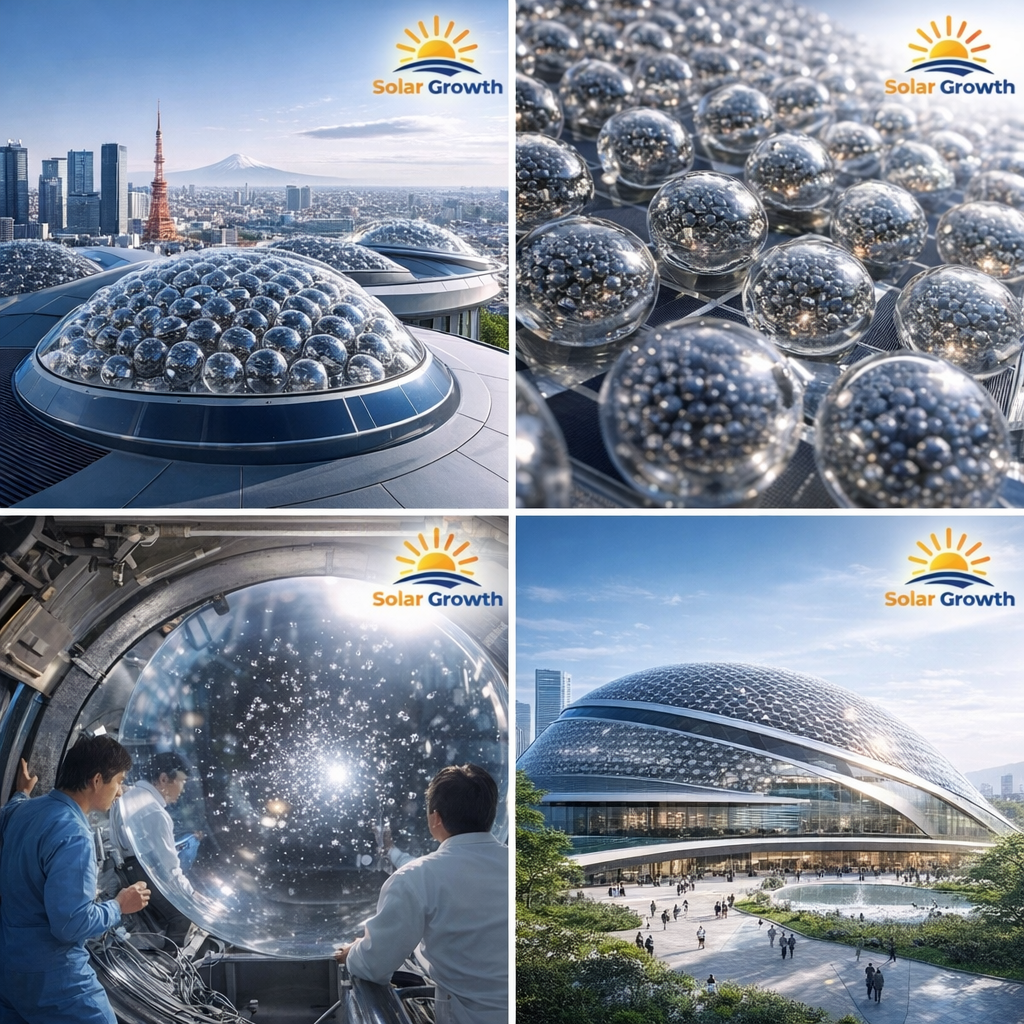
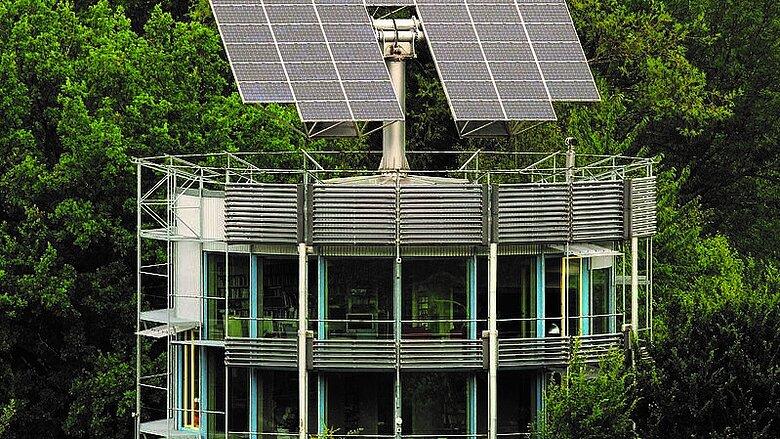
Tokyo, April 2026, For more than a century, solar power has largely meant flat, rectangular panels mounted on rooftops and solar farms. That long-standing design may now be facing disruption from an unexpected direction geometry.
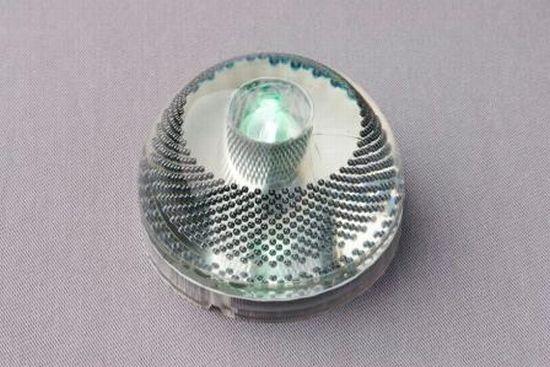
Researchers and engineers in Japan, led by Kyosemi Corporation, have developed a new class of photovoltaic technology built around microscopic spheres rather than flat surfaces. Known as Sphelar, these tiny silicon balls are designed to capture sunlight from every angle, offering a fundamentally different approach to harnessing solar energy.
Traditional solar panels are most efficient when sunlight hits them directly. As the sun moves across the sky, their efficiency drops unless they are mounted on tracking systems, which add cost and complexity. Spherical solar cells attempt to solve this limitation by embracing how light actually behaves, arriving not just directly, but also as reflected and diffused radiation throughout the day.
Each sphere functions as a complete solar cell, capable of absorbing light across its entire surface. This means energy can be generated from multiple directions simultaneously, even in conditions where conventional panels struggle, such as cloudy weather or shaded urban environments. Early demonstrations suggest that while peak efficiency may not yet surpass high-end flat panels, overall energy capture across a full day could be more consistent.
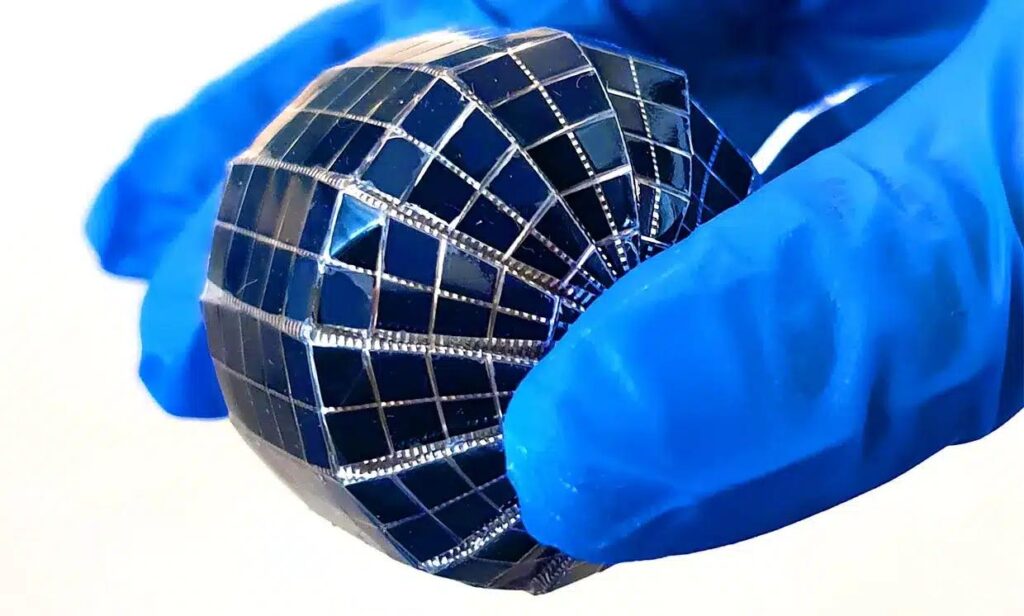
The manufacturing process behind these spheres is equally unconventional. Engineers have experimented with microgravity environments to form near-perfect silicon spheres. Using facilities such as Japan Microgravity Center, molten silicon is dropped in controlled conditions, allowing surface tension to shape it into uniform balls during free fall. These spheres are then engineered with a P-N junction, the essential structure that enables electricity generation in any solar cell.
Beyond performance, the production method may also reduce material waste compared to traditional wafer slicing, where significant silicon is lost during cutting. This has potential implications for both cost and sustainability if the process can be scaled efficiently.
The real promise of spherical solar cells lies in where they can be used. Because they do not rely on a fixed orientation, they can be embedded into surfaces that were previously unsuitable for solar power. Curved building facades, glass panels, street infrastructure, and even wearable technology are all being explored as possible applications.
Urban environments, in particular, could benefit from this flexibility. Buildings that cannot support large rooftop arrays due to space or structural limitations may still generate power through integrated spherical systems. The technology also opens possibilities for smaller, decentralized energy solutions in devices and smart city networks.
At present, the technology remains in an early stage of commercialization. Prototype modules and sample products have been introduced, and industry interest is growing, but large-scale deployment is still some distance away. Challenges such as manufacturing scalability, cost competitiveness, and integration standards will determine how quickly spherical solar cells move from innovation to mainstream adoption.
Japan’s broader push into next-generation energy solutions provides important context. Alongside developments in advanced photovoltaics, the country is also investing in space-based solar power and high-efficiency materials, reflecting a long-term strategy to diversify and strengthen energy sources.
For businesses, developers, and energy planners, this shift signals an important trend. Solar energy is no longer confined to panels installed in specific locations, it is evolving into a more adaptable, integrated system that can exist across multiple surfaces and environments. Keeping pace with these developments may offer an early advantage as the technology matures.
FAQs
Are spherical solar cells more efficient than traditional panels?
Not necessarily in peak output yet. However, they can generate more consistent energy over time by capturing light from multiple angles.
Can they replace conventional solar panels?
In the near term, they are more likely to complement existing systems rather than replace them entirely.
Where can this technology be applied?
Potential uses include building facades, windows, infrastructure, wearable devices, and compact electronics.
Is the technology commercially available?
It is currently in early deployment phases, with prototypes and limited industry applications underway.
Why is Japan leading this innovation?
Long-term investment in energy innovation and a focus on efficiency and space optimization have positioned Japan at the forefront of alternative solar technologies.
As the energy landscape continues to evolve, innovations like spherical solar cells suggest that the future of solar power may not depend on larger installations, but on smarter, more versatile designs that fit seamlessly into everyday life.