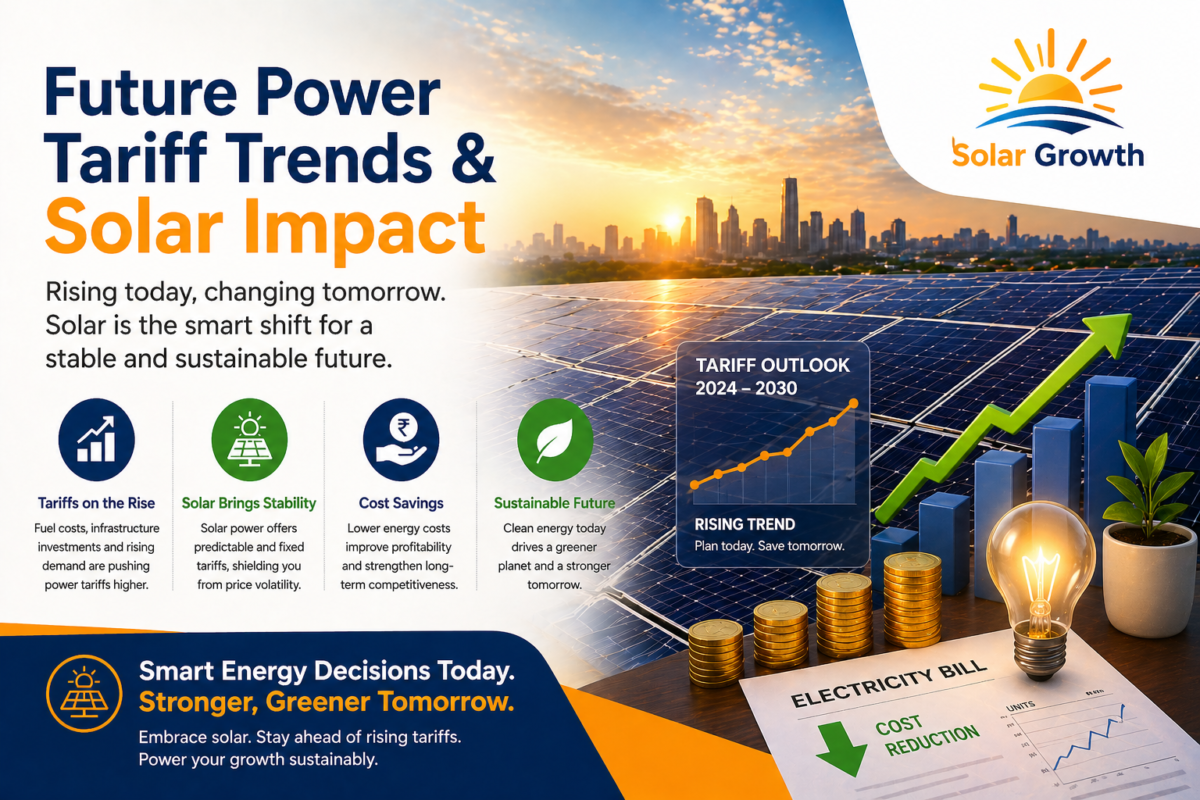
India’s power sector is entering a decisive phase where tariff trends are being shaped by a combination of rising demand, fuel cost pressures, and the rapid expansion of renewable energy. For businesses and consumers alike, the question is no longer whether electricity prices will change, but how sharply and in which direction. Amid this uncertainty, solar energy is emerging as a stabilizing force that is reshaping how power is priced and consumed.
Over the past few years, conventional power tariffs have shown an upward trajectory. Factors such as increasing coal costs, transportation expenses, and infrastructure upgrades have contributed to higher electricity prices across several states. Distribution companies are also under financial pressure, leading to periodic tariff revisions that are often passed on to end users. For industrial and commercial consumers, this has translated into rising operating costs and reduced predictability.
Looking ahead, this trend is expected to continue. As India invests heavily in grid modernization, transmission expansion, and electrification initiatives, the cost burden is likely to reflect in tariffs over time. Additionally, fluctuations in global fuel markets can indirectly influence domestic electricity pricing, adding another layer of uncertainty.
This is where solar energy is beginning to play a transformative role. Unlike conventional power sources, solar generation is not dependent on fuel costs, which makes its pricing inherently more stable. Once a solar project is set up, the cost of generating electricity remains largely fixed, allowing developers to offer long-term tariffs that are insulated from market volatility.
For businesses, this shift is particularly significant. Solar solutions such as open access and group captive models are enabling companies to secure power at predictable rates for extended periods. In many cases, these tariffs are lower than prevailing grid rates, creating immediate cost advantages along with long-term savings. As more companies adopt solar, the overall demand for grid power may gradually moderate, influencing future tariff structures.
Another important development is the increasing role of corporate participation in renewable energy procurement. Large enterprises are actively signing long-term agreements with solar developers to meet both cost and sustainability objectives. This growing demand is driving competition among developers, which in turn is helping to keep solar tariffs competitive.
Policy support continues to be a key driver in this transition. Government initiatives aimed at expanding renewable capacity, improving open access regulations, and enhancing grid integration are creating a more favorable environment for solar adoption. At the same time, there is a clear push toward reducing dependence on fossil fuels, which further strengthens the case for renewable energy.
The impact of solar on future tariffs is not limited to cost reduction alone. It is also influencing how electricity is consumed and managed. With the integration of energy storage and hybrid solutions, solar power is becoming more reliable and capable of meeting demand beyond daylight hours. This evolution is expected to reduce reliance on expensive peak power and contribute to more balanced tariff structures.
However, the transition is not without challenges. The variability of solar generation means that grid management becomes more complex as renewable penetration increases. Investments in storage, smart grids, and balancing mechanisms are essential to ensure stability. These costs may partially offset some of the savings in the short term, but the long-term outlook remains positive.
For distribution companies, the rise of solar presents both an opportunity and a challenge. While it helps reduce procurement costs and supports sustainability goals, it also impacts revenue models as large consumers shift away from traditional grid supply. This dynamic could lead to further changes in tariff design, including new pricing structures and charges.
From a broader perspective, the future of power tariffs in India is likely to be shaped by a mix of conventional and renewable sources, with solar playing an increasingly dominant role. As technology improves and economies of scale continue to drive down costs, solar energy is expected to become one of the most competitive sources of electricity.
For businesses, the implications are clear. Relying solely on grid power may become increasingly expensive and unpredictable, while integrating solar into the energy mix offers a pathway to stability and savings. Early adopters are already gaining a competitive advantage by locking in lower tariffs and reducing exposure to market fluctuations.
As the energy landscape evolves, staying ahead of tariff trends will be crucial for long-term planning. Exploring solar options today can help businesses secure a more predictable and cost-efficient energy future. Take the next step toward smarter energy decisions with this free registration.
FAQs
1. Why are electricity tariffs expected to rise in India?
Rising fuel costs, infrastructure investments, and financial pressures on distribution companies are key factors driving tariff increases.
2. How does solar energy impact power tariffs?
Solar offers stable and often lower tariffs because it does not rely on fluctuating fuel costs.
3. Can businesses lock in solar power rates?
Yes, many solar models allow businesses to secure long-term tariffs through structured agreements.
4. Is solar power reliable for large-scale use?
With advancements in storage and hybrid systems, solar is becoming increasingly reliable for consistent energy supply.
5. Will solar completely replace conventional power?
Not entirely, but it will play a major role in reducing dependence on fossil fuels and shaping future tariffs.
6. What challenges does solar adoption face?
Key challenges include variability in generation, grid integration, and the need for supporting infrastructure.
7. Is now a good time to switch to solar?
With rising tariffs and improving technology, it is an increasingly favorable time for businesses to consider solar solutions.