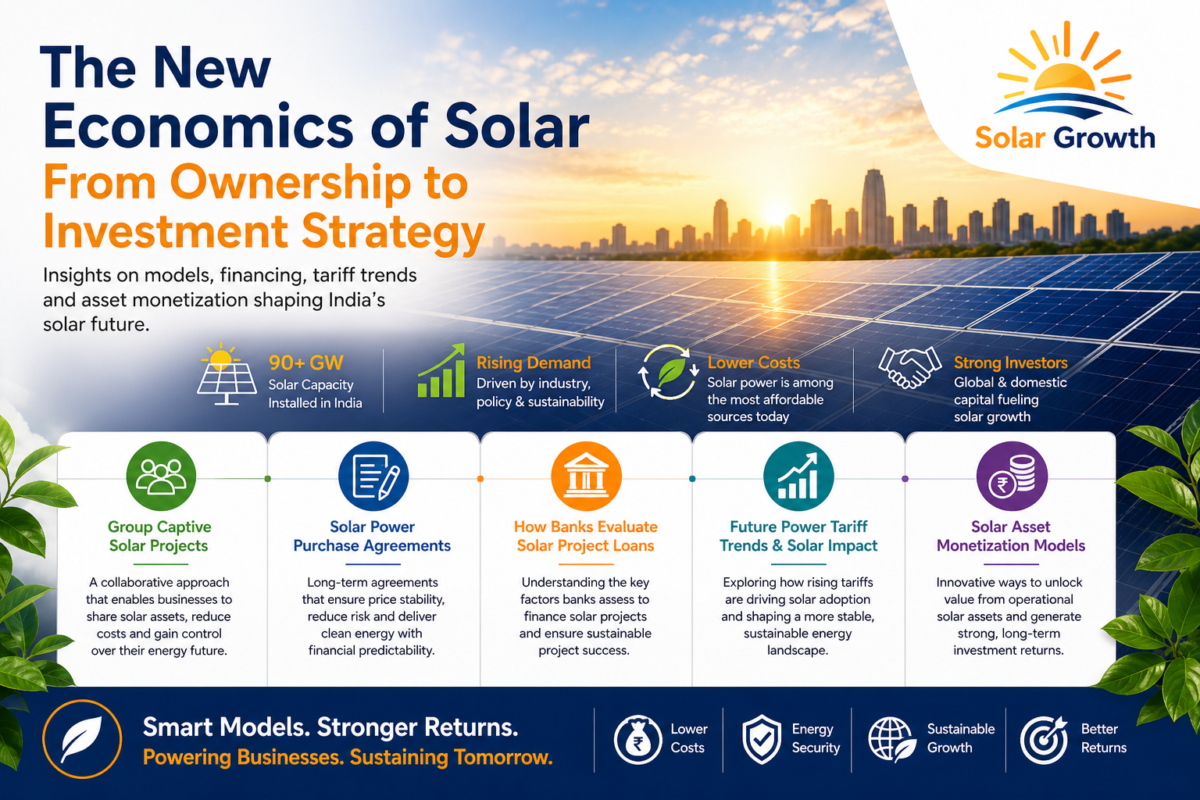
India’s solar sector has moved far beyond the early days of simple cost savings. It now represents a dynamic intersection of energy, finance, and long-term business strategy. With electricity demand rising and tariff structures becoming increasingly unpredictable, companies are rethinking how they procure and manage power. Solar energy is no longer just an alternative, it is becoming central to how forward-looking businesses plan for stability, growth, and sustainability.
This transformation is being driven by a set of evolving models that address different needs across the value chain. From shared ownership structures to sophisticated investment strategies, each approach reflects a deeper shift toward treating energy as a strategic asset rather than a routine expense.
Group Captive Solar Projects: Expanding Access Through Collaboration
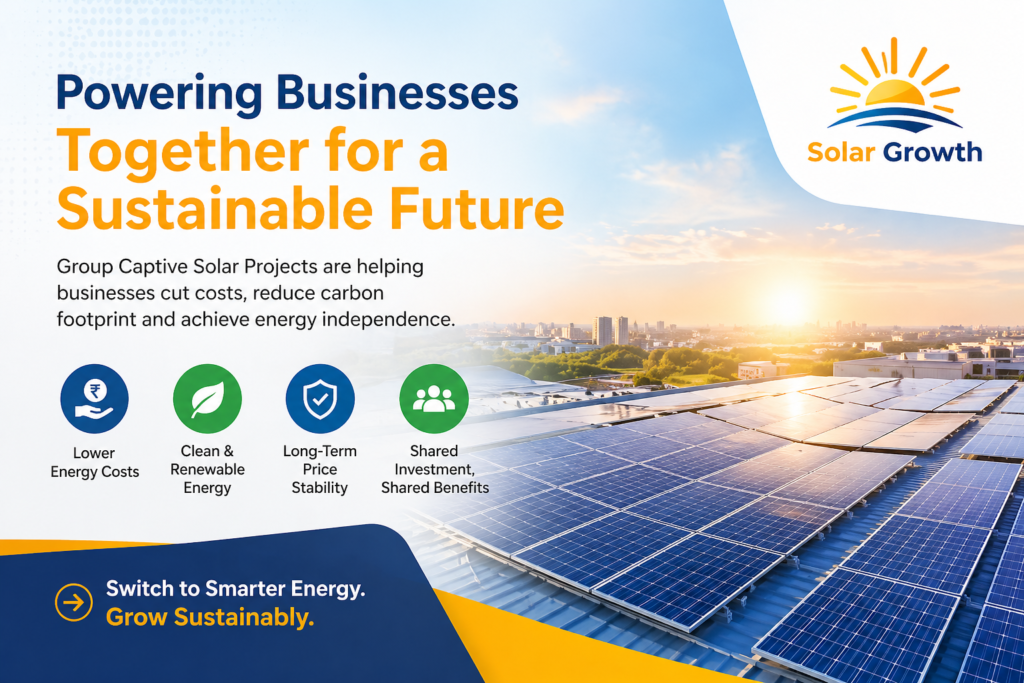
Group captive solar projects have emerged as one of the most accessible and practical solutions for businesses that want the benefits of solar without the burden of full ownership. In this model, multiple companies come together to invest in a single solar plant, sharing both the capital investment and the energy generated.
What makes this structure particularly appealing is its ability to deliver scale. Instead of installing smaller, less efficient systems, businesses can tap into large-scale solar generation that offers better economics and improved efficiency. This translates into lower power costs over time, along with greater predictability in energy expenses.
Beyond cost savings, group captive projects provide a sense of ownership and control that is often missing in traditional power procurement. Companies are not just consumers but participants in the energy ecosystem. This shift is especially valuable for industries with high energy consumption, where even small changes in tariff can have a significant impact on overall costs.
Solar Power Purchase Agreements: Securing Long-Term Stability
While ownership models are gaining traction, Solar Power Purchase Agreements continue to play a crucial role in expanding solar adoption. These agreements allow businesses to procure solar power at fixed or pre-agreed rates over extended periods, creating a stable and predictable cost structure.
In an environment where grid tariffs are subject to frequent revisions, this level of certainty is a major advantage. Businesses can plan their operating expenses with greater confidence, reducing exposure to market fluctuations. For many companies, this predictability is just as valuable as the cost savings themselves.
From an investor’s perspective, these agreements are equally compelling. They provide a steady stream of revenue backed by contractual commitments, making solar projects more attractive as long-term assets. The growing shift toward corporate participation in these agreements is further strengthening the market, as financially strong companies become key offtakers.

How Banks Evaluate Solar Project Loans: The Foundation of Growth
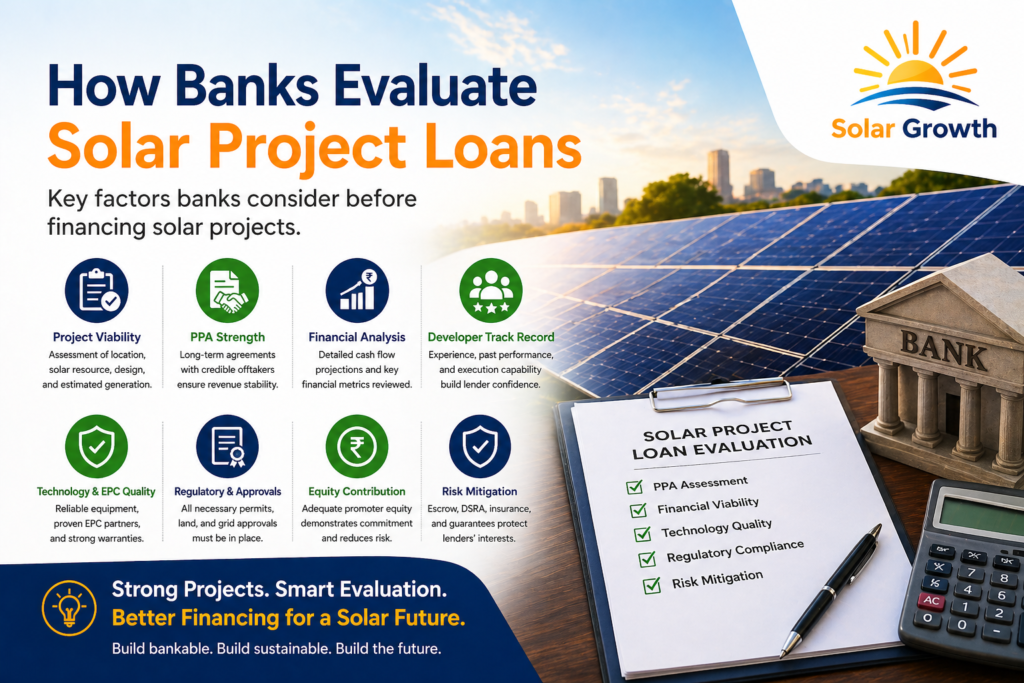
The rapid expansion of solar projects would not be possible without strong financial backing, and this is where banks and financial institutions come into play. Their role extends far beyond providing capital, they act as gatekeepers who ensure that only viable and well-structured projects move forward.
The evaluation process is comprehensive, covering technical feasibility, financial projections, and the credibility of all stakeholders involved. Banks pay close attention to the reliability of revenue streams, particularly the strength of agreements that guarantee power offtake. They also assess the experience and track record of developers, as execution capability plays a critical role in project success.
Another important aspect is risk management. Lenders look for safeguards that protect their investment, including strong contractual frameworks and contingency measures. As the sector matures, this disciplined approach is helping build confidence among investors and enabling more efficient access to financing.
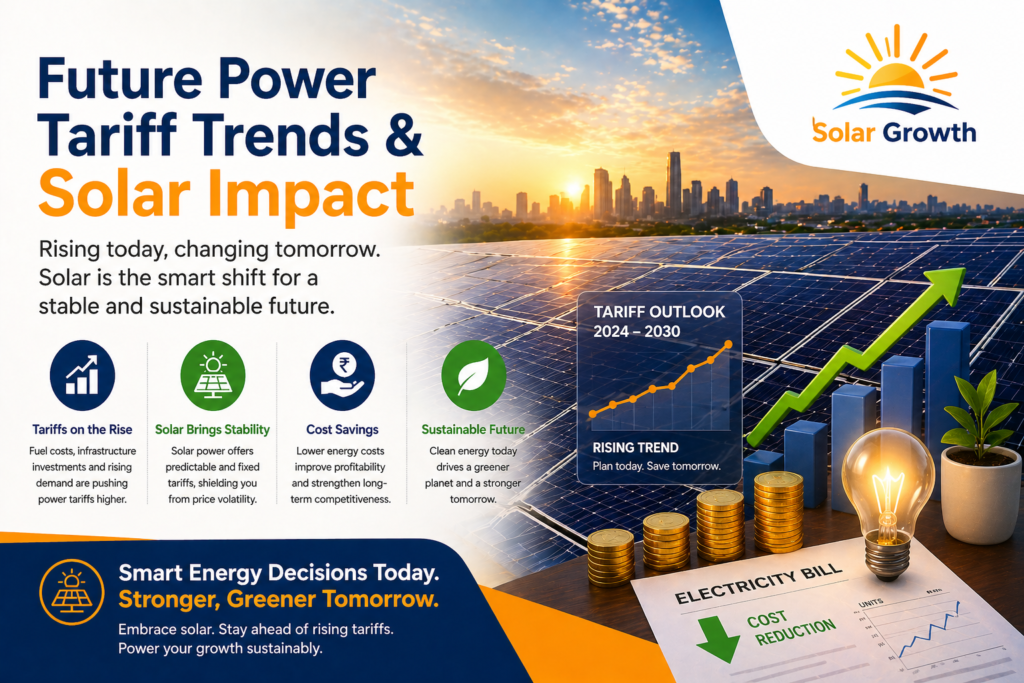
Future Power Tariff Trends and Solar’s Expanding Influence
Electricity tariffs in India are undergoing a gradual but steady transformation, influenced by rising input costs, infrastructure investments, and evolving regulatory frameworks. For businesses that rely heavily on grid power, this creates a level of uncertainty that can complicate long-term planning.
Solar energy offers a compelling alternative by introducing stability into this equation. Unlike conventional sources, it is not subject to fuel price volatility, which allows for more consistent pricing over time. As adoption increases, solar is beginning to influence the broader energy market, contributing to a more balanced and resilient tariff structure.
The integration of advanced technologies such as energy storage is further enhancing solar’s role. By addressing issues related to intermittency, these innovations are making solar a more reliable and comprehensive solution. This evolution is expected to strengthen its position as a key driver of future tariff trends.
Solar Asset Monetization: Unlocking Capital and Driving Growth
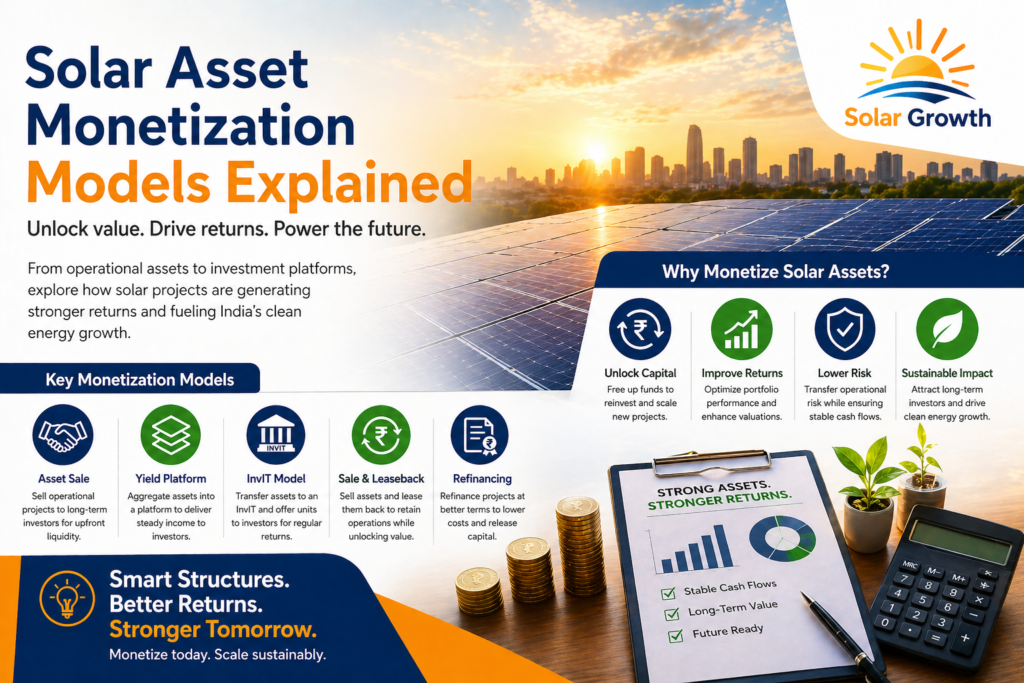
As the solar market matures, the focus is shifting toward maximizing the value of existing assets. Solar asset monetization has become an essential strategy for developers and investors who want to unlock capital and reinvest in new opportunities.
Instead of holding projects for their entire lifecycle, companies are exploring ways to convert operational assets into financial value. This can involve selling assets to long-term investors, creating structured investment platforms, or refinancing projects under more favorable terms.
These approaches not only improve liquidity but also enable continuous growth. Developers can recycle capital into new projects, while investors gain access to stable, income-generating assets. This dynamic is creating a more fluid and efficient market where capital can move quickly to support expansion.
For businesses and investors alike, understanding these monetization strategies is becoming increasingly important. They represent a shift toward treating solar assets not just as infrastructure, but as financial instruments that can be actively managed and optimized.
A Strategic Shift That Is Reshaping the Energy Landscape
What ties all these developments together is a fundamental change in perspective. Solar energy is no longer viewed as a secondary option or a compliance requirement. It has become a core component of business strategy, influencing decisions around cost management, investment, and long-term sustainability.
Companies that embrace these models are better equipped to navigate the challenges of rising tariffs and evolving market conditions. They gain not only cost advantages but also greater control over their energy future.
If you are looking to explore how these solar models can work for your business or investment goals, take the first step with free registration.
To dive deeper into each topic and explore detailed insights, you can refer to the following articles:
(Group Captive Solar Projects – Read more here)
(Solar Power Purchase Agreements – Investor View – Read more here)
(How Banks Evaluate Solar Project Loans – Read more here)
(Future Power Tariff Trends and Solar Impact – Read more here)
(Solar Asset Monetization Models Explained – Read more here)
FAQs
1. Which solar model is best for businesses starting out?
Group captive and power purchase agreements are often the most practical starting points, depending on energy needs and financial capacity.
2. Are solar investments reliable over the long term?
Yes, they are known for stable returns due to predictable generation and long-term agreements.
3. What role do banks play in solar expansion?
Banks provide critical financing and ensure that projects meet viability and risk standards before approval.
4. Will electricity tariffs continue to rise?
Current trends suggest upward pressure due to multiple factors, which makes solar an attractive alternative.
5. What is the benefit of monetizing solar assets?
It allows developers to unlock capital and reinvest in new projects while offering investors access to stable returns.
6. Can mid-sized companies participate in solar projects?
Yes, collaborative models like group captive make it easier for smaller companies to benefit from solar energy.
7. Is solar energy suitable for all industries?
Most industries can benefit, especially those with significant and consistent energy consumption.